
I feel like most parents think that kids learn the important stuff while sitting at a desk. You know, things like math and spelling tests. But let’s say you send your kid to walk 3 blocks to buy a gallon of milk.
Doesn’t seem like a learning opportunity, does it? But it is!
They have to remember which way to go, count their money, talk to the cashier, and then decide when to cross the street. And while some people might interpret/see this as sort of a chore, it’s really not. In the real world, this type of activity teaches children to observe, to communicate, it teaches them problem-solving skills, and all sorts of things – all wrapped into a 10-minute-long session.
Let’s go over how to effectively teach our kids skills they’ll ACTUALLY use each and every day.
Real-World Lessons Hiding Outside Your Door
To be perfectly honest, the inspiration for this article didn’t come out of nowhere. You have my friend from Chicago to thank for it.
She’s the one who sent her kid to buy a gallon of milk, and the kid ended up getting hit by a car. He’s fine, don’t worry. He had a small bruise on the hip for a few weeks, and that was it, but that got me thinking.
What happened was that she sent her child to run an errand. And it was super simple, super safe, something the kid has done dozens of times. The next thing she knew was that she was with a pedestrian injury attorney in Chicago on the phone simply because her child wasn’t able to cross the street safely.
The bus was taking a left and didn’t let the child pass, even though the child stopped at the crosswalk, looked left and right, and started walking. Midway, the bus still pushed left. If her kid hadn’t stopped, all scared and confused, God knows what might’ve happened!
So what he did was panic, and he tripped over the curb as he was getting back on the pedestrian walk. The only injury here was a bruised knee and a scratch on his other leg. But it could’ve ended in a MUCH darker and more tragic way.Horrible!
A nice attorney from Rosenfeld Injury Law helped her out with the claim, but still. The little guy should have known how to cross the street, right?
Here are some other things kids can learn while also having fun.
A Neighborhood Scavenger Hunt
Who doesn’t love a scavenger hunt? It’s so simple, but it can teach SOO much.
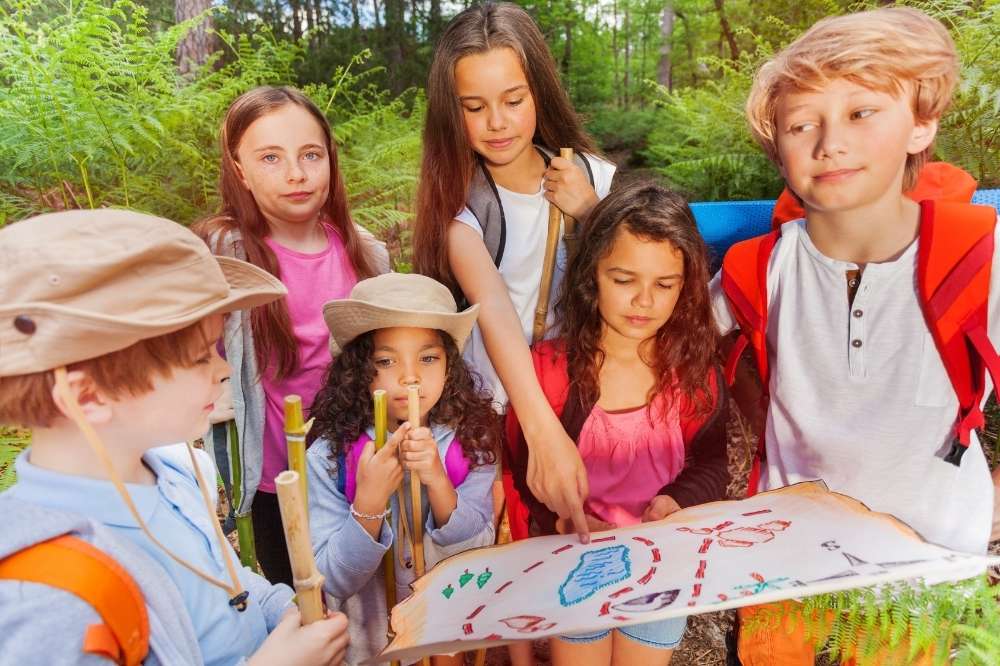
If you can’t get your kid to pay attention when you tell them to, get in line with the rest of the world, but also try a scavenger hunt. What you can do to take it to the next level is to turn it into a serious mission, like a quest. Just write down a list of things/items for them to find (e.g., a bush with red berries, a specific traffic sign, etc.), and then they check the box next to the item as they find it.
Give them the list; see what happens.
I’ll tell you what’ll happen: they’ll start to pay attention to EVERYTHING around them, which will help them learn how to focus and solve problems on the go.
Try a Map-Reading Walk
Phones tell all of us where to go, but it’s different for kids.
You and I have seen and used a map, but our kids? They see those in movies. So, get a printed map of your neighborhood (you can get this at a library, or you can draw one) and mark your house, a park that’s nearby, a corner store, their school, etc. Hand the map to the kid and tell them they’re in charge of getting you to a specific location.
If you see them holding the map sideways, that’s fine.
Let them figure it out on their own, and don’t be too quick to correct them. They’ll learn how to estimate distance and recognize street names.
Go on a Local History Adventure
Every neighborhood has some old stuff nobody pays much attention to, like a house with a cornerstone that says 1924 or a bench dedicated to someone who died 150 years ago. Pick a thing and walk past it with your kid.
What you can do is read what’s written there and then ask a couple of follow-up questions, like a quick test. But not even a test, see what they think about it.
The answers aren’t the point here.
What you’re actually trying to do is to get your child to wonder and understand that history is much more than a boring list of dates.
Get those cogs spinning!
Become Nature Detectives
Spending time in nature is full of benefits, so take advantage of it.
It doesn’t have to be an actual forest (although, if you have one close by, that’s perfect); a park will do just fine. Ask your kid to find 3 different kinds of birds or look for ant trails along the base of a wall. Give them a little notebook and tell them to draw what they see. And no, the drawing doesn’t have to be good, like at all. The entire point here is for the child to think about all the details. To look at things more closely. To store it in their long-term memory.
And that’s scientific thinking.
Conclusion
Saying that learning can be fun is such a cliché that I’m actually cringing while writing this, but you have to admit that it’s true. I’m not saying that geometry and spelling aren’t important, but all kids have to learn real-world skills somehow.
So, why not make that fun?
Let the teachers deal with the boring stuff.
