
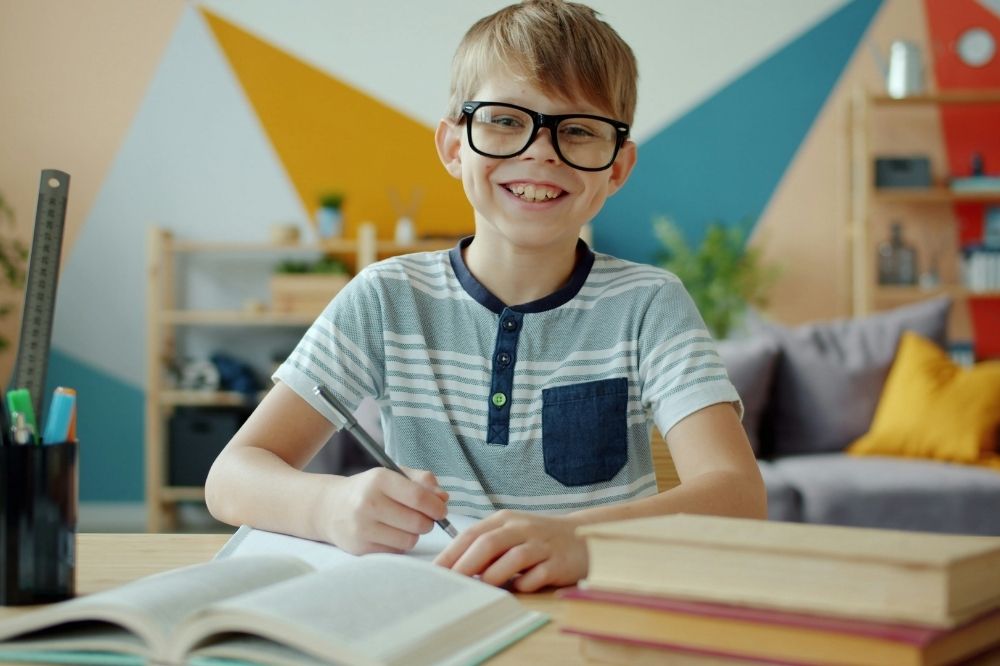
Parents hear that their children require “support,” “structure,” and “engagement.” However, these concepts may seem meaningless when their kids refuse to do homework, ignore instructions, or get angry because of a reading assignment. The real process of education goes beyond the ability to sit quietly and absorb knowledge. Children learn by paying attention, feeling emotions, repeating what was said, playing games, communicating, memorizing, moving, and receiving feedback.
To develop tips for parents based on current research, EssayPro has analyzed the literature in education, child psychology, and cognitive science. Parents should know which little actions really matter for effective learning and which only cause additional stress.
For older children who face difficulties with research-based assignments, parents might analyze different options for additional assistance, including tutoring, feedback from teachers, planning apps, and EssayPro. This approach would work best if parents also help their children form the skills necessary to complete the assignments: reading attentively, remembering facts, asking more productive questions, and revising the work.
1. Kids Learn Through Responsive Interaction
Among the key insights from early learning studies, researchers found that responsive interaction plays an essential role in child development. In this regard, Harvard University’s Center on the Developing Child coined the term “serve and return.” According to the concept, children make a comment, gesture, look, babble, or show some kind of interest, and adults provide a warm response.
In everyday life, this type of activity does not need any special toys. It may be performed during cooking, walking, folding clothes, or reading books. When the child exclaims, “Look at this truck,” a parent replies, “Yes, this truck carries soil. Do you know where it is going?”
The same approach can be applied to older kids as well:
- Pay attention to what the child is interested in.
- React to their observation without dominating the conversation.
- Say something or ask a question.
- Wait for a response from your child.
2. Learning Is Enhanced If Parents Remain Involved, Without Being Overbearing
Parental involvement is key, but it all depends on the nature of that involvement. According to the Education Endowment Foundation, parental involvement has the effect of about four months’ additional progress, especially when it involves home reading activities.
This does not mean parents must be constantly involved in every single worksheet. Excessive parental involvement is counterproductive since it may render children dependent or rebellious. A better way is for parents to set up routines, ask questions, and express interest in the process.
Examples include:
- “Do you see where I went wrong?”
- “What was the easiest bit?”
- “What confused you here?”
- “How could you remember this better tomorrow?”
- “Would you like to do the first question with me and then do two on your own?”
These kinds of questions encourage children to reflect upon their learning rather than respond negatively to correction.
3. Children Require Retrieval Practice, Not Rereading
Most children think studying entails looking at their notes repeatedly. According to research on learning and memory, retrieval practice, which involves recalling information from memory, is generally more effective than rereading. According to How People Learn II, published by the National Academies, aspects of learning include memory, metacognition, prior knowledge, and self-regulated learning.
Parents can easily play retrieval games at home. After finishing a page of reading, shut the book and ask your child, “What were the three most important things that occurred?” After learning about a concept in a science lesson, ask your child to describe the concept using a picture. Prior to a spelling test, say the word and have your child write it down without referring to any notes.
Recalling information should be nonthreatening. If your child does not recall something, provide a hint. Every little mistake should not lead to a lecture. Memory develops with multiple tries, not humiliation.
| Research Idea | What It Means For Parents | Home Example |
| Serve And Return | Children learn through responsive interaction | Ask follow-up questions when a child notices something |
| Parental Engagement | Family involvement supports progress | Read together for 15 minutes and discuss the story |
| Retrieval Practice | Remembering strengthens learning | Close the book and ask the child to explain the idea |
| Play-Based Learning | Exploration supports early development | Use blocks, sorting, pretend play, or drawing |
| Metacognition | Kids learn better when they think about thinking | Ask, “What helped you solve this?” |
4. Play Is Not A Break From Learning
Playful activities play an important role for young children when it comes to learning. In OECD early childhood education, it is stated that early learning must promote development, well-being, agency, play, experience, and exploration.
Some parents may be under pressure to turn everything into some form of academic activity, which can do more harm than good. While playing with a tower, the child develops such skills as balance, prediction, patience, and problem-solving. Acting as a shop owner teaches the child about language, counting, roles, and memory. Creating a map of the bedroom develops symbolic thinking.
The key takeaway of the EssayPro research analysis on play was very simple: parents should not think of it as either play or learning when it comes to kids. It is usually both.
Try these examples of playful learning:
- Sort toys by their sizes, colors, and habitats.
- Make your grocery shopping more educational.
- Let your child teach a toy something new.
- Construct a bridge out of household items and test its weight capacity.
- Create story cards for the child to put in order.
5. Stress Will Hinder Learning Faster Than Laziness
Not all children who shy away from their tasks are lazy. They might be lost, embarrassed, tired, hungry, overexcited, or afraid of making mistakes. In studies on child development, it is always clear that learning goes hand in hand with emotional security and relationships. The same principle applies to the Serve and Return relationship model from Harvard.
Parents can help lower learning stress levels by changing the emotional tone of the homework session. Begin with small victories. Allow the child to organize the tasks. Use a timer to concentrate for ten minutes. Make sure the child gets some physical activity before completely shutting down.
There is one very useful rule: connect before correct. If the child is already upset, then the grammar lesson will not go through.
The Role Of The Parent Is To Create Learning Conditions
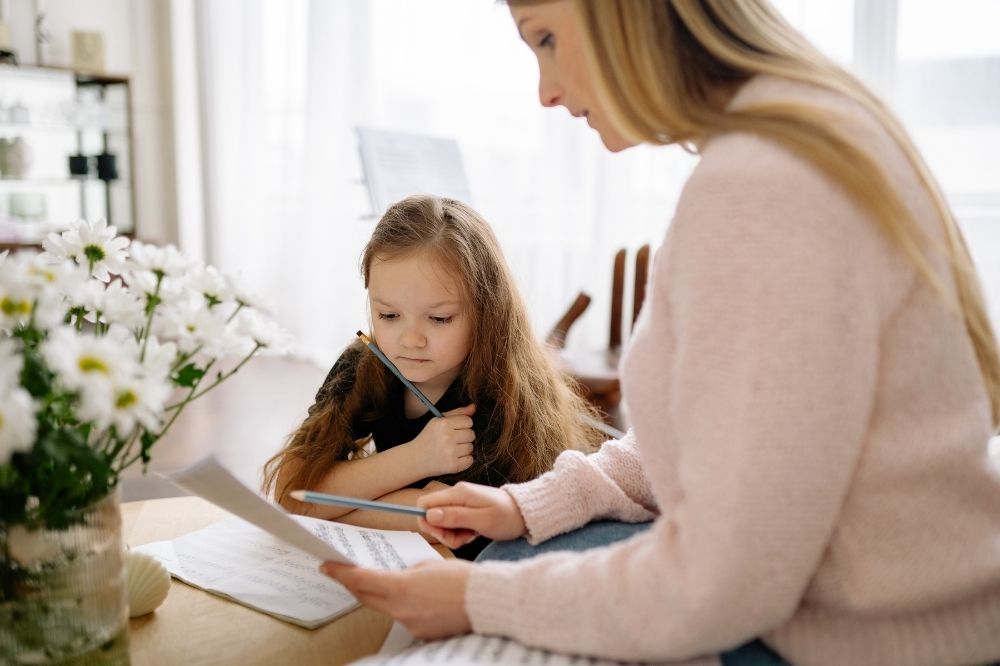
The best science does not ask parents to be flawless. Rather, it indicates that children learn more effectively in an environment that is emotionally warm and structured, yet also responsive. Children require opportunities for discussion, repetition, play, memorization, security, and the ability to discuss their thought processes.
Based on its evaluation of the literature, EssayPro identified one actionable pattern: children will learn better if their thought processes are made visible.
