
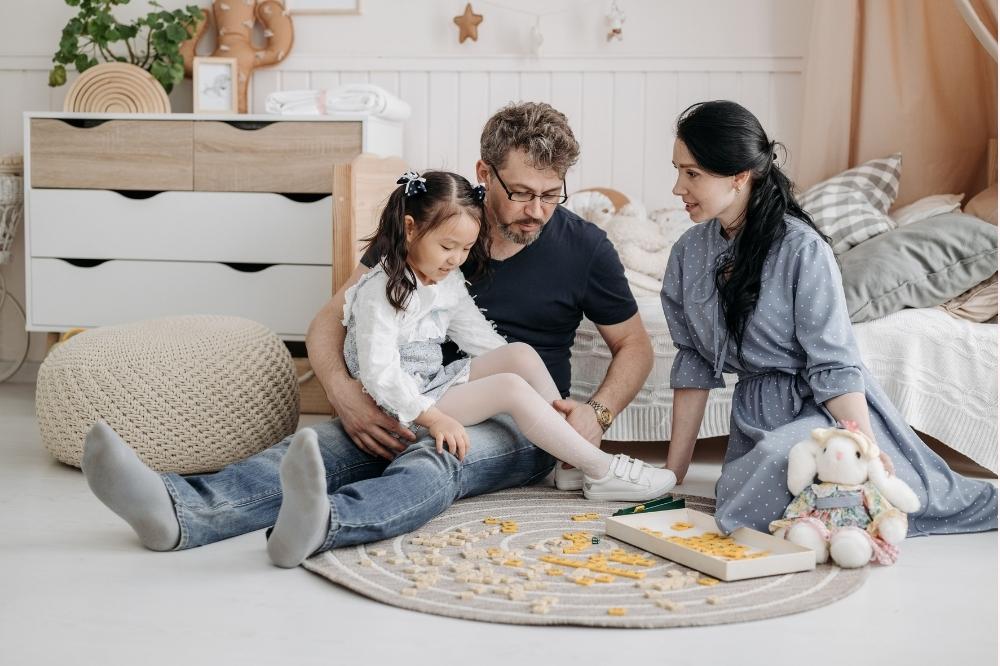
Math anxiety starts early. By age six, many kids already feel a knot in their stomach when numbers show up on a worksheet. Yet the same child might happily count out loud while setting the table or splitting candy with a sibling. That gap matters. It tells us something important about how children actually absorb math skills.
Family activities offer something a classroom rarely can: low pressure, high repetition, and zero grades attached. When parents weave numbers into everyday life, kids stop seeing math as a subject and start treating it as a tool. That shift alone can rebuild confidence faster than any tutoring session.
Why Confidence Matters More Than Drilling
Here’s a fact that surprises a lot of parents. Research from Stanford’s Graduate School of Education has found that math anxiety can lower performance independent of actual ability — meaning a capable kid can still bomb a test simply because they’re scared of it. Confidence isn’t a soft, secondary outcome. It’s a functional ingredient in learning.
Drilling flashcards under stress can actually backfire. Kids associate the discomfort with the subject itself, not with the specific problem they got wrong. Family activities sidestep this trap completely. Nobody times you while you’re baking cookies.
Cooking Together Builds Real Number Sense
A kitchen is basically a math lab disguised as dinner. Measuring cups teach fractions. Doubling a recipe teaches multiplication. Halving one teaches division, often before a child has even heard those words in school.
Ask a seven-year-old to figure out how many cups make a quart, and watch them work it out without complaint. They’re not doing “math homework.” They’re trying to get pancakes on the table. That distinction changes everything about how the brain receives the task.
Board Games Quietly Train Strategic Thinking
Monopoly, Yahtzee, even simple card games like Uno involve constant arithmetic. Players add scores, count spaces, calculate odds, and track money, often without realizing they’re doing four math operations in a row. A 2022 study noted that children who regularly played number-based games showed stronger arithmetic fluency than peers who didn’t, regardless of school performance.
Games also teach something textbooks struggle to convey: that being wrong is temporary. Lose a round, shrug, try again. That resilience transfers directly to how kids handle a tricky math problem at school the next day.
Why Game Night Beats Flashcards
Flashcards isolate a skill. Games embed it inside something fun, social, and slightly competitive. The brain remembers context far better than it remembers isolated facts.
There’s also no test score attached to losing at Sorry!. That removes the fear factor entirely, and fear is often the biggest obstacle in early math learning.
Family Budgeting Conversations Demystify Money Math
Talking openly about household budgets, within the appropriate age range for a child, introduces percentages, decimals, and basic financial literacy. A simple conversation like “We have this much for groceries this week” teaches subtraction in a way no worksheet can replicate.
Older children especially benefit from this. Letting a twelve-year-old help plan a family outgoing budget gives them ownership over the numbers that actually matter to them. Formulas can be created from the family budget and solved together. If there are gaps in knowledge in this area, it’s wise to use Math Solver for Chrome for clarity. Math Solver doesn’t just give the answer; it shows a step-by-step solution.
Grocery Shopping as a Hidden Math Lesson
Few parents think of a grocery run as an academic exercise, but it quietly is one. Comparing prices per ounce, estimating a total before reaching the register, figuring out if there’s enough cash for everything on the list — these are all real-world math tasks dressed up as errands.
Try handing a child a calculator and a ten-dollar budget. Let them pick snacks within that limit. They’ll learn addition, subtraction, and budgeting simultaneously, and they’ll barely notice they’re learning anything at all.
Building and Construction Toys Teach Spatial Math
Blocks, Legos, and even pillow forts involve geometry whether anyone calls it that or not. Symmetry, balance, measurement, angles — kids absorb these concepts through trial and error long before a geometry class introduces formal vocabulary.
Spatial reasoning, interestingly, correlates strongly with later math achievement. The National Science Foundation has noted that early spatial skills predict math performance years down the line, sometimes more reliably than early counting ability does. So that tower your toddler keeps rebuilding? It’s doing more work than it looks like.
Outdoor Activities Reinforce Measurement and Estimation
Hiking, biking, and even backyard gardening involve estimation constantly. How far is that trail? How many steps until the mailbox? How much taller did the tomato plant get this week compared to last?
These questions don’t feel like math because they’re wrapped in fresh air and physical movement. But estimation is a core math skill, one that standardized tests increasingly emphasize. Practicing it outdoors, without pencil or paper, makes the skill feel intuitive rather than forced.
Storytelling and Math Don’t Have to Be Separate
Picture books with counting themes, or even bedtime stories where parents pause to ask “how many were left?”, blend literacy and numeracy in a way that feels natural. Children process narrative and number together when the two are intertwined like this.
This matters more than it sounds. Many kids who struggle with math actually struggle with reading word problems, not the math itself. Strengthening both skills together, early and often, prevents that disconnect from forming in the first place.
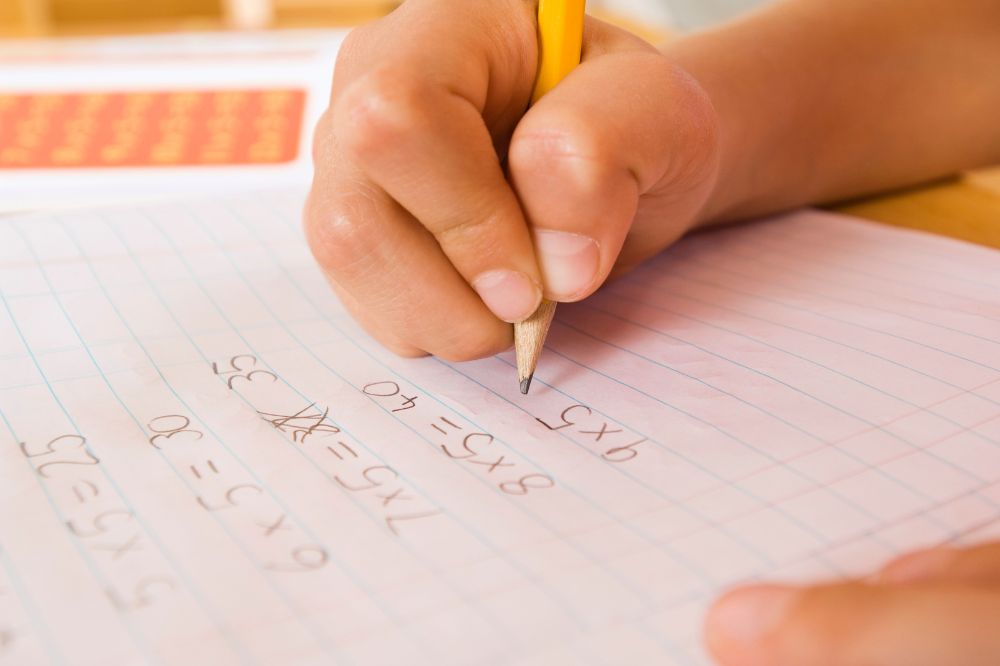
Consistency Matters More Than Intensity
None of this requires hour-long math sessions at the kitchen table. A few minutes here, a quick question there, woven into normal life, adds up faster than scheduled study blocks ever could. Children don’t need more math time. They need more natural exposure to numbers without anxiety attached.
Short, frequent, low-stakes interactions beat long, infrequent, high-pressure ones almost every time. That’s true for adults learning new skills too, so it shouldn’t surprise anyone that it works for kids.
A Quiet Shift in Mindset
Math confidence rarely improves through lectures about how “math is fun.” It improves through lived experience that math actually is useful, approachable, and sometimes even enjoyable. Family activities provide exactly that kind of repeated, judgment-free exposure.
Parents don’t need a teaching degree to make this happen. They just need to notice the math that’s already hiding in daily life and point it out, casually, without turning it into a lesson. Over time, that casual noticing becomes the foundation kids carry into every math class they’ll ever take.
