
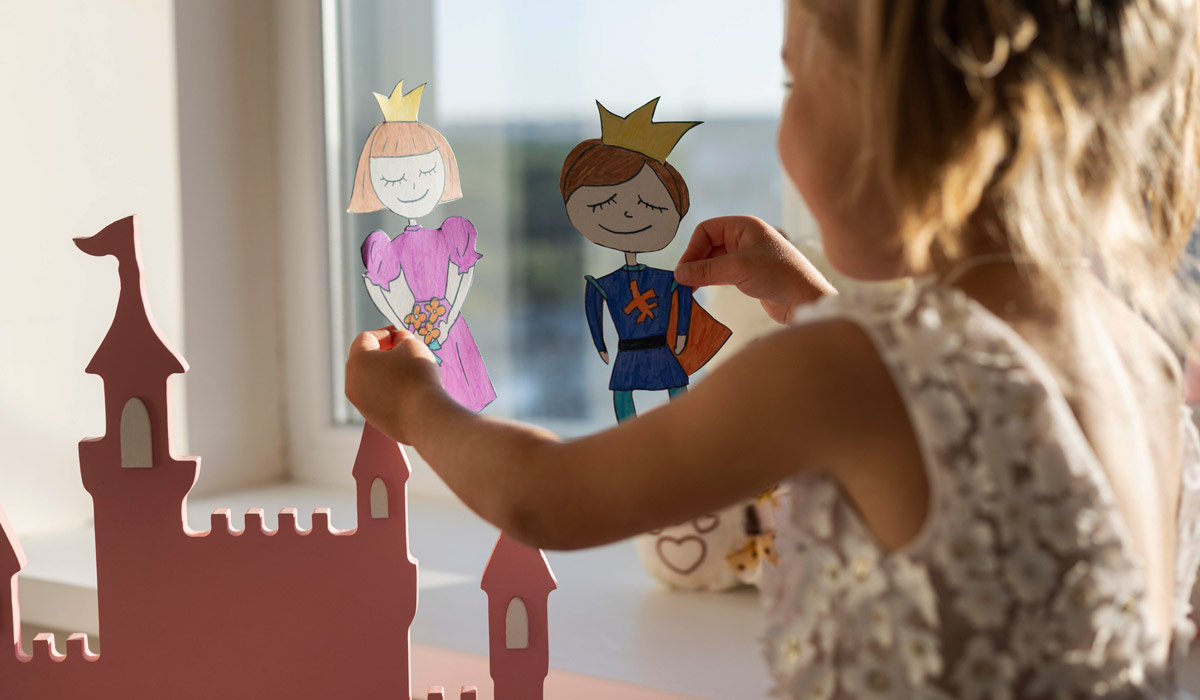
“Lower the drawbridge!” Six eager students tug on a string pulley as their homemade gate clunks down. Inside, a velvet-draped throne awaits the royal proclamation while market vendors haggle over wooden coins.
Whether you teach in a classroom or around the kitchen table, this play-based medieval unit turns history into living theater. It is simpler to pull off than you might think. Use the guide below to build immersive role-play stations, weave in literacy activities, and sneak STEM lessons into every corner.
Setting the Medieval Scene
Before paint brushes and cardboard boxes fly, ground students in the who, what, and why of the Middle Ages. The Middle Ages spanned roughly A.D. 500–1500, a time defined by feudal castles, bustling guild markets, and painstakingly illustrated manuscripts.
Provide a kid-friendly snapshot of the era to ground students in the context of the time period. Referencing maps helps contextualize where these events took place historically.
The Middle Ages, also called medieval times, refer to roughly the fifth to the fifteenth centuries in Europe. These were times of knights, serfs, and castles. Introduce essential vocabulary such as feudalism, guild, heraldry, drawbridge, trebuchet, and scribe. Post these words near your activity stations so students naturally incorporate them during play.
Costume & Identity: Safe Dress-Up Options
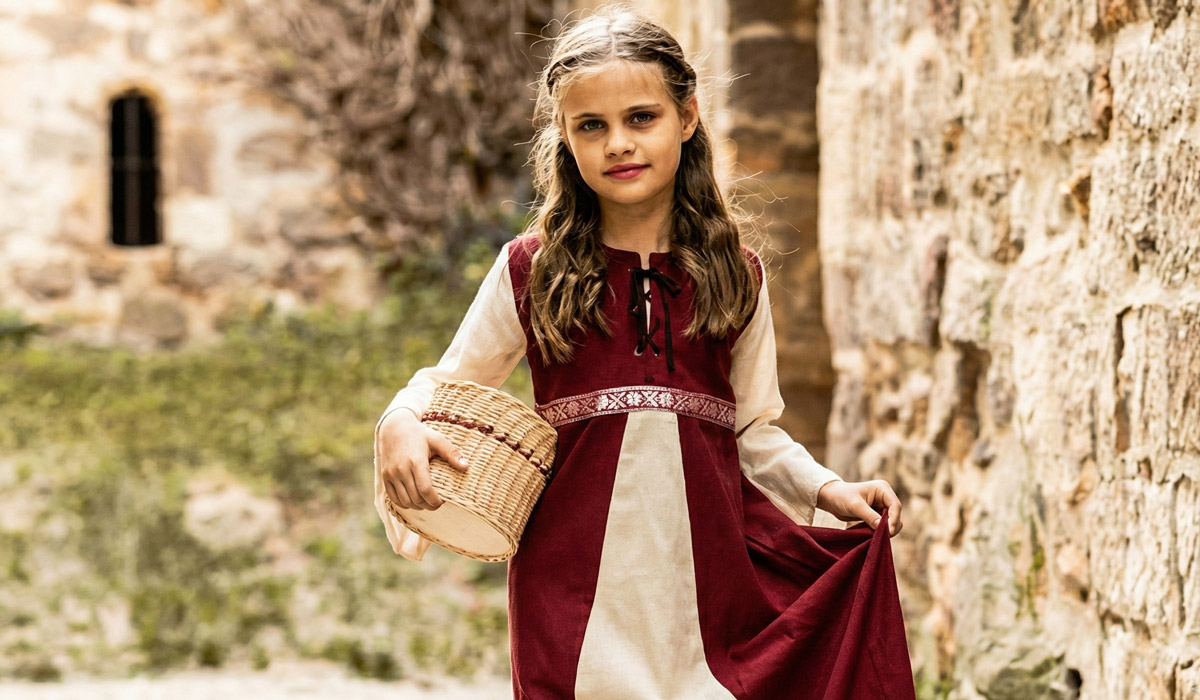
Few things transport kids faster than clothing. Instead of scratchy brocade or heavy armor, opt for comfortable layers that spark conversation about symbolism and social status. Simple tunics made from oversized T-shirts belted with yarn work well, as do kid-sized fleece cloaks.
You can also incorporate elements inspired by dramatic goth clothing styles from Medieval Collectibles. These often utilize the deep purples, black velvets, and dramatic lace cuffs that echo the aesthetics of medieval nobility without sacrificing comfort. Use these costumes to discuss color symbolism in a hands-on way.
Black suggested solemnity and wealth, purple showed power because the dye was rare, and gold conveyed divine authority. Invite students to predict a character’s rank or profession based purely on the colors they choose to wear. Always prioritize safety by using Velcro closures instead of cords for younger learners.
| Warning/Important: Prioritize safety by avoiding long cords or drawstrings on tunics to prevent tripping hazards. Ensure sleeves are short or rolled up securely when students are operating moving parts like winches or using paints. |
Building Your Medieval Role-Play Stations
Station 1: Castle Corner
Transform two large appliance boxes or tri-fold presentation boards into a fortress using gray paint and sponges for stone texture. Cut a door into one wall and hinge it with duct tape.
To create a working drawbridge, knot a string through eye-hooks at the top of the door and wind it around a dowel winch on the interior wall. This setup allows you to explain the science of simple machines.
Station 2: Busy Marketplace
Set up a folding table or cardboard stalls stocked with faux produce, fabric scraps, or recycled containers. Create balance scales using a hanger, string, and paper cups. Use wooden or felt coins for currency to encourage math practice. Providing script cards helps students practice skip-counting and basic economic principles while they trade.
Station 3: The Scribe’s Desk
Equip a quiet corner with feather quills and washable ink or diluted food coloring. Use tea-stained printer paper to simulate parchment. Assign roles like the Royal Chronicler to record events or a Law Clerk to write new village rules. Students can use illuminated letter templates to practice their penmanship and artistic skills.
| Pro Tip: Contact local appliance stores for discarded refrigerator boxes before buying supplies. These large, sturdy cartons are usually free and provide a seamless, robust foundation for creating realistic castle towers or fortress walls. |
STEM Spotlight: Drawbridge or Catapult Build
Pick one signature build to teach force and motion while adding dramatic play value. A mini drawbridge project requires a cardboard door, paper clips, string, and a pencil winch.
Students can tape the door’s bottom edge as a hinge, thread a string through the top corners, and wrap it around the pencil. This demonstrates potential versus kinetic energy, as lifting the bridge stores potential energy.
Alternatively, a tabletop catapult can be constructed using craft sticks, rubber bands, and a plastic spoon. By stacking sticks to create a fulcrum and attaching a spoon as the launching arm, students can launch soft projectiles like pom-poms. Have them chart the distance traveled versus the pullback angle to visualize the data.
| Key Insight: The key insight here is that simple machines transform abstract physics into tangible experiences. By physically winding a winch, students feel the mechanical advantage and directly observe potential energy converting into kinetic energy. |
Storytelling & Speaking Activities

Structure the role-play to build communication skills. In the marketplace, hand students role cards for characters like a blacksmith or spice trader. This requires them to barter using persuasive language and period-appropriate greetings.
Conduct a knighting ceremony where students script an oath of chivalry, receive titles with a foam sword, and record the event in a logbook. Rotate the role of the Town Crier, who must deliver breaking news about trade or castle decrees. This provides public speaking practice disguised as fun.
Assessment & Reflection
Wrap up the unit with reflection methods that gauge understanding. Use journals with prompts like “What did you trade today?” or “How did you persuade your partner?” For STEM assessment, use a recording sheet to measure catapult distances and graph the outcomes.
A photo or video log where students narrate each station can serve as a virtual museum tour. For a formal grade, consider a simple rubric evaluating creativity, collaboration, and content understanding. This keeps the focus on the learning process rather than just the final product.
| Key Insight: The key insight here is that documentation transforms play into a portfolio. By photographing the build process or recording their broadcasts, you create tangible artifacts of learning that prove mastery of historical concepts. |
Making It Happen
Ready to don the cloak? Start small by choosing the Castle Corner or the Marketplace and gathering materials this week. Then add one literacy or STEM activity every few days. Whether you are in a classroom or a living room, these interactive stations bring history to life. Raise the portcullis. Class is in session!
| Author Profile: Medieval Collectibles is the leading online retailer of authentic medieval replicas and fantasy collectibles for history enthusiasts, reenactors, and collectors worldwide. |