
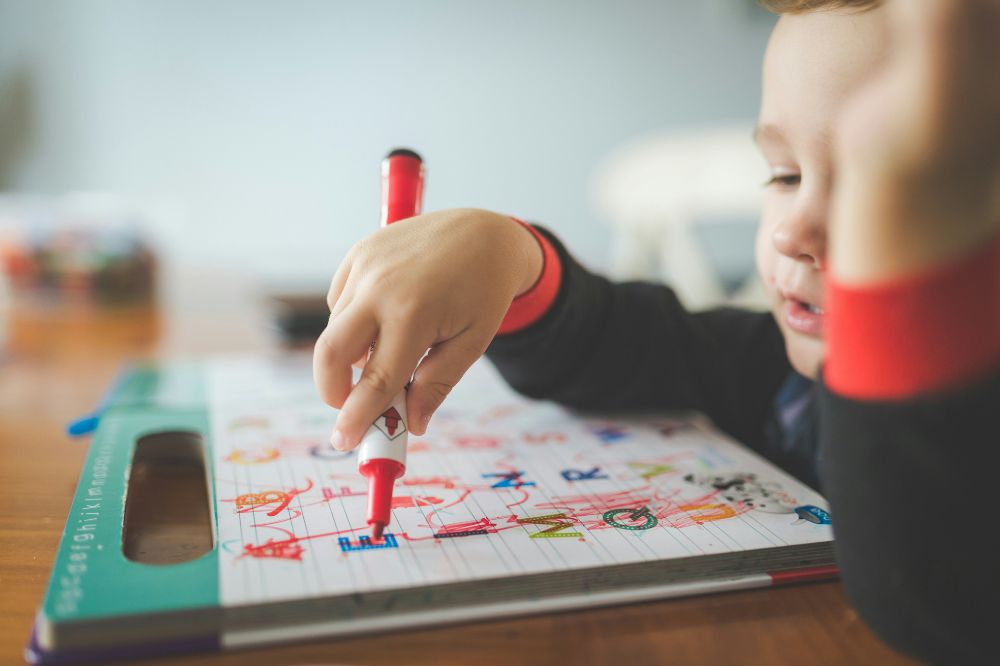
Play is often thought of as the process that children go through once they have done their “proper learning.” This approach seems sensible at first glance, yet all available research indicates quite the opposite. Play is one of the most prominent processes for testing theories, practicing language, memorizing, emotional regulation, problem-solving, and understanding the perspective of others.
To illustrate what play is and what role it plays in learning and cognitive development, Studyfy has summarized data from studies related to pediatrics, education, and child development. One of the most evident findings here is that play is not merely an extra activity. On the contrary, it is a necessary condition for any proper learning.
The information about this phenomenon is relevant for both parents and students. First, learning does not take place exclusively through completing tasks from textbooks. Parents assisting their children in constructing a tower, Studyfy helping them with their “Do my project!” pleas, and older students developing a creative presentation are all involved in the learning process.
Play Helps Develop The Brain Through Active Exploration
According to the American Academy of Pediatrics, play is vital for the development of children and helps develop their cognitive, physical, social, and emotional well-being. Moreover, according to its clinical report, playful interactions between parents and children can aid in controlling stress responses in the body. This is crucial since stressed children find it difficult to concentrate, memorize things, and speak coherently.
In play, children do not just get “busy.” They try out cause-and-effect relationships. A baby drops a spoon and understands that it will fall down. A child builds a tower from cubes and understands the relationship between size and balance. A child playing a game of shop learns counting, turns, remembering, and speaking socially.
2. Play Supports Mental Well-Being Through Connection
Play supports mental well-being by providing an outlet for expression, relieving stress, and fostering connections between children and adults or their peers. According to UNICEF, children who play regularly with their parents experience less anxiety, depression, aggression, and sleep disorders. Additionally, it highlights that playing together fosters a stronger bond between the adult and the child, as adults have a chance to see things from a child’s perspective.
Playing does not require complex activities on the part of parents. Even ten minutes of active play may be enough, as long as there is full attention from the parent. A caregiver who is actively engaged in pretend cooking, drawing, construction, or outdoor games with a child is sending a powerful message saying, “Your ideas matter.” This fosters self-confidence.
Play can promote children’s mental well-being in the following ways:
- Provide children with a healthy outlet for their emotions.
- Give them an opportunity to practice self-regulation without stress.
- Establish trust between children and caregivers.
- Help anxious children express themselves without additional stress.
- Allow children to decompress after school.
3. Play Instructs Social Skills That Can’t Be Taught Via Lectures
Cooperation does not come about by merely telling children that they should share. Children learn cooperation from attempting to play together and realizing that playing is impossible when no one listens. Playing involves a built-in social feedback loop. When a child tries to take all the toys, other children walk away. When a child constantly modifies the rules within ten seconds, everyone becomes frustrated. When a child listens and adapts accordingly, playing goes on.
That’s why pretend games, board games, building games, outdoor games, and collaborative art projects are so important. They help children develop their adaptability skills. Children practice waiting, communicating, disagreeing, problem-solving, and reading facial expressions.
Playful learning, according to the evidence review of the LEGO Foundation on learning through play, includes joyful, meaningful, actively engaging, iterative, and socially interactive components. These five elements are helpful because they explain what makes playing more than just a fun activity for children. Playing engages children’s minds and allows them to experiment with their ideas.
| Research-Backed Play Benefit | What Children Practice | Simple Example |
| Cognitive Growth | Problem-solving, memory, cause and effect | Building a bridge from blocks and testing weight |
| Language Development | Vocabulary, storytelling, listening | Pretend restaurant with menus and orders |
| Emotional Regulation | Patience, recovery, self-control | Losing a board game and trying again |
| Social Skills | Sharing, rules, negotiation | Creating group rules for a playground game |
| Physical Health | Movement, coordination, confidence | Outdoor chase games, climbing, dancing |
4. Play Involving Movement Helps The Body And The Brain
Play that involves physical movement is also essential for mental well-being. Activities such as running, climbing, jumping, dancing, sports, and physically active games allow children to expend their energy and increase their confidence and coordination skills. According to CDC data, 61% of adolescents aged 12–17 in 2021–2023 participated in at least an hour of physical activity daily, while 60% took part in sports teams in the previous year. Such statistics demonstrate that teens still have the habit of moving, yet there is room for improvement.
Movement-based play does not necessarily imply athleticism. A child who avoids sports could love playing on scooters, dance videos, obstacle courses, swimming, hiking, or backyard games. The point is not the skill level but the enjoyment of the activity.
Parents can make it easier for children to participate in physical activities by offering frictionless opportunities:
- Have a ball, jump rope, chalk, or frisbee at the door.
- Have brief movement breaks before homework.
- Allow children to create obstacle courses indoors with safe objects.
- Go walking when discussing academic problems.
- Engage in activities involving movement rather than watching screens.
Why Play Deserves A Place In Childhood Education
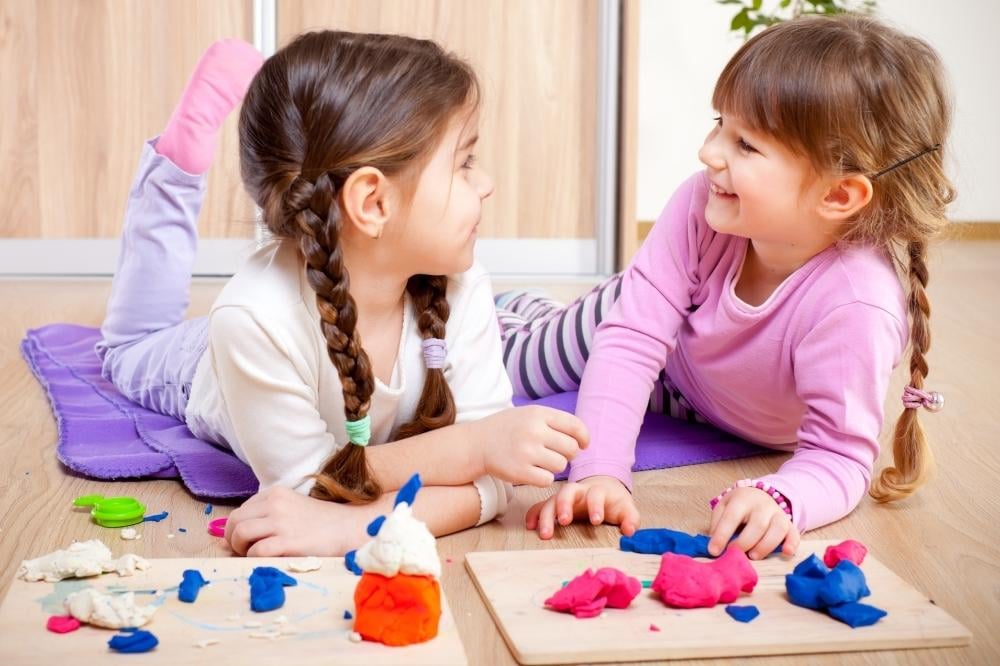
Play helps with learning because it connects attention, emotion, memory, movement, language, and social interaction. Play helps with mental health because it offers a healthy outlet for expressing emotions, developing relationships, and recovering from stress. It is difficult to substitute this kind of experience with worksheets and computers.
Parents and teachers do not have to choose between learning and play. A balanced childhood requires structure and freedom. While children require books, structure, practice, and instruction, they also need the time to create, pretend, move, play, imagine, and experiment freely.
There is an obvious lesson that can be learned from all the research: play is not a distraction. Play is one of the major forms of development.
