
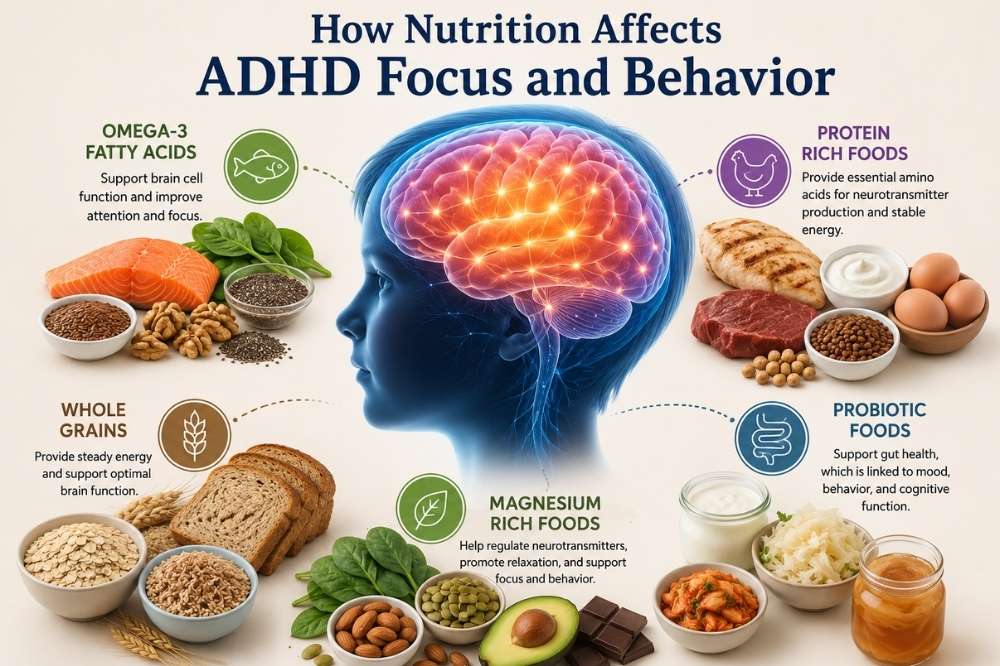
If you have ADHD, you have probably noticed that some days your brain just works better than others. You are sharper, calmer, and easier to get along with. While on other days, everything feels like wading through fog. A lot of things affect that, but one of the most underrated ones is sitting right on your plate.
The connection between food and ADHD symptoms is something researchers have been digging into for years, and while diet is not a cure for anything, the evidence is real and growing. What you eat influences how your brain makes and uses the chemicals it needs to stay focused, regulated, and even-keeled.
This is not about overhauling your entire life or swearing off anything fun forever. It is about understanding a few key connections between diet and ADHD focus, and making some practical tweaks that can actually move the needle. Think of it as adding more tools to your toolbox, not swapping them all out.
Blood Sugar and Focus: The Connection Nobody Talks About Enough
Let’s start with something that affects pretty much everyone but hits people with ADHD especially hard: blood sugar swings. When you eat something high in refined sugar or simple carbs and not much else, your blood sugar shoots up quickly and then drops just as fast. That crash is where the trouble lives.
ADHD and blood sugar are closely linked because the brain is extremely sensitive to those dips. When blood sugar drops, the brain gets less of the steady fuel it needs, and that shows up as inattention, irritability, impulsivity, and that classic feeling of not being able to string two thoughts together. Research has shown that fluctuations in blood glucose can affect cognitive performance, including processing speed and attention. For someone who already struggles with those things, a mid-morning crash from a sugary breakfast can make a hard day feel impossible.
The fix is not complicated. It is really about eating in a way that keeps things steady rather than spiking and crashing. That means pairing carbohydrates with protein and healthy fat, choosing whole grains over refined ones, and not skipping meals. The Academy of Nutrition and Dietetics has good guidance on this, and it really comes down to building meals that release energy more slowly and evenly over time.
A practical example: instead of a bowl of sweetened cereal for breakfast, try eggs with whole grain toast or Greek yogurt with some nuts and berries. Both options have protein and fiber to slow digestion and keep your brain fueled longer. Small shift, real difference.
Omega-3 Fatty Acids and the ADHD Brain
If there is one nutritional area where the research on ADHD is especially compelling, it is omega-3 fatty acids. These are the healthy fats found in things like fatty fish, walnuts, and flaxseed, and they play a genuinely important role in how the brain functions.
Studies have found that many people with ADHD tend to have lower levels of omega-3s than people without it. For example, a meta-analysis published in the Journal of Pediatrics found that individuals with ADHD had significantly lower blood levels of omega-3 fatty acids than those without the condition. Omega-3s are involved in building brain cell membranes and in the production and regulation of dopamine, which is the neurotransmitter most closely tied to attention, motivation, and reward.
Omega-3s for ADHD are most concentrated in fatty fish like salmon, sardines, and mackerel. Walnuts, chia seeds, and flaxseed also provide a plant-based form called ALA, though the body has to convert it to use it, which is less efficient. If fish is not your thing, fish oil or algae-based omega-3 supplements are an option worth discussing with your doctor or dietitian.
The takeaway here is not that you need to eat salmon every day. It is that making omega-3-rich foods a regular part of your diet is a low-effort, evidence-backed way to support brain health alongside whatever other strategies you already have in place.
The Gut-Brain Connection and Why It Matters for ADHD
This one sounds a little unexpected at first, but stay with it because it is genuinely fascinating and backed by a growing body of research. Your gut and your brain are in constant communication, connected through something called the gut-brain axis. The health of your digestive system has a real, measurable effect on your mood, focus, and behavior.
The gut-brain connection ADHD research is still emerging, but what we know so far is that the trillions of bacteria living in your gut help produce neurotransmitters, including serotonin, which affects mood, and even some precursors to dopamine. When the gut microbiome is out of balance, that can ripple outward in ways that show up as brain fog, irritability, and difficulty regulating emotions. Working with a gut health nutritionist can help you understand what your specific gut needs and how to build an eating pattern that supports both digestive and brain health.
So what actually supports a healthy gut? Three things make the biggest difference: fiber, fermented foods, and an overall anti-inflammatory way of eating. Fiber from vegetables, fruits, beans, and whole grains feeds the good bacteria in your gut. Fermented foods like yogurt, kefir, sauerkraut, and kimchi introduce beneficial bacteria directly. And eating fewer ultra-processed, high-sugar foods reduces inflammation, which is increasingly linked to both gut and brain health problems.
You do not need to overhaul everything. Adding a serving of vegetables to dinner, swapping regular yogurt for one with live cultures, or sprinkling some seeds on your oatmeal are small moves that add up over time.
Foods That Are Worth Limiting
Let’s talk about the flip side without turning it into a fear-based list of forbidden foods. The goal here is awareness, not anxiety.
Artificial food dyes have been studied in relation to ADHD for decades. A well-known study in The Lancet found that certain artificial colorings were associated with increased hyperactivity in children, and the conversation has continued since. CHADD acknowledges the research while noting it is not conclusive for all children. Still, if you or your child seems more reactive on days involving brightly colored processed snacks, it is worth paying attention to.
Refined sugar, beyond the blood sugar swings it causes, is tied to increased inflammation and tends to displace more nutritious foods in the diet. Again, this is not about never eating sweets. It is about noticing patterns. Is a high-sugar lunch followed by a rough afternoon? That is information.
Ultra-processed foods, meaning things with long ingredient lists full of additives, stabilizers, and refined ingredients, tend to be low in the nutrients that support brain health and high in the things that work against it. They are also designed to be hard to stop eating, which can be a particular challenge for people with ADHD who may already struggle with impulse control around food.
Foods that help ADHD are generally the same foods that help everyone, just that the effects can be more noticeable when your brain is already working harder than average to regulate itself. Whole foods, plenty of vegetables and protein, healthy fats, and not too much of the ultra-processed stuff. That is the general direction, without any rigid rules attached.

ADHD Meal Tips You Can Use Starting Today
Here is where we get practical. ADHD meal tips do not have to be complicated. In fact, complicated is the enemy here, because the more steps something requires, the harder it is to stick with when your brain is already stretched thin.
Start with breakfast. It sets the tone for your whole morning, and a protein-forward breakfast, think eggs, nut butter on toast, cottage cheese, or a smoothie with protein powder, does more for your focus than anything else on this list. If mornings are chaotic, prep something the night before.
Do not skip meals. This one is huge. People with ADHD often hyperfocus through lunchtime and then wonder why they are irritable and scattered by 3pm. Setting a recurring alarm as a meal reminder sounds a little silly until you realize how much it helps.
Keep snacks that actually work within reach, such as a handful of nuts, some cheese and crackers, a piece of fruit with nut butter, or hard-boiled eggs. These are all protein-plus-something options that stabilize blood sugar instead of spiking it. Having them accessible means you are less likely to grab something that works against you when hunger hits fast.
Drink water consistently. Dehydration impairs concentration noticeably, and many people with ADHD forget to drink enough because they get absorbed in tasks. A large water bottle on your desk or wherever you spend most of your time is a small thing that genuinely helps.
Try adding before subtracting. Instead of starting with what you should cut out, start with what you can add in. More vegetables at dinner. A serving of fish once or twice a week. Some flaxseed in your oatmeal. Adding good things tends to naturally crowd out some of the less useful ones, and it feels a lot less punishing than restriction.
Conclusion
Let’s be clear about something. Food is not a replacement for ADHD treatment. It will not do what medication, therapy, or coaching does, and it is not meant to. What it can do is support everything else you are already doing, fill in some gaps, and reduce the noise that makes symptoms harder to manage.
The research on ADHD and nutrition is real, ongoing, and worth taking seriously. Blood sugar stability, omega-3 intake, gut health, and reducing ultra-processed foods are all areas where the evidence points in a consistent direction. You do not need to act on all of it at once. Pick one thing from this article and try it for two weeks. See how you feel.
And if you want personalized support rather than trying to piece it together yourself, that is exactly what a registered dietitian or online nutrition coaching service is there for. What works for one person’s brain and body might need some tweaking for yours, and having someone in your corner who understands both nutrition and ADHD can make the whole process a lot less overwhelming.
Your brain does a lot. Feed it like it matters.
