

Ask any parent of a six-year-old what their kid did before dinner, and the answer is rarely “sat quietly with a book.” Children move constantly. They climb things and jump off things they shouldn’t. The question worth asking is whether all that movement is enough, and whether your backyard is set up to encourage it.
The short answer from paediatricians and child development researchers is that most kids aren’t getting close to what they need. The longer answer is more interesting, and it has practical consequences for how families spend weekends, set up their gardens, and decide what equipment is worth buying for the kids who will use it.
What do the guidelines actually say?
The World Health Organization recommends that children aged 5 to 17 get at least 60 minutes of moderate to vigorous physical activity every day. For kids aged 3 to 4, the recommendation jumps to 180 minutes of physical activity spread across the day, with at least an hour of that being moderate to vigorous.
Most kids fall short. A 2022 study published in The Lancet Child & Adolescent Health found that fewer than 20% of children globally meet daily activity guidelines. In the United States and Australia, the figures sit between 20% and 30%, depending on age group and how the data is collected.
Screen time is part of the story. So is the decline of unstructured outdoor play, the rise of structured indoor activities, the shrinking of suburban backyards, and the way schedules now leave less room for either. But there’s a more subtle factor: kids tend to move when movement is easy and fun, and they tend to sit when it isn’t.
Why does this matter beyond fitness?
Physical activity in childhood does more than build muscle and burn energy. Research from the American Academy of Pediatrics links daily active play to better sleep, stronger bone development, improved mood regulation, and measurable gains in attention span and academic performance. Kids who jump, climb, run, and generally throw themselves around regularly also develop better proprioception, which is the sense of where the body is in space. That skill underpins everything from handwriting to riding a bike.
There’s also growing evidence that vestibular stimulation, the kind you get from spinning, swinging, bouncing, and being upside down, plays a role in developing the brain’s capacity for focus and emotional regulation. Occupational therapists have used trampolines for decades to help children with sensory processing differences, and the same principles apply to neurotypical kids who simply benefit from the input.
What does this look like in a regular backyard?
Most parents don’t have the time or budget to build a full play structure, and they shouldn’t need to. The goal is to make movement the path of least resistance. A flat patch of grass works. A climbing tree works. So does a sturdy trampoline, which is one reason Vuly kids trampolines have become a fixture in suburban gardens across Australia and the US over the past decade. The appeal is straightforward: a well-built trampoline turns a corner of the yard into a place kids genuinely want to be, often for hours at a stretch.
The bounce itself does a lot of work. Twenty minutes on a trampoline burns roughly the same calories as a moderate jog, but kids don’t experience it as exercise. They experience it as play. That distinction is the whole game when you’re trying to raise an active child.
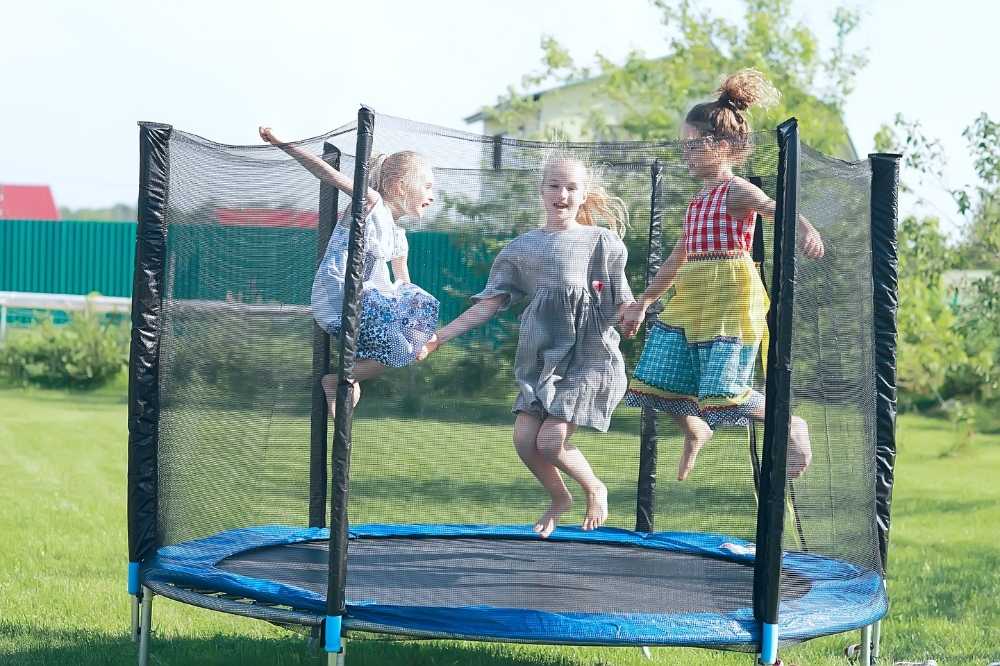
How long should kids be on a trampoline?
There’s no single number, but most paediatric occupational therapists suggest 20 to 45 minutes of trampoline play in a session for primary-school-age kids, with breaks for water and rest. Younger children should bounce for shorter periods and always under supervision. The American Academy of Pediatrics recommends that only one jumper be on a home trampoline at a time, regardless of size, because most injuries occur when two or more kids are bouncing together.
Safety features genuinely change the risk profile. Look for full enclosure netting that attaches directly to the mat with no gap, padded poles that curve outward away from the jumping surface, self-closing entry doors, and a frame design that keeps springs out of reach. Springless designs, which use leaf springs hidden under the mat, eliminate the pinch-point injuries that account for a meaningful share of trampoline emergency room visits.
What about kids who don’t like sport?
Not every child wants to play soccer or do gymnastics. That’s fine. The point isn’t to produce athletes; it’s to produce kids whose bodies and brains develop the way they’re supposed to. Free play does this better than structured activity for younger children, and a backyard set up for movement gives kids the option to engage on their own terms.
Some practical ideas that work for movement-resistant kids:
- Set up a simple obstacle course with cushions, hula hoops, chairs, and a couple of cardboard boxes, then change it weekly so it stays interesting.
- Hang a swing from a tree branch. Vestibular movement is calming for anxious kids and stimulating for under-aroused ones.
- Get a trampoline with a printed game mat. Vuly’s Thunder model has games printed onto the bouncing surface, which gives kids a reason to keep coming back beyond plain bouncing.
- Make outdoor time non-negotiable but unstructured. Thirty minutes in the backyard after school, no instructions, no agenda.
How do you know it’s working?
The signs are practical rather than dramatic. Kids who get enough active play tend to fall asleep faster and wake up in a better mood. They also handle the small frustrations of school and siblings with more resilience. They’re hungrier at meals. They build more focused attention when they sit down for homework or quiet activities.
You don’t need to track minutes or chart progress. If your child is moving most days and sleeping well, and isn’t climbing the walls by 5pm, you’re probably on the right side of the line.
What’s the simplest place to start?
If your backyard already has space and a few features that invite movement, you may not need to do anything. If it doesn’t, start with one piece of equipment that gets used. A trampoline tends to deliver the highest play-hours-per-dollar of any backyard purchase, particularly when kids hit the age where they want friends over. A good one will last through siblings and into the next decade, which makes the upfront cost easier to justify.
The honest measure of any backyard setup is whether kids choose it over a screen. If yours does, you’ve solved the problem most parents are still trying to solve.
