
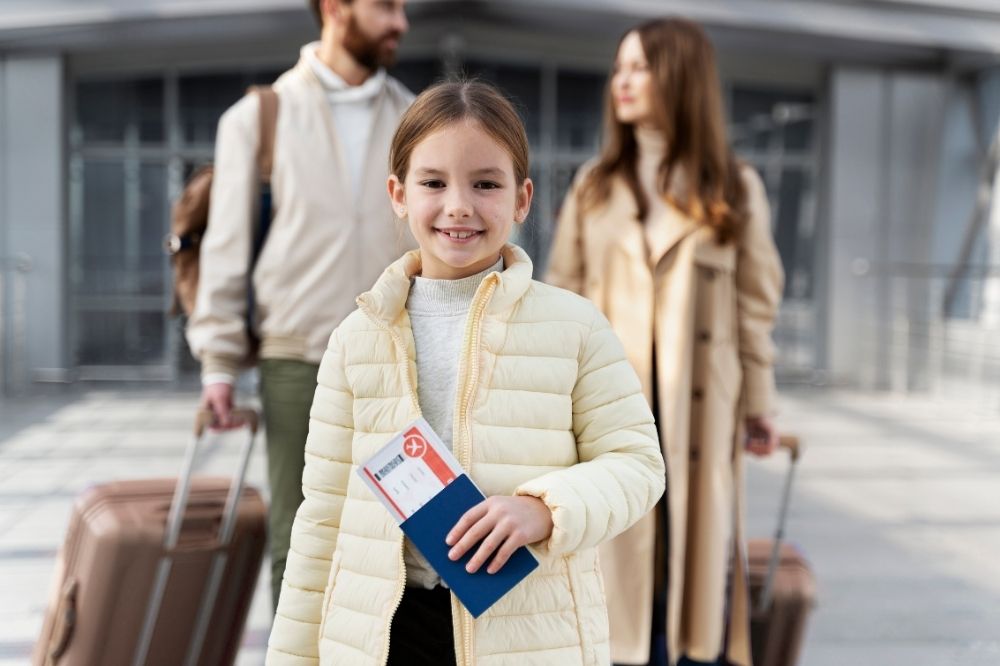
Planning an international trip with a little one? It’s a rollercoaster of pure excitement and—let’s be honest—low-key panic. While you’re busy daydreaming about beach days or introducing the baby to family overseas, there’s one hurdle standing in your way: getting that tiny human a passport.
If you’ve ever tried to navigate government paperwork while keeping a tired toddler happy, you know it requires a solid strategy. This guide breaks the process down into manageable steps so you can get the paperwork sorted without losing your mind.
1. Gather Your Paperwork
First things first: kids under 16 cannot renew their passports by mail like adults do. You have to apply in person. Since a single missing document can stall your vacation plans for weeks, it’s worth double-checking your folder before you leave the house. Parents whose child was born in Florida should check early whether they need to obtain a replacement birth certificate Florida. Having a certified copy ready before the appointment can help prevent avoidable delays.
The Golden Rule: Print everything on single-sided sheets only. It sounds petty, but government clerks generally loathe double-sided pages and will reject them without a second thought.
Exactly what you need to bring:
- Form DS-11: Fill this out completely beforehand, but do not sign it. You must sign it right in front of the agent during your appointment. If you sign it early, they’ll make you start all over with a fresh printout.
- Proof of Citizenship: You’ll need an original or certified copy of the birth certificate, a certificate of citizenship, or a consular report of birth abroad—plus a clear black-and-white photocopy of it.
- Proof of Relationship: Usually, the birth certificate covers this, provided it lists both parents’ names.
- Parental IDs: Both parents or guardians need a valid photo ID (like a driver’s license). Bring the originals plus clear photocopies of both the front and back.
- Consent Forms: Life is much easier if both parents attend the appointment. If one of you can’t make it, the attending parent must bring a notarized consent form (Form DS-3053) signed by the parent staying home.
2. Master the At-Home Photo
The hardest part of this process is often the photo. Biometric rules are notoriously strict: the baby has to look straight at the camera with eyes open, no shadows on the face, and absolutely no pacifiers, toys, or visible parent hands in the shot.
Dragging a baby to a professional photo studio is usually a recipe for a meltdown. Between the intimidating equipment, flashing lights, and “stranger danger” from the photographer, it’s tough. Honestly? Your living room makes a much better studio.
How to get the shot without the drama:
- Timing is everything: Wait until the baby is fed, napped, and in a “chill” mood.
- The Floor Trick: Lay a plain white sheet on the floor or a firm bed and lay your baby flat on their back. It gives you the perfect background without you having to prop up a baby who can’t sit up yet.
- Find Natural Light: Set up near a large window for even lighting. Turn off your camera’s flash to avoid red-eye and weird shadows.
- The Bird’s-Eye View: Stand safely above your child and look down through the lens. To get them to look up, rustle some paper or make a clicking sound right over the camera.
Once you have a few shots where the eyes are open and mouth is closed, use Passport Photo Software to handle the technical side. Instead of wrestling with complicated editing tools, these programs allow you to crop the photo to exact government dimensions automatically, meeting official standards in just a few clicks.
3. Book Your Appointment
Once the papers are ready and the photo is printed, book your in-person slot. You’ll submit everything at an official acceptance facility—usually a local post office, public library, or county clerk’s office.
These spots fill up fast, especially during spring and summer. Try to book your visit two or three months before you leave. Use the online passport scheduler to lock in a time so you aren’t stuck in an unpredictable walk-in line with a fussy baby.
4. Know the Timelines and Fees
Processing times fluctuate. Standard service usually takes four to eight weeks. If you’re in a pinch, you can pay an extra fee to expedite the application.
Pro Tip: You will likely need two different payment methods. The facility usually accepts credit cards for their “execution fee,” but the State Department’s main application fee must be paid via personal check or money order. Don’t get caught at the window without your checkbook!
A Quick Reminder on Expiration: Keep in mind that adult passports last for 10 years, but child passports are only valid for 5 years. Kids change fast, and so do their biometrics! Put a reminder in your calendar for 4.5 years from now so you aren’t caught off guard for your next big family adventure.
5. What to Expect After You Apply
Once you hand over that folder, you might feel a sudden pinch of anxiety when you realize the agent is keeping your child’s original birth certificate. Don’t panic! This is standard procedure. The State Department will mail your original documents back to you in a separate envelope, often arriving a week or two after the passport itself. You can also track your application status online at the official Bureau of Consular Affairs website, though keep in mind it usually takes about 14 days for your application to show up in their system.
Ready to Go
While government forms and strict photo rules are a bit of a headache, getting that passport opens the door to amazing family memories. Once the little blue booklet finally arrives, all the struggle of the paperwork and the photo shoot will become a distant memory. Instead of worrying about the documents, you’ll be busy debating how many outfits to pack and whether you’ve brought enough snacks to survive the flight.
The secret is to just take it one step at a time, get your documents organized early, and take the photo at home to skip the unnecessary drama. You’ve got this! Now, go grab those suitcases—adventure is waiting for your family. Safe travels!
