
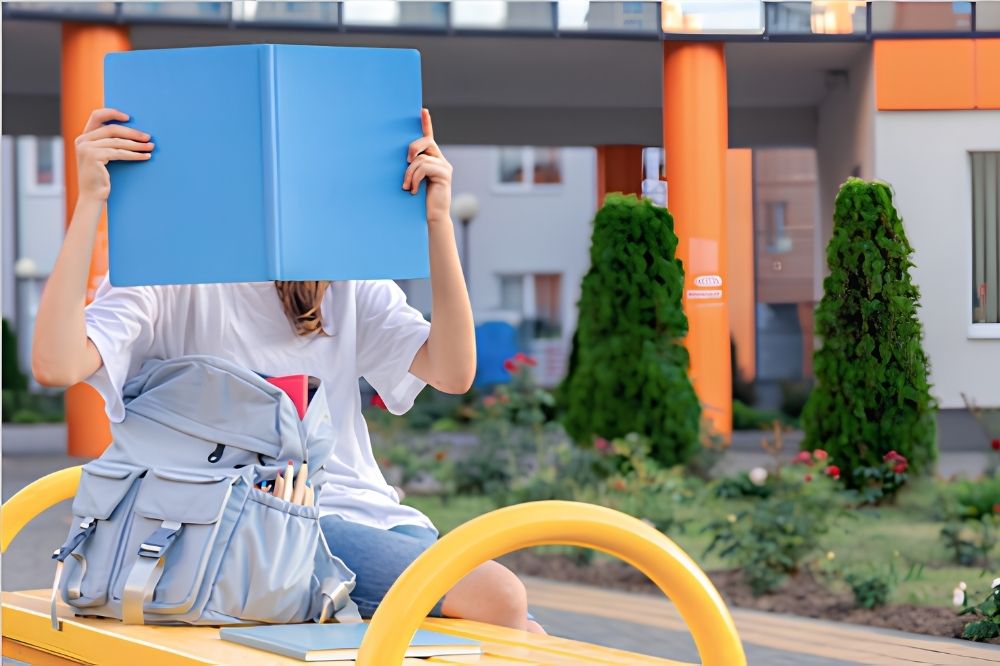
The future of education may just lie in one simple question: what happens when a school building is designed around how students actually learn?
Google’s global Future of the Classroom report found that early hybrid classroom designs outperformed 91% of conventionally designed classrooms in reading and math outcomes.
These findings are helping reshape conversations about educational architecture. Increasingly, architects, educators, school leaders, and industry platforms like news.designrush.com are viewing the physical environment as an active learning tool rather than a container for instruction.
Why One-Size-Fits-All Schools No Longer Fit Today’s Learners
Walk into many schools built several decades ago, and you’ll notice something interesting. The architecture quietly assumes that every student will learn the same thing, at the same pace, in the same place, for most of the day.
Today’s classrooms tell a different story.
Personalized learning has gained momentum because educators recognize that students engage with information differently. A single lesson may involve independent research, peer discussion, teacher guidance, and digital exploration, all within the same class period.
In some areas, school design is finally beginning to catch up with that reality.
The goal is not to replace classrooms. It’s to expand the range of environments available to students. When learners have access to spaces that match the task at hand, whether that’s brainstorming, problem-solving, presenting, or reflecting, the building becomes more responsive to their needs.
In many ways, the most forward-thinking schools are no longer designed solely around teaching.
What Educational Architecture Can Learn from the Elementary Math Curriculum
A modern elementary math curriculum offers an interesting lesson for educational architecture. Math instruction relies more and more on exploring first-hand, discussion, and problem-solving.
Within the same lesson, students can work in small groups, collaborate with their classmates, or receive student-specific support from teachers. Traditional rows of desks don’t really fit this picture, as they make the space feel cluttered and harder to navigate.
That’s where modern-day, flexible learning environments come into play and what makes them so important.
And, on top of that, spaces that can easily adapt to different teaching methods help students stay engaged and actively participate.
The Rise of Multifunctional Learning Spaces
The good old “Reduce, Reuse, Recycle” mantra goes for educational facilities, too. Most innovative schools today are not necessarily building more classrooms, but finding smart ways to reuse the space they already have.
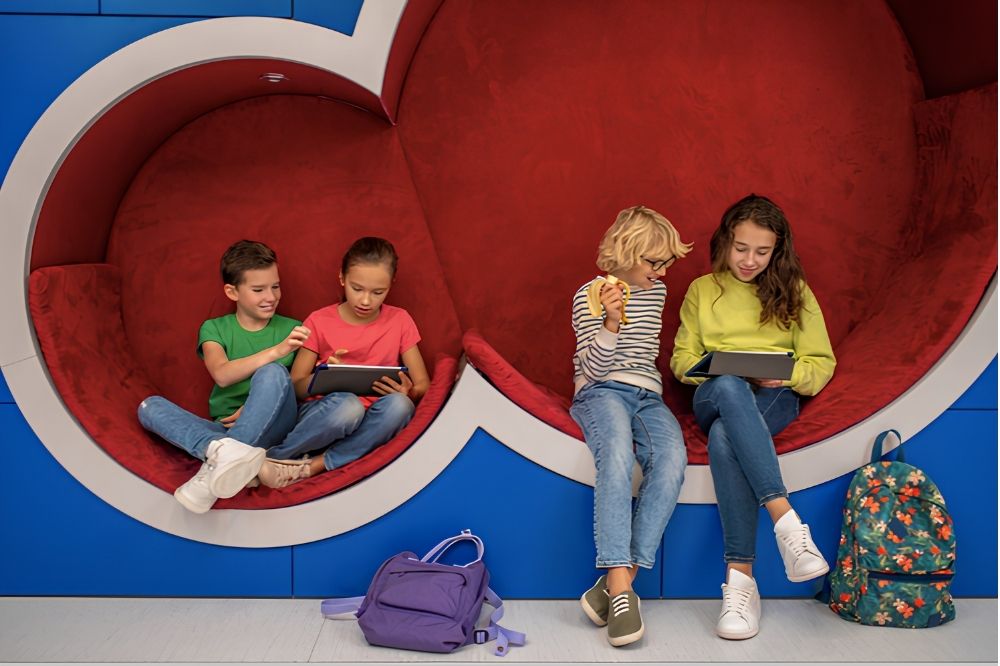
Hallways transform from simple transitional spaces into places where students can collaborate. Other shared spaces become just as versatile and easily transform into presentation stages, study hubs, or meeting points, all depending on the moment and the need.
What makes these areas so flexible is the way they are built. By adding movable partitions, adaptable furniture, and layouts that can change depending on the need, schools reinvent the space and reuse what they have over and over again.
Bringing Nature Into the Learning Experience
The future of educational design is finally becoming a little greener, and students are definitely benefiting from it. More and more schools are incorporating outdoor classrooms, gardens, and spaces for open-air learning because nothing sparks interest more than being out there in the real world.
The interiors of schools are also keeping up with these changes, as architects turn toward natural materials and add large windows and plants to make the space more welcoming and connected to the outdoors.
Greener, well-lit spaces seem more appealing, but they’ve also been linked to improved focus, reduced stress, and an overall better well-being.
Schools as Community Hubs, Not Standalone Buildings
The idea that a school should sit empty after the final bell is slowly becoming outdated. And honestly, it was about time. Nowadays, many new schools are being designed around the idea that a school can be a community hub, active outside the traditional school hours.
It’s a fantastic way to include and strengthen the wider local community by offering shared spaces, for example, a garden or a cultural space. Because schools should be just that – a place where the community can gather to learn and grow together, even beyond traditional classes.
The Next Frontier: Adaptive Spaces for Lifelong Learning
Kids are growing up surrounded by screens, notifications, and endless digital distractions, so trying to keep them engaged and interested in learning might feel like an impossible task on most days. Schools have to work harder than ever to keep up the pace.
No one can say for sure what education will look like ten or twenty years from now. What we do know is that flexibility will matter. The schools that thrive may be the ones that leave room for change instead of trying to predict every future need.
That’s where educational architecture comes in. School buildings built to spark curiosity and tickle kids’ adventurous spirit can do more than support learning; they become an important part of the experience.
