
Teach Mama
  • Reading
  • Early Literacy
  • Writing
  • STEM
  • Activities
  • Digital Literacy
Top Posts
How to Know If Homeschooling Is Right for...
Do Kids Who Grow Up with Pets Have...
Predictable Family Routines Give Children the Extra Mental...
Can Letting Yourself Be Completely Bored at Home...
How Parents Can Support Academic Learning at Home...
How Online Learning Is Opening New Career Paths...
Why Sleep Is the Foundation Every Learning Routine...
Supporting Neurodivergent Learners at Home
From Classroom Skills to Career Certifications: Helping Learners...
How much backyard play does a child need...
Teach Mama
  • Reading
  • Early Literacy
  • Writing
  • STEM
  • Activities
  • Digital Literacy
Teach Mama
Teach Mama
  • reading
  • early literacy
  • writing
  • STEM
  • Activities
  • digital literacy
  • Contact
Simple, Joyful Ways to Raise Globally Minded Kids at Home
Teach Mama Community

More Than a Passport: Simple, Joyful Ways to Raise Globally Minded Kids at Home

by Hannah June 1, 2026
written by Hannah

As parents, we often look at the world map and wonder how we can give our kids a truly global perspective. We want them to grow up curious, empathetic, and aware of the beautiful diversity that exists outside our neighborhood. 

But let’s be honest for a moment. Between managing school schedules, preparing dinner, and handling the daily laundry mountain, planning a massive international vacation isn’t always feasible or realistic. 

How can we bridge that gap without adding more stress to our already packed days?

Honestly, I guess the pressure to be a perfect, worldly educator can feel heavy when you’re just trying to survive the morning rush.

The good news is that raising culturally aware children doesn’t require a passport or an expensive plane ticket. You can weave global education right into the fabric of your daily family life. 

And it starts much closer to home than you think. By using creative, hands-on activities, you can turn your living room into a gateway to the world.

The Power of Global Flavors

One of the easiest and most delicious ways to introduce your kids to a new country is through food. Every culture has its unique comfort foods, spices, and cooking traditions. 

Instead of sticking to the usual weekly meal rotation, you can dedicate one night a week to a specific country.

Involve your children in the entire process. Pick a country together, look up a traditional recipe, and head to the grocery store to find the ingredients. 

Whether you’re rolling out dough for homemade empanadas or learning how to fold a dumpling properly, the kitchen becomes a classroom. Have you ever noticed how food can break down barriers faster than any textbook? 

As you cook, you can discuss where the country is located and what the landscape looks like. It’s amazing how much a simple spice can spark a conversation about history and geography.

Storytime Without Borders

Books have an incredible ability to foster empathy by letting children step into someone else’s shoes. To build a global mindset, take a look at your current home library and see where you can expand. 

Look for children’s books written by international authors or stories that celebrate daily life in other parts of the world.

When you read these stories together, focus on the similarities as well as the differences. What if the best way to teach understanding is simply by reading a bedtime story? 

Your child will notice that even though a character lives thousands of miles away and speaks a different language, they still love playing with their friends, going to school, and spending time with family. 

This realization builds a deep sense of connection to the global community. You know, it is in those quiet bedtime moments that big ideas really sink in.

Creating a Living Cultural Exchange

While books and food are wonderful tools, nothing compares to the impact of personal interaction. Connecting with people from different backgrounds is the most effective way to bring cultural awareness to life for your children.

One beautiful way to achieve this is by welcoming a global perspective directly into your household. Many families find that hosting an intercultural childcare provider offers an immersive educational experience for everyone involved.

For example, families who welcome a live-in au pair into their home find that their children gain a profound, firsthand understanding of another country, and it can help to first use an au pair childcare cost calculator to see how this arrangement fits within the family budget.

Imagine your kids learning traditional songs, hearing a new language spoken naturally at the breakfast table, and celebrating international holidays with someone who grew up with them. 

It transforms cultural education from a passive lesson into a living, breathing part of their daily routine. Maybe that is the real secret to empathy. 

These relationships often blossom into lifelong bonds, showing children that the world is a welcoming place filled with friends they haven’t yet met.

But it goes even deeper than that.

The Rhythm of the World

Music and art are universal languages that transcend borders. You can easily integrate global sounds into your home by changing your daily soundtrack. 

Try playing international music during playtime, or stream a global radio station while your children are working on art projects. I often think about how the hum of the laptop at midnight, while searching for folk songs, turns into morning dancing. 

And that’s the point.

So, where should you start? You can easily explore traditional art forms together. Try your hand at Japanese origami, African textile printing, or Mexican folk art. As your children work with their hands, they learn to appreciate the creativity and craftsmanship of different societies. 

It allows them to see that beauty is expressed in countless different ways across the globe.

Small Steps to a Bigger Worldview

Small Steps to a Bigger Worldview

Raising globally minded children isn’t about doing everything at once. It’s about creating small, intentional moments of discovery. 

It’s about pausing to look at a globe when a foreign country is mentioned in the news, or trying a new fruit at the local market to see what it tastes like. It is a slow, beautiful unfolding of their worldview.

When we show our children that we value and respect other cultures, they learn to do the same. 

We’re helping them build a foundation of curiosity that will serve them for the rest of their lives. 

They start to see diversity not as something strange or distant, but as a beautiful and natural part of our shared human experience.


June 1, 2026 0 comments
0 FacebookTwitterPinterestPocketEmail
How to Turn Errands Into Mini Learning Moments
Teach Mama Community

How to Turn Errands Into Mini Learning Moments

by Hannah May 28, 2026
written by Hannah

Errands may feel ordinary to adults, but for kids, they are full of things to notice, count, read and understand. A grocery run, post office stop, library visit or school errand can become a simple chance to practice real-world skills.

The best part is that these moments do not need special supplies or a formal lesson plan. With a little intention, everyday outings can help children build reading, math, observation, manners, patience and decision-making skills in a natural way.

Start with a simple errand-day mission

Before leaving the house, give your child one small mission. This gives the outing a purpose and helps them stay engaged.

For younger kids, the mission might be finding three red things, counting how many stops are planned or looking for a specific shape. Older kids might help remember what comes next, read a short list or compare two items in the store.

Keep the mission easy and playful. The goal is not to make errands harder. It is to give children something simple to focus on while moving through the day.

Practice early literacy by reading signs and labels

Errands are full of reading opportunities. Store signs, aisle labels, food packaging, street signs, menus and receipts can all become quick literacy practice.

Younger children can look for letters they know, identify colors, recognize logos or listen for beginning sounds. For example, you might ask, “Can you find something that starts with B?” or “Do you see the word milk?”

Older children can read short labels, help find items from a list or compare two packages. These small moments show kids that reading is not just something that happens in books. It is part of everyday life.

Build math skills with counting and comparing

Math is everywhere during errands. Kids can count apples in a bag, compare prices, estimate how many items are in the cart or figure out which line is shorter.

You can also talk about simple math words like more, less, same, first, last, big, small, heavy and light. At the grocery store, a child might compare two boxes of crackers or count how many bananas go into the basket.

Keep it light. You do not need to turn the store into a classroom. A few quick questions can help children practice math in a way that feels useful and fun.

Let kids help with lists and planning

Children love feeling helpful, and errands are a great way to practice planning. Let your child help make a short grocery list, cross off items or check what you already have at home.

Older kids can help group errands by location or decide which stop should happen first. For example, you might ask, “Should we go to the library before or after the grocery store?” This builds sequencing, organization and responsibility.

Even simple participation helps children see that planning makes family life run more smoothly. It also gives them a role in the outing instead of making them feel like they are just being dragged along.

Talk about choices in age-appropriate ways

Errands naturally involve choices. Parents decide what to buy, what to skip, what can wait and what fits the plan for the day. These choices can become gentle learning moments.

You might talk through choosing apples or bananas, picking one snack, waiting for a sale or deciding whether something is a need or a want. For younger kids, keep it simple: “We need bread today, but the cookies are a treat.”

These conversations help children understand that choices are part of everyday life. They also build practical thinking without making money feel scary or stressful.

Practice manners and social confidence

Everyday errands give kids chances to practice social skills in real settings. They can greet a cashier, say thank you, wait in line, hold a door or ask a polite question.

For shy children, these moments can be small and low-pressure. They might start by waving, handing an item to the cashier or saying “thank you” with a parent nearby. Over time, those tiny interactions can build confidence.

Manners are easier to learn when children see them used naturally. Errands provide plenty of chances to practice kindness, patience and respectful communication.

Use waiting time wisely

Waiting is often the hardest part of errands, but it can also become a quick learning moment. Lines, waiting rooms and car stops are perfect for simple games.

Try “I spy,” rhyming games, color hunts, memory games, storytelling or asking your child to predict what happens next. You can count how many people are in line, look for letters on signs or make up a story about where everyone is going.

These games keep kids engaged and make waiting feel shorter. They also help children practice patience without simply being told to be patient.

Family doing grocery

Use parent tools to make errands smoother

Learning moments work best when parents are not completely overwhelmed. A little organization can make errands calmer before you even leave the house.

Shared calendars, grocery apps, digital lists, store accounts, reminders and premium banking rewards can help parents stay organized around planned purchases and family errands. The point is not to buy more or add more tasks. It is to use tools that make routine days easier to manage.

When parents feel more prepared, it is easier to slow down and notice small learning opportunities with kids.

Keep it short and positive

Not every errand needs to become a lesson. Some days, the goal is simply to get in, get what you need and get home.

Choose one or two small learning moments and let that be enough. If your child is tired, hungry or frustrated, it is okay to pause the activity. Learning works best when it feels positive and connected, not forced.

The goal is not perfection. It is to help children notice that the world around them is full of things to learn.

Learning is already happening in everyday life

Children learn through real experiences. They learn by watching, helping, asking questions and practicing small skills again and again.

Errands may seem ordinary, but they offer many chances to read, count, compare, choose, wait and connect. With a little intention, parents can turn everyday outings into simple learning moments that fit naturally into family life.

May 28, 2026 0 comments
0 FacebookTwitterPinterestPocketEmail
Why Your Child’s Phone Needs Better Security Than You Think
Teach Mama Community

Why Your Child’s Phone Needs Better Security Than You Think

by Hannah May 27, 2026
written by Hannah

Smartphones have become a major part of childhood and teenage life, helping kids stay connected with friends, school, games, and family. However, many parents underestimate the security risks these devices face every day. Understanding and addressing mobile security vulnerabilities helps protect your child’s personal information, online activity, and digital identity from increasingly sophisticated threats.

1. Your Child’s Phone Holds More Personal Information Than You May Realize

Today’s smartphones store far more information than most parents or kids recognize. Beyond text messages and photos, children’s devices may contain saved passwords, email accounts, gaming profiles, social media apps, banking or payment information connected to family accounts, school portals, location history, and private conversations with friends and family. According to research on smartphone usage, 97% of Americans own cellphones, with smartphones representing 85% of those devices, making them major targets for cybercriminals. Because a child’s phone often acts as a gateway to family accounts and sensitive personal data, losing control of the device or experiencing a security breach can expose much more than a few pictures or messages.

2. Basic Device Protection Is the First Step Toward Safer Screen Time

Simple security habits can significantly reduce the risk of common mobile threats. Parents should encourage children to use strong lock screens, such as PINs, passwords, fingerprint authentication, or facial recognition instead of simple swipe patterns. Enabling auto-lock settings helps secure devices quickly when left unattended, while remote-wipe and “find my device” features provide additional protection if a phone is lost or stolen. According to cybersecurity experts, keeping operating systems and apps updated remains important because updates frequently patch vulnerabilities that attackers actively exploit. Children should also be taught to install applications only from trusted sources like Apple’s App Store or Google Play Store and avoid downloading unknown apps from third-party websites.

3. Public Wi-Fi and Online Gaming Can Create Hidden Security Risks

Kids and teenagers frequently connect to public Wi-Fi networks at schools, restaurants, airports, hotels, and sporting events without realizing the risks involved. These unsecured networks can expose devices to interception, allowing attackers to steal passwords, messages, or sensitive information. Online gaming platforms and chat features can also introduce security concerns if children click suspicious links or communicate with strangers.

When public Wi-Fi use is unavoidable, using a VPN encrypts internet traffic, hides IP addresses, and helps protect browsing activity from hackers or “man-in-the-middle” attacks. VPNs create secure connections that make it much more difficult for cybercriminals to intercept personal information, even when connected to compromised networks.

4. Modern Mobile Threats Are Becoming More Sophisticated

Mobile security threats extend far beyond stolen phones or weak passwords. Today’s dangers include malicious apps disguised as games or entertainment tools, spyware secretly tracking activity, phishing messages pretending to come from friends or trusted companies, and malware designed to steal login credentials or personal information. Mobile security threats continue to evolve rapidly, with attackers increasingly targeting smartphones because of the amount of personal data they contain.

Children and teenagers may be especially vulnerable because they are more likely to click unfamiliar links, download trending apps quickly, or trust online messages without questioning their legitimacy. Many attacks now focus on maintaining long-term access to devices rather than carrying out a single breach, allowing criminals to monitor activity or collect information over extended periods without detection.

Teaching Kids About Mobile Security Matters More Than Ever

Teaching Kids About Mobile Security Matters More Than Ever

Protecting children online requires more than installing security tools. Parents should regularly discuss safe browsing habits, explain why suspicious links and downloads can be dangerous, and encourage kids to report anything unusual on their devices. Building good digital habits early can help children better recognize online threats as they grow older.

Mobile security requires ongoing attention and layered defenses to protect against both common risks and evolving cyber threats. Taking proactive steps today can help keep your child’s personal information, online accounts, and digital life safer in an increasingly connected world.

May 27, 2026 0 comments
0 FacebookTwitterPinterestPocketEmail
Parent’s Guide to Managing Unexpected Family Expenses
Teach Mama Community

A Parent’s Guide to Managing Unexpected Family Expenses

by Hannah May 26, 2026
written by Hannah

Unexpected expenses have a way of showing up at the worst possible time. One week, the family budget feels manageable. The next, the car needs repairs, a child needs dental work, the washing machine stops working, or a school activity fee is due sooner than expected.

For parents, these surprise costs can feel especially stressful because they often affect the entire household. It is not just about finding the money. It is about keeping routines steady, making sure children have what they need, and trying not to let financial pressure spill into everyday family life.

The good news is that an unexpected expense does not have to turn into a long-term financial setback. With a calm plan, clear priorities, and a realistic look at your options, you can handle surprise costs while protecting your family’s stability.

Why Unexpected Family Expenses Feel So Overwhelming

Family budgets are often already doing a lot of work. Housing, groceries, transportation, insurance, utilities, school supplies, childcare, and activities can take up most of a household’s monthly income. Even families who budget carefully may not have much extra room when something sudden happens.

Unexpected costs also come with emotional pressure. If your child needs medical care, your car is the only way to get to work, or your home needs an urgent repair, it is hard to think about the situation calmly. Parents naturally want to fix the problem quickly.

That urgency is understandable, but it can also lead to rushed decisions. Taking a little time to assess the expense, even if only for an hour, can help you avoid choices that create more stress later.

Identify the Type of Expense

Some surprise costs are true emergencies, while others are simply unplanned expenses. A medical bill, an urgent car repair, a broken refrigerator, an emergency childcare need, or a sudden home repair may require quick action. Other costs, such as sports registration, school trips, replacement clothing, or new electronics for school, may feel urgent but offer more flexibility.

Before deciding how to pay, ask yourself whether the expense affects your family’s health, safety, housing, transportation, or ability to work. If it does, it should probably move to the top of the list. If it does not, you may be able to delay it, reduce it, or look for a lower-cost alternative.

This step is not about ignoring the expense. It is about matching your response to the situation. Not every unexpected cost deserves the same level of financial pressure.

Review Your Budget Before Choosing a Payment Option

Before using savings, borrowing money, or putting the expense on a credit card, take a fresh look at your current budget. Check what bills are coming due, how much cash is available, and whether there are flexible categories you can temporarily reduce.

For example, you may be able to pause takeout, entertainment, subscriptions, extra shopping, or nonessential purchases for a few weeks. These small changes may not fully cover a major expense, but they can reduce the amount you need to pull from savings or finance elsewhere.

It can also help to look ahead. If next month is lighter financially, you may have more room to adjust. If the next few months are already tight, you may need a more cautious plan.

Compare Your Options Carefully

Once you understand the expense’s size and urgency, compare the options available to you. Savings may be the simplest choice if you have enough set aside and can still cover essentials afterward. Some providers, such as medical offices, schools, mechanics, utility companies, or repair services, may offer payment plans. In certain situations, community programs, employer benefits, family support, or local assistance may also be available.

When a cost is too large to cover immediately, such as a major home repair, medical bill, or necessary replacement appliance, parents may consider whether a loan for big expenses makes sense, but it should be compared carefully against payment plans, interest rates, fees, repayment terms, and the family’s ability to manage the monthly payment without adding more stress.

The key is to avoid choosing the fastest option simply because it is available. A payment method that feels easy today may become difficult later if the repayment terms do not fit your budget.

Avoid Panic-Based Financial Decisions

Unexpected expenses can leave parents feeling cornered, especially when the cost is tied to a child’s needs or the family’s daily routine. In that moment, it may be tempting to use the first credit offer, skip another bill, drain all savings, or agree to a payment plan without reading the details.

Try to slow the decision down. Read the terms. Ask about fees. Find out whether there are penalties for late payments. If you are borrowing, make sure you know the total repayment amount, not just the monthly payment.

It is also worth contacting service providers directly. Medical offices, schools, repair companies, and utility providers may be more flexible than expected, especially if you communicate early. A short conversation can sometimes open up options you would not have known about otherwise.

Rebuild After the Expense

After the immediate problem is handled, give your budget time to recover. If you used savings, start rebuilding slowly. Even a small automatic transfer each week can help restore your emergency fund over time.

If you took on a payment plan or borrowed money, add the repayment amount to your monthly budget right away. Treat it as a fixed expense until it is paid off. If extra money comes in from a tax refund, bonus, side job, or selling unused items, consider putting some of it toward the balance or your emergency savings.

Recovery does not have to happen all at once. The goal is to regain stability without creating new pressure.

Prepare for Future Surprises

No family can predict every expense, but you can make surprise costs easier to manage. Start by building a small emergency fund, even if it grows slowly. A few hundred dollars can make a meaningful difference when a smaller repair, school fee, or medical copay comes up.

It also helps to create simple savings categories for predictable but irregular expenses. Car maintenance, school activities, holidays, clothing, home repairs, and medical costs may not occur every month, but they do. Setting aside a little at a time can prevent these costs from feeling like emergencies later.

Keep warranties, insurance details, important receipts, and provider contact information in one place. When something goes wrong, having documents ready can save time and reduce stress.

Final Thoughts

Unexpected family expenses are stressful, but they are also normal. A surprise bill does not mean you have failed at budgeting or planning. It simply means family life is full of moving parts, and sometimes those parts cost money at inconvenient times.

The best approach is to pause, prioritize, compare your options, and make the choice that protects your family now without creating unnecessary stress later. With a calm plan and a few practical habits, parents can handle unexpected expenses with more confidence and less panic.

May 26, 2026 0 comments
0 FacebookTwitterPinterestPocketEmail
What Makes a Student Feel Seen, Heard, and Supported at School
Teach Mama Community

What Makes a Student Feel Seen, Heard, and Supported at School?

by Hannah May 26, 2026
written by Hannah

Many students go through an entire school day without feeling noticed. They attend classes, complete assignments, and follow instructions, yet still feel disconnected from the people around them. Educators often focus heavily on grades, behavior, and performance targets, but students pay close attention to something else: how adults treat them every day. A student who feels respected and understood usually participates more, asks for help sooner, and develops stronger confidence in the classroom. That sense of support can shape attendance, motivation, and even long-term academic success. Schools that create meaningful connections with students tend to build healthier learning environments overall. 

When Students Feel Personally Recognized

Students notice when teachers remember small details about them. A teacher asking about a soccer game, favorite book, or weekend activity sends a clear message that the student matters beyond grades and attendance records. These moments help students feel more comfortable participating in class because the relationship feels real instead of formal. Many students become guarded when they believe adults only speak to them during discipline issues or academic concerns. Personal recognition changes that dynamic quickly. It creates familiarity and trust, especially for students who struggle socially or academically. Teachers do not need lengthy conversations every day to build these connections. Simple interactions before class, during transitions, or after assignments can have a lasting effect. 

Flexible Teaching Helps More Students Succeed

Flexible instruction helps students stay connected to learning instead of feeling frustrated or left behind. Teachers who adjust assignments, participation methods, or lesson formats often reach students who struggle in traditional settings. Flexibility also supports students dealing with stress, learning differences, or language barriers. Many educators strengthen these teaching skills through professional development and programs like an online Masters in Education, where they study inclusive classroom strategies and differentiated instruction. Small adjustments often create meaningful improvements in engagement. Students become more confident when classrooms give them realistic ways to succeed without making them feel singled out or academically incapable.

Safe Spaces Encourage Honest Participation

Students hold back when they fear embarrassment. Many stay quiet because they worry about giving the wrong answer, being laughed at, or disappointing their teacher. A supportive classroom reduces that fear by making participation feel low-pressure and respectful. Teachers shape this environment through their reactions. Students pay attention to tone, facial expressions, and how mistakes are handled in front of peers. A calm response to incorrect answers encourages students to keep trying instead of shutting down. Teachers who allow time for discussion and thoughtful responses usually hear from more students over time. Participation also improves when classrooms avoid constant competition between students. Children and teenagers learn better when they feel emotionally safe. Students who trust their classroom environment are more likely to ask questions, share opinions, and stay involved in learning activities.

Listening Builds Stronger Student Trust

Students quickly recognize when adults are distracted during conversations. Looking away, interrupting, or rushing through discussions can make students feel dismissed, even if that was never the intention. Active listening builds stronger relationships because it shows students that their thoughts deserve attention. This matters especially during difficult situations involving stress, behavior concerns, or personal struggles. Students often reveal important information slowly, particularly when they are uncertain about how adults will respond. Teachers who listen carefully create opportunities for honest communication. Small habits can improve these interactions significantly. Maintaining eye contact, allowing pauses, and asking follow-up questions helps students feel respected. Listening also improves classroom management because students become more willing to cooperate with adults they trust. Strong communication often prevents problems from growing larger later because students feel more comfortable speaking openly early on.

Giving Students More Ownership in Class

Students respond differently when they feel involved in their own learning process. Small choices inside the classroom can increase participation and motivation because students feel trusted instead of controlled. Teachers do not need to redesign entire lesson plans to create this sense of ownership. Allowing students to choose between project formats, discussion topics, or reading materials can make classroom activities feel more personal and engaging. Many students become more invested when they feel their opinions carry weight. Ownership also encourages responsibility because students start seeing classroom success as something they actively shape. This approach works particularly well for students who seem disconnected or uninterested during lessons. They often participate more when learning feels relevant to their preferences and strengths. Giving students appropriate control helps classrooms feel more collaborative and respectful overall.

Taking Social Problems Seriously

Students struggle academically when they feel isolated, excluded, or unsafe around peers. Social experiences affect concentration, attendance, and classroom participation more than many adults realize. Bullying does not always appear through obvious conflict. Some students experience exclusion through group work, lunchroom dynamics, online behavior, or repeated social rejection. Teachers and school staff need to pay attention to these quieter patterns because students often avoid reporting them directly. Fast and consistent responses matter. Students lose trust in adults when harmful behavior gets ignored or minimized. Schools create healthier environments when they encourage respectful peer interactions from the beginning instead of waiting for major problems to develop. Students also benefit from opportunities to build connections naturally through collaborative activities, mentorship programs, and supportive classroom discussions where every student feels included and acknowledged by others.

Looking Beyond Academic Performance

Students sometimes show emotional stress through behavior changes rather than direct conversations. A student who suddenly stops participating, misses assignments, or becomes disruptive may be dealing with anxiety, family problems, exhaustion, or social pressure outside school. Teachers are often the first adults to notice these changes because they interact with students regularly throughout the week. Paying attention to patterns helps schools provide support earlier. Educators do not need to become counselors to make a meaningful difference. Simple actions such as checking in privately, offering flexibility during difficult moments, or connecting students with school support staff can help students feel understood instead of judged. Emotional support also improves learning outcomes because students focus better when they feel stable and supported. Schools that recognize student well-being as part of education usually build stronger relationships and healthier classroom environments overall.

Students thrive when schools create environments where they feel respected, understood, and supported as individuals. Academic success becomes easier when students trust the adults around them and feel comfortable participating in class. Small daily actions often shape those experiences more than formal programs or large initiatives. Listening carefully, encouraging effort, responding to social concerns, and building meaningful relationships all help students feel connected to school. These practices also strengthen classroom culture and improve communication between students, teachers, and families. Supportive schools do not happen by accident. They develop through consistent choices that prioritize student well-being alongside academic growth. When students feel seen and heard, they become more confident learners and more engaged members of their school community.


May 26, 2026 0 comments
0 FacebookTwitterPinterestPocketEmail
How to Study Effectively When You Have Kids
Teach Mama Community

How to Study Effectively When You Have Kids

by Hannah May 21, 2026
written by Hannah

Trying to study while raising kids is a very different experience from anything that came before. It’s not just about finding time, it’s about managing interruptions, mental load and the constant pull of competing priorities. Even the most motivated parents can find themselves staring at a book after bedtime, too tired to focus. 

In reality, most traditional study advice wasn’t designed with parents in mind. Long uninterrupted blocks of time and perfectly structured schedules sound great in theory, but they rarely hold up in real time. What does work is a more flexible and realistic approach, one that fits around your family instead of competing with it. 

Choosing the right education path 

Before you think about study schedules or productivity hacks, it’s worth stepping back and looking at the bigger picture. The type of program you choose can either make your life easier or a lot harder. 

Some courses still rely on rigid timelines, fixed class hours and heavy weekly demands that leave little room for family life. For parents, that kind of structure can quickly become overwhelming. On the other hand, many modern programs are designed specifically for working adults, offering online access, part-time pacing and more control over when and how you study. 

For those already working in structured fields like healthcare, this flexibility can be especially important. Continuing education often needs to fit around both a job and a family. Options like a PNP post masters certificate are designed with that reality in mind, allowing parents to pursue advanced training in pediatric care without stepping away from their responsibilities. Choosing a path that fits your life might not make it easier, but it will make your goals possible.  

Rethink what “study time” looks like 

One of the biggest mindset shifts for parents is letting go of the idea that studying requires long, uninterrupted hours. In reality, those hours are hard to come by and waiting for them can slow your progress. 

Instead, it helps to think in smaller and more flexible chunks of time. A focused 20-minute session during a quiet moment can be just as effective as a longer block when you’re distracted or exhausted. 

You might find yourself: 

  • Reviewing notes while dinner is in the oven
  • Listening to lectures during school pick-up lines
  • Reading a few pages before bed instead of pushing for an entire chapter 

It might not look like traditional studying, but over time, it can be extremely effective. 

Building a routine around your child

Every family has its own rhythm. And the more you can work with that rhythm, the better. Trying to force a rigid study schedule onto an unpredictable day often leads to frustration. 

Instead, look for natural openings: 

  • Early mornings before the house wakes up
  • Nap times or quiet play periods
  • Evenings after bedtime 

Some days will go smoothly, others won’t. That’s part of the process. Flexibility isn’t a backup plan; it should be your strategy. 

Lower the pressure

It can be easy to feel like you’re not doing enough, especially if you remember what studying looked like before you had kids. But holding yourself to that same standard can quickly lead to burnout. 

Progress as a parent often looks different. It’s slower, less predictable and sometimes messy. But it’s still progress. Letting go of perfection doesn’t mean lowering your goals. It just means adjusting your expectations so you can keep moving forward, even on difficult days. 

Protect your energy, not just your time 

Time is important, but energy is often the real limiting factor. Sitting down to study when you’re completely drained rarely leads to productive work. Pay attention to when you feel more alert. For some parents, that’s early in the morning. For others, it’s a window of time in the afternoon or even later in the evening. Protecting those moments, even if they’re short, can make a big difference. It’s also ok to rest. Pushing through exhaustion might feel productive in the moment, but it’s rarely sustainable. 

Let your kids see you learning

There’s an unexpected benefit to studying as a parent: your kids are watching. When they see you reading, taking notes or working toward a goal, they begin to understand that learning doesn’t stop when you become an adult. You don’t have to make a big deal out of it. Simply letting them see the process can quietly shape how they think about learning themselves. 

It’s not easy, but it’s possible 

Balancing education and parenting isn’t simple. It requires you to be patient, flexible and willing to adapt. Some days will feel more productive than others. But over time, those small efforts build into something more meaningful. With the right approach and the right kind of program, it’s entirely possible to keep learning while raising a family. Not perfectly, not effortlessly, but in a way that works for you. 

May 21, 2026 0 comments
0 FacebookTwitterPinterestPocketEmail
How to Maintain a Fresh, Toxin-Free Home Environment
Teach Mama Community

How to Maintain a Fresh, Toxin-Free Home Environment

by Hannah May 21, 2026
written by Hannah

Creating a home that feels clean, fresh, and free from harmful toxins has become a growing priority for many households. With increased awareness of indoor air quality and the effects of chemical exposure, more people are looking for ways to maintain their living spaces without relying on harsh or potentially harmful substances. The goal is not just cleanliness, but a balanced environment that supports both health and comfort.

Indoor environments can often contain higher concentrations of pollutants than outdoor spaces, due to limited ventilation and the accumulation of cleaning residues, dust, and everyday contaminants. By focusing on smarter habits, better airflow, and more thoughtful product choices, it’s possible to maintain a home that feels naturally fresh and safe for daily living.

Understanding Where Toxins Come From

Toxins in the home can originate from a variety of sources, including cleaning products, cooking residues, smoke, and even materials used in furniture or flooring. Over time, these elements can build up, affecting both air quality and overall comfort.

Research shows that indoor air pollution is a significant concern, with common household activities contributing to airborne contaminants.

Understanding these sources is the first step toward reducing exposure. By identifying where pollutants originate, homeowners can make more informed decisions about how to manage and eliminate them effectively.

Improving Airflow and Ventilation

One of the simplest and most effective ways to reduce toxins is by improving airflow. Proper ventilation helps remove pollutants and brings in fresh air, creating a healthier indoor environment.

Opening windows, using exhaust fans, and allowing air to circulate regularly can significantly lower the concentration of airborne particles. Even small changes, such as ventilating during cooking or cleaning, can make a noticeable difference.

Airflow also plays a role in preventing moisture buildup, which can contribute to mold and other issues that impact air quality.

Maintaining Clean Surfaces Without Harsh Chemicals

Clean surfaces are essential, but the products used to achieve that cleanliness matter just as much. Many conventional cleaning solutions contain chemicals that can leave behind residues or release volatile compounds into the air.

Adopting methods inspired by practices such as commercial kitchen floor maintenance highlights the importance of thorough, consistent cleaning routines that remove buildup effectively rather than masking it. These approaches focus on proper technique and equipment, ensuring surfaces are genuinely clean without unnecessary chemical exposure.

Choosing gentler cleaning solutions and focusing on technique can reduce the need for strong chemicals while still maintaining high hygiene standards.

Eliminating Odors at the Source

Eliminating Odors at the Source

Odors often signal the presence of underlying contaminants, whether from cooking, smoke, or everyday activities. Simply masking these smells does not address the root cause.

Targeted solutions, such as using a best smoke odor eliminator for home, work by neutralizing odor-causing particles rather than covering them up. This approach contributes to a more genuinely fresh environment.

Regular cleaning of fabrics, ventilation systems, and high-use areas also helps prevent odors from becoming embedded over time.

Reducing Dust and Allergens

Dust is more than just a surface issue, it can carry allergens, pollutants, and particles that affect indoor air quality. Regular removal is essential for maintaining a healthy environment.

Frequent vacuuming, wiping surfaces, and washing textiles such as curtains and bedding help reduce buildup. Using tools designed to capture fine particles can further improve results.

Consistent dust control not only improves cleanliness but also supports respiratory health, especially in households with pets or allergy sensitivities.

Creating Consistent Cleaning Habits

A toxin-free home is not achieved through occasional deep cleaning, but through consistent daily habits. Small, regular actions prevent buildup and maintain a stable environment.

Establishing routines for cleaning, airing out spaces, and managing waste helps keep the home fresh without requiring excessive effort. Over time, these habits become part of daily life, making cleanliness easier to maintain.

Consistency also allows homeowners to identify potential issues early, preventing them from becoming larger problems.

Supporting Long-Term Indoor Health

Maintaining a fresh, toxin-free home is ultimately about long-term balance. By combining proper ventilation, effective cleaning techniques, and targeted odor control, it’s possible to create a space that supports both physical health and everyday comfort.

Research in environmental health consistently emphasizes that reducing indoor pollutants, improving airflow, and maintaining clean surfaces are key factors in supporting long-term well-being. These strategies work together to create a home environment that feels clean, safe, and sustainable over time.

May 21, 2026 0 comments
0 FacebookTwitterPinterestPocketEmail
How strong school leadership helps students and teachers thrive
Teach Mama Community

How strong school leadership helps students and teachers thrive

by Hannah May 21, 2026
written by Hannah

Schools don’t run on curriculum alone. What happens day to day depends a lot on how a school is led. Leadership shapes routines, expectations and how people respond when things don’t go to plan. Sometimes it shows up in small ways, like a quick check-in with a teacher or how a situation is handled before it escalates. Leadership influences how supported teachers feel, how consistent classrooms are and how students experience learning across the school. You don’t always notice it straight away, but the difference becomes clearer as routines settle. Many educators develop these skills over time, often through experience and through leadership-focused study such as an EdD in educational leadership, while continuing their work in schools.

What strong school leadership looks like day to day

Strong leadership isn’t only about major decisions. Most of it happens in everyday moments that are easy to overlook. A leader might step into a classroom situation early, before it becomes disruptive, or set expectations clearly at the start of a term so teachers aren’t left guessing. These things don’t stand out on their own, but together they create stability. Consistency plays a big role here. When staff know how situations will be handled, it removes uncertainty and students benefit from that too. Clear routines and predictable responses help create an environment where fewer things feel out of control.

That doesn’t mean everything runs smoothly. Schools deal with a mix of situations every day and some of them are unpredictable. The response matters. One unclear decision can create confusion across multiple classrooms, while a steady response can settle things quickly. Research continues to show how important this is, with school leadership remaining one of the biggest influences on student learning, second only to classroom teaching. It explains why leadership has such an impact, even when it sits in the background.

How leadership affects teachers and classrooms

Leadership has a direct effect on teachers and that usually shows in the classroom fairly quickly. When teachers feel supported, they tend to be more confident in how they run lessons and handle challenges. When that support is inconsistent, uncertainty starts to build. Support isn’t just about resources. It’s how communication works, how feedback is given and how problems are handled when they come up. Teachers often look to leadership when behavior becomes difficult or when expectations shift mid-term.

You might see this as a parent when classrooms feel very different from one year to the next. In schools with strong leadership, expectations stay more consistent, so students don’t have to keep adjusting to completely new systems each time they move up a year. There’s also the way teachers work together. In schools with clear leadership, collaboration tends to happen more naturally, with teachers sharing what’s working and supporting each other when something isn’t going well. That shows up in the classroom, where teaching feels more aligned and students know what to expect.

Why school leaders need to keep learning

Education doesn’t stay still. New tools, changing expectations and different approaches all shape how schools operate, even if those changes happen gradually. Leaders are expected to keep up with that while still managing the day-to-day running of a school. Some decisions affect long-term planning, while others need to be made quickly, often with limited information. There isn’t always a clear answer and what works in one school might not work in another.

Over time, leaders develop ways of handling this. It becomes less about following a set approach and more about responding to what’s in front of them. Large-scale research shows leadership has a measurable impact on student outcomes, though it rarely appears all at once. More often, it builds through consistent decisions that shape the environment over time.

Flexible pathways for educators moving into leadership

Moving into leadership doesn’t always mean stepping away from teaching straight away. Many educators take on more responsibility while still working in the classroom, which can make further study difficult if it requires leaving a role. Online learning has changed that. For educators already working toward leadership roles, an EdD in educational leadership offers a way to build those skills alongside day-to-day responsibilities, allowing ideas to be tested in real situations rather than kept separate from practice.

Flexibility also opens up access. Educators with different schedules, or those based in smaller schools, have more options than they used to. Not everything works perfectly the first time and some approaches need adjusting, but that’s part of the process. Over time, this has widened the pathway into leadership in a way that wasn’t always possible before.

What this means for students and families

Leadership might not be the first thing families think about, but it affects the school experience in ways that are easy to notice over time. A well-led school often feels calmer and more organized, with clearer communication and more consistent responses when problems come up. That sense of stability makes a difference.

For students, it creates a more predictable environment where they can focus on learning rather than uncertainty. For parents, it often means fewer surprises and more confidence in how the school operates.

Leadership shapes the school experience over time

Leadership doesn’t just affect policies or planning. It shapes how a school feels on a daily basis and that environment builds gradually through small, repeated actions. How communication is handled, how staff are supported and how challenges are approached all play a part.

Small moments carry more weight than they seem. A quick decision, a clear response, or even a short conversation can influence what happens next. Strong leadership doesn’t remove every challenge, but it creates conditions where teachers can focus on teaching and students can focus on learning. That difference builds.

May 21, 2026 0 comments
0 FacebookTwitterPinterestPocketEmail
How Online Accelerated BSN Programs Are Reshaping Second-Career Entry into Nursing
Teach Mama Community

How Online Accelerated BSN Programs Are Reshaping Second-Career Entry into Nursing

by Hannah May 21, 2026
written by Hannah

Online accelerated Bachelor of Science in Nursing programs have opened a compelling path for adults who want a second career in healthcare, particularly across the United States, where demand for registered nurses continues to rise, with the U.S. Bureau of Labor Statistics projecting about 189,100 job openings for registered nurses each year over the next decade. 

You might reach a point where meaningful work feels more important, where nursing stands out with its blend of purpose, stability and human connection. 

Traditional four-year nursing degrees once created barriers for career changers, as time commitments conflicted with existing responsibilities. Accelerated options with online coursework now create a more efficient transition, so you can build on your prior education without starting from the beginning. 

This shift expands access to nursing education, as professionals from business, education or technology bring valuable insight into patient care. As a result, the pathway into nursing feels more practical, more achievable and more aligned with the realities of adult life.

What makes accelerated BSN pathways distinct

The defining feature of BSN accelerated programs lies in how they build directly on your existing bachelor’s degree, where your previous academic work becomes a foundation for rapid progress. 

Most programs across the United States can be completed within 12 to 18 months, which allows you to transition into nursing far more quickly than traditional routes. General education courses are removed from the curriculum, so your focus stays on nursing science, clinical reasoning and patient-centered care. 

Admission standards remain competitive, as programs expect a solid academic record along with prerequisite coursework in anatomy, physiology and microbiology. This structure creates an intensive academic experience, but it also attracts individuals who are motivated to commit fully to the process. 

When you enter one of these programs, you engage in a focused track that values your prior achievements, where your time feels respected as you move toward a new professional identity.

The rise of online and hybrid learning models

Online accelerated BSN programs operate through a hybrid model, so you gain flexibility without losing the essential hands-on training required for safe nursing practice. 

Coursework such as lectures, discussions and assignments takes place online, which allows you to organize study time around your existing responsibilities. Clinical rotations and lab simulations occur in person, so you still develop practical skills under supervision in real healthcare settings. 

This combination creates a balanced structure, as theoretical knowledge pairs with direct patient care experience. Universities across the country have expanded these offerings as digital platforms support high-quality instruction for complex subjects. You benefit from this model, as it reduces the need for relocation or drastic lifestyle changes. 

Over time, this approach has helped more adults pursue nursing, so education aligns more closely with the pace and structure of modern professional life.

Why career changers are driving growth

Second-career students form a significant portion of accelerated nursing cohorts, as many professionals seek work that feels more impactful and personally rewarding. You might come from a completely different field, but your existing skills still carry value in nursing practice. 

Communication, leadership and problem-solving abilities transfer effectively into patient care, so your background strengthens your role. Accelerated programs recognize this advantage, as they are designed to incorporate prior education and life experience into a focused curriculum. 

Today, strong job prospects across the nursing field add another layer of appeal, as healthcare systems continue to need skilled professionals in large numbers. This combination of purpose and stability makes the transition feel grounded in reality. 

When you consider a shift into nursing, you are not actually starting over, as you are building forward with intention and clarity.

Challenges and expectations of an intensive format

The pace of an accelerated BSN program demands consistent effort, so it is important to understand the level of commitment required before you begin. 

Coursework is condensed into shorter academic terms, which means assignments, exams and clinical hours arrive quickly and require steady attention. Many students treat the program as a full-time responsibility, as the workload can feel comparable to a demanding job. 

Clinical placements add another layer of responsibility, so you balance hands-on training with academic expectations throughout the program. Here, time management becomes essential, as each week carries multiple priorities that must be handled carefully. This intensity can feel overwhelming at times, although it also reflects the realities of nursing practice where adaptability matters. 

Ultimately, when you stay organized and focused, you build resilience that supports your transition into professional nursing with confidence and competence.

A transformative pathway into modern nursing

Online accelerated BSN programs have changed how adults approach entry into nursing by offering a pathway that aligns with contemporary career transitions and personal responsibilities.

You gain the ability to pivot into healthcare without sacrificing years, so your decision feels both strategic and meaningful. These programs also strengthen the nursing workforce, as individuals from diverse professional backgrounds contribute broader perspectives to patient care. 

Healthcare systems benefit from this diversity, as varied experiences support more thoughtful and adaptable care delivery. For you, the nursing journey becomes more than a career change, as it represents a deliberate move toward purpose-driven work. 

With the right preparation and commitment, this pathway provides a clear route forward, where you can stride into a profession that values your past experience and your future potential in equal measure.

May 21, 2026 0 comments
0 FacebookTwitterPinterestPocketEmail
Could Helping Kids Communicate Become Your Next Career
Teach Mama Community

Could Helping Kids Communicate Become Your Next Career?

by Hannah May 21, 2026
written by Hannah

Employment for speech-language pathologists is projected to grow 15% from 2024 to 2034, according to the U.S. Bureau of Labor Statistics Occupational Outlook Handbook, published August 27, 2025. If you have spent years reading with children, noticing speech milestones, sitting through school meetings or helping a child find the words they need, that figure may mean something to you.

For parents, educators, tutors and caregivers, communication has been part of daily life for years. You may have helped a child slow down, try again, retell a story or explain a feeling that came out all tangled. Speech-language pathology takes that concern for communication and gives it a professional path; one built through graduate study, supervised clinical practice and state licensure.

Let’s walk through what the career involves, why schools need this kind of support and how online speech language pathology programs can make the route feel more possible for adults with full lives.

The Words Kids Need

Speech-language pathologists assess and treat people with communication disorders, according to the U.S. Bureau of Labor Statistics. In everyday terms, that can mean helping someone work on speech sounds, language, fluency, voice, communication confidence or related needs, depending on the person and setting.

If you’re a parent, you already know communication can touch almost every part of a child’s day. A child who can ask for help has a better chance of joining the lesson. Being able to explain what happened on the playground improves the odds of being understood. Following a story, answering a question or saying a tricky sound with more confidence may open the door to new kinds of participation.

That doesn’t mean parenting experience is the same as clinical training. It’s not.

Still, it can give you a meaningful starting point. You may already have the patience to wait for a child’s answer, the curiosity to notice patterns and the respect to understand that communication grows at different speeds. Professional speech-language pathology adds the science, structure, supervised practice and licensing requirements needed to do the work responsibly.

The career is also broader than many people realise. BLS notes that speech-language pathologists work in schools, private practice, hospitals and nursing or residential care facilities. So while you may first think of children in classrooms, the profession also supports people across ages and settings.

That breadth can be reassuring. If you’re exploring this field, you’re not looking at one narrow doorway. You’re looking at a profession with several kinds of work, all tied to helping people communicate more fully.

Flexibility With Footing

Online programs appeal to many adults for a simple reason: life does not pause because you’re ready for a new chapter. You may have work hours, school pickups, caregiving responsibilities, bills and a calendar that already feels packed.

A flexible program can help make graduate study easier to consider. For example, Ithaca College describes its online MS-SLP pathway as part-time, with fully online coursework, virtual simulations, in-person clinical experiences near the student’s community and no required campus visits or travel. That kind of structure can be especially relevant if you cannot relocate or step away from family responsibilities.

Still, flexibility deserves clear thinking. Online does not mean light, and it does not remove the professional requirements.

BLS states that speech-language pathologists typically need at least a master’s degree in speech-language pathology. All states require speech-language pathologists to be licensed, with requirements that vary by state and typically include clinical experience and passing an exam. You can also review certification standards through the American Speech-Language-Hearing Association as you compare programs.

Before applying, it helps to ask practical questions early:

  • Is the program accredited and appropriate for your career goal?
  • How are clinical experiences arranged, especially if you live far from campus?
  • Does the program prepare students for licensure in your state?
  • What is the expected weekly workload for part-time students?
  • What prerequisites are required before admission?

Those questions are not meant to discourage you. They protect your time, money and energy. They also help you compare programs with clearer eyes, rather than choosing based only on convenience.

Schools Still Need Helpers

If you’re reading as a parent, the school connection may be the easiest one to feel. Many families already know the language of reading support, IEP conversations, classroom participation and related services.

The need is substantial. The National Center for Education Statistics reported in May 2024 that 7.5 million students ages 3 to 21 received special education or related services under IDEA in 2022–23, equal to 15% of all public school students. NCES uses U.S. Department of Education IDEA Section 618 data and the Common Core of Data for this reporting.

Speech and language needs are a major part of that picture. In 2022–23, speech or language impairments accounted for 19% of students served under IDEA. NCES also explains that IDEA defines speech or language impairment as a communication disorder, such as stuttering, impaired articulation, a language impairment or a voice impairment, that adversely affects a child’s educational performance.

One detail is especially helpful to understand. In fall 2022, 89% of students served under IDEA for speech or language impairments spent 80% or more of their school day in general classes. That means communication support often connects directly to everyday classroom life.

It may show up in how a child answers during morning meeting, follows directions during reading, joins a small-group activity or explains what they know on an assignment. The work can feel technical, but its purpose is familiar to anyone who wants children to be heard, understood and included.

So, if communication affects how a child learns, connects, participates and asks for help, what would it mean to make that support your life’s work?

A Career With Purpose

Speech-language pathology can be a hopeful career path because it connects practical demand with work that feels personal. BLS projects about 13,300 openings for speech-language pathologists each year, on average, from 2024 to 2034. The median annual wage for speech-language pathologists was $95,410 in May 2024, though pay can vary by setting, location and experience.

If you’re a parent, tutor, classroom aide or career changer, the first step does not have to be dramatic. It can be research. Learn what SLPs do, compare accredited programs, check your state’s licensure rules and ask how clinical placements work. Think honestly about your time, your support system and your reason for pursuing the field.

Online programs can make the path more accessible for some adults, especially if you need study to fit around real life. The strongest choice is the one that balances flexibility with professional preparation.

May 21, 2026 0 comments
0 FacebookTwitterPinterestPocketEmail
How Play Helps Kids Learn And Protects Their Mental Health
Teach Mama Community

How Play Helps Kids Learn And Protects Their Mental Health

by Hannah May 21, 2026
written by Hannah

Play is often thought of as the process that children go through once they have done their “proper learning.” This approach seems sensible at first glance, yet all available research indicates quite the opposite. Play is one of the most prominent processes for testing theories, practicing language, memorizing, emotional regulation, problem-solving, and understanding the perspective of others.

To illustrate what play is and what role it plays in learning and cognitive development, Studyfy has summarized data from studies related to pediatrics, education, and child development. One of the most evident findings here is that play is not merely an extra activity. On the contrary, it is a necessary condition for any proper learning.

The information about this phenomenon is relevant for both parents and students. First, learning does not take place exclusively through completing tasks from textbooks. Parents assisting their children in constructing a tower, Studyfy helping them with their “Do my project!” pleas, and older students developing a creative presentation are all involved in the learning process. 

Play Helps Develop The Brain Through Active Exploration

According to the American Academy of Pediatrics, play is vital for the development of children and helps develop their cognitive, physical, social, and emotional well-being. Moreover, according to its clinical report, playful interactions between parents and children can aid in controlling stress responses in the body. This is crucial since stressed children find it difficult to concentrate, memorize things, and speak coherently.

In play, children do not just get “busy.” They try out cause-and-effect relationships. A baby drops a spoon and understands that it will fall down. A child builds a tower from cubes and understands the relationship between size and balance. A child playing a game of shop learns counting, turns, remembering, and speaking socially.

2. Play Supports Mental Well-Being Through Connection

Play supports mental well-being by providing an outlet for expression, relieving stress, and fostering connections between children and adults or their peers. According to UNICEF, children who play regularly with their parents experience less anxiety, depression, aggression, and sleep disorders. Additionally, it highlights that playing together fosters a stronger bond between the adult and the child, as adults have a chance to see things from a child’s perspective.

Playing does not require complex activities on the part of parents. Even ten minutes of active play may be enough, as long as there is full attention from the parent. A caregiver who is actively engaged in pretend cooking, drawing, construction, or outdoor games with a child is sending a powerful message saying, “Your ideas matter.” This fosters self-confidence.

Play can promote children’s mental well-being in the following ways:

  • Provide children with a healthy outlet for their emotions.
  • Give them an opportunity to practice self-regulation without stress.
  • Establish trust between children and caregivers.
  • Help anxious children express themselves without additional stress.
  • Allow children to decompress after school.

3. Play Instructs Social Skills That Can’t Be Taught Via Lectures

Cooperation does not come about by merely telling children that they should share. Children learn cooperation from attempting to play together and realizing that playing is impossible when no one listens. Playing involves a built-in social feedback loop. When a child tries to take all the toys, other children walk away. When a child constantly modifies the rules within ten seconds, everyone becomes frustrated. When a child listens and adapts accordingly, playing goes on.

That’s why pretend games, board games, building games, outdoor games, and collaborative art projects are so important. They help children develop their adaptability skills. Children practice waiting, communicating, disagreeing, problem-solving, and reading facial expressions.

Playful learning, according to the evidence review of the LEGO Foundation on learning through play, includes joyful, meaningful, actively engaging, iterative, and socially interactive components. These five elements are helpful because they explain what makes playing more than just a fun activity for children. Playing engages children’s minds and allows them to experiment with their ideas.

Research-Backed Play Benefit What Children Practice Simple Example
Cognitive Growth Problem-solving, memory, cause and effect Building a bridge from blocks and testing weight
Language Development Vocabulary, storytelling, listening Pretend restaurant with menus and orders
Emotional Regulation Patience, recovery, self-control Losing a board game and trying again
Social Skills Sharing, rules, negotiation Creating group rules for a playground game
Physical Health Movement, coordination, confidence Outdoor chase games, climbing, dancing

4. Play Involving Movement Helps The Body And The Brain

Play that involves physical movement is also essential for mental well-being. Activities such as running, climbing, jumping, dancing, sports, and physically active games allow children to expend their energy and increase their confidence and coordination skills. According to CDC data, 61% of adolescents aged 12–17 in 2021–2023 participated in at least an hour of physical activity daily, while 60% took part in sports teams in the previous year. Such statistics demonstrate that teens still have the habit of moving, yet there is room for improvement.

Movement-based play does not necessarily imply athleticism. A child who avoids sports could love playing on scooters, dance videos, obstacle courses, swimming, hiking, or backyard games. The point is not the skill level but the enjoyment of the activity.

Parents can make it easier for children to participate in physical activities by offering frictionless opportunities:

  • Have a ball, jump rope, chalk, or frisbee at the door.
  • Have brief movement breaks before homework.
  • Allow children to create obstacle courses indoors with safe objects.
  • Go walking when discussing academic problems.
  • Engage in activities involving movement rather than watching screens.

Why Play Deserves A Place In Childhood Education

Why Play Deserves A Place In Childhood Education

Play helps with learning because it connects attention, emotion, memory, movement, language, and social interaction. Play helps with mental health because it offers a healthy outlet for expressing emotions, developing relationships, and recovering from stress. It is difficult to substitute this kind of experience with worksheets and computers.

Parents and teachers do not have to choose between learning and play. A balanced childhood requires structure and freedom. While children require books, structure, practice, and instruction, they also need the time to create, pretend, move, play, imagine, and experiment freely.

There is an obvious lesson that can be learned from all the research: play is not a distraction. Play is one of the major forms of development.

May 21, 2026 0 comments
0 FacebookTwitterPinterestPocketEmail
Public Speaking for Kids Build Confidence at Home
Teach Mama Community

Public Speaking for Kids: Simple Ways to Build Confidence at Home

by Hannah May 21, 2026
written by Hannah

Imagine the scene: a bright, capable student stands at the front of a quiet classroom. Their palms are damp, their knees feel dangerously weak, and the index cards in their hands are shaking so violently they look like a hummingbird’s wings. The teacher nods encouragingly, but the student’s throat feels tight, dry, and completely blocked. It is the weekly, stress-inducing reality of being called on to speak or present in public for millions of students worldwide.

As parents and educators, we place an immense amount of focus on what students write in their notebooks or how they solve complex mathematical equations. Yet, the ability to articulate those ideas out loud to a room full of peers is often the true gateway to academic and personal success. Public speaking is not an innate genetic trait possessed exclusively by natural-born politicians or charismatic stage actors. It is a muscle. And just like any muscle, it can be conditioned, strengthened, and perfected right from the comfort of your own living room. By creating a supportive, low-stakes environment at home, we can help students transform their paralyzing stage fright into an unshakeable sense of confidence.

The Real Weight of Classroom Stage Fright

It is remarkably easy to dismiss a child’s reluctance to speak up in class as simple shyness or a phase they will naturally outgrow. However, clinical and educational data reveals that public speaking anxiety is a heavy, systemic burden for developing minds. According to the National Institute of Mental Health, public speaking anxiety is one of the most widespread social phobias in the world. Crucially, research shows that these symptoms frequently take root during childhood or early adolescence, meaning early intervention is paramount.

The direct impact of this anxiety on academic performance is stark. WritePaper reports that up to 75% of high school students experience significant levels of anxiety when required to deliver oral presentations in front of their classmates. Even more alarming is the tangible academic toll: roughly 15% of students see their overall grades suffer because they actively avoid courses with heavy presentation requirements, or they underperform dramatically when forced into the spotlight due to overwhelming fear.

When a massive end-of-semester classroom project triggers this level of existential dread, it is entirely natural for a stressed student to look for an escape hatch. Wishing they could hire someone to do my presentation for me is the easy way to make the impending stress disappear. But some day they migth want to learn to unpack their anxieties, practice their delivery, and build the resilience required to tackle any classroom assignment head-on.

Remember! Avoiding public speaking doesn’t cure the anxiety; it reinforces it. The key to breaking the cycle is transforming the task from a terrifying, monolithic ordeal into a manageable, step-by-step skill set practiced at home.

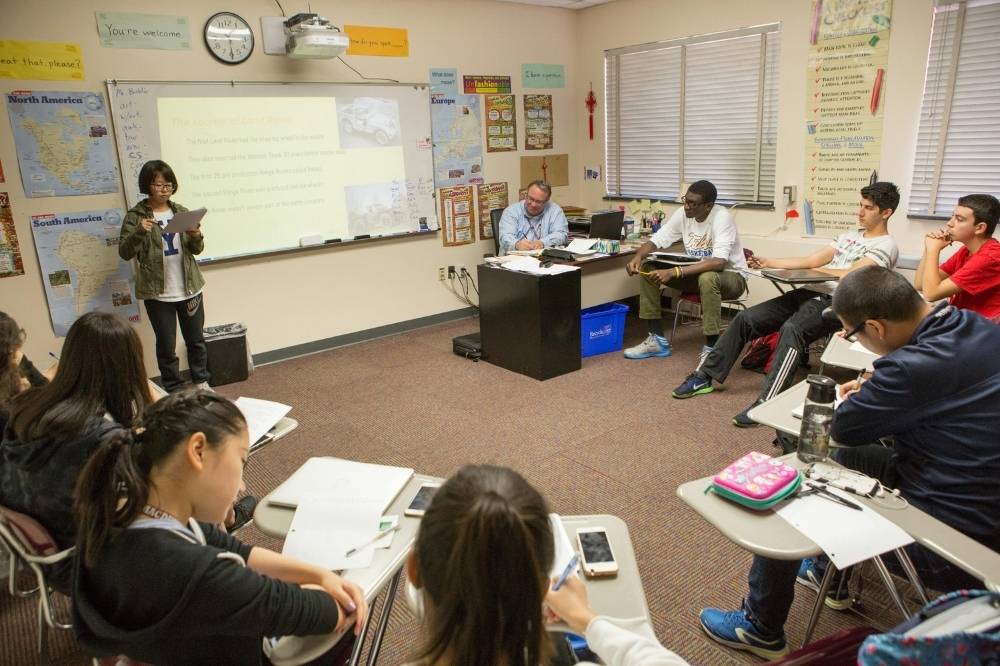
teenagers in classroom

Shift the Mindset: From Performance to Sharing

One of the largest psychological hurdles students face is the belief that an oral presentation is a theatrical performance where they will be ruthlessly judged for every single stumble, awkward pause, or mispronounced word. This perfectionist mindset creates an unsustainable level of mental pressure. To break down this barrier, parents must help students completely reframe how they view the entire concept of public speaking.

Public speaking is not some dramatic occurrence. It is simply your way of sharing information. When a student talks to their friends at lunch about their favorite video game, or passionately explains the rules of a complex sport to a younger sibling, they are already practicing public speaking. In those informal moments, they are naturally articulate, expressive, and confident. Why? Because they are thinking not about themselves they are thinking entirely about the topic.

To cultivate this mindset at home, encourage regular family conversations that focus heavily on the student’s unique areas of interest. Ask open-ended questions during dinner. Let them explain a complex plot point from a novel they are reading, or describe how a specific science experiment works. When the pressure to deliver a perfect performance is completely removed, the student’s authentic, natural voice easily shines through.

5 Creative Home Activities to Build Speaking Stamina

Building presentation confidence does not mean forcing your child to stand on a soapbox in the living room and read a dry academic paper. Instead, try incorporating these five engaging, low-pressure games into your weekly routine to help students develop their speaking stamina naturally.

1. The 60-Second Impulsive Talk

This is a classic improvisational game that works wonders for spontaneous thinking and vocal fluency. Write down a dozen random, lighthearted topics on small slips of paper and have kids draw a slip from a hat and speak on that topic continuously for 60 seconds without pausing, filtering, or overthinking. The goal is not to be profoundly accurate; it is simply to keep the words flowing and teach the brain to think fast on its feet.

2. The Dinner Table Keynote

Turn a regular family dinner into an informal podium. Once a week, assign a designated Keynote Speaker for the evening. The speaker gets two to three minutes to present on anything they wish, like a fascinating fact they learned that week, a movie trailer they loved, or a favorite family vacation memory. Keep the atmosphere light, cheerful, and celebratory.

3. Record, Rewatch, and Refine

Technology can be a magnificent tool for self-improvement if it is used gently. Have the kid record a short 2-minute video of themselves practicing a school presentation using a smartphone or tablet. Sit down together to review the footage, but keep the focus strictly on finding the positives first. Point out their excellent eye contact, their clear pronunciation, or a great hand gesture. Seeing themselves succeeding on camera provides a massive psychological boost that counters negative self-talk.

4. The Family “Teach-Back”

The absolute best way to master a concept is to teach it to someone else. If a student is preparing for a history, geography, or science presentation, have them act as the teacher while you play the role of the curious student. Ask them basic, interesting questions. This shifts their mental role from a vulnerable presenter being evaluated to an empowered expert sharing knowledge with an audience that genuinely wants to learn.

5. The Eye Contact Game

If practicing directly in front of family members feels a bit too intimidating at the beginning, have your child set up an audience of stuffed animals, action figures, or pillows in their bedroom. Instruct them to deliver their speech while consciously moving their gaze from the toy on the left to the one on the right. This builds the physical habit of scanning a room and making eye contact without the added stress of real eyes staring back.

The Art of the Feedback Loop

How you respond to your child’s practice sessions at home can either supercharge their confidence or cause them to shut down completely. Traditional, blunt criticism can feel like a personal attack to a vulnerable kid who is already feeling exposed. Instead, adopt a structured method to deliver constructive but empowering feedback.

By keeping the feedback loop heavily weighted toward positive reinforcement, you teach the kids that making mistakes is just a normal, healthy part of the learning curve, rather than a sign of personal failure.

A Practical Checklist for Presentation Day

When the morning of the actual classroom presentation finally arrives, nerves are bound to resurface. Help your kids manage those last-minute jitters with this simple, actionable morning checklist:

  • The Power Pose: Spend two minutes standing like a superhero with your hands on your hips, chest out, chin up. Studies indicate this physical posture can lower stress hormones and boost feelings of confidence.
  • Hydrate Early: Keep a water bottle handy. Nervousness causes a dry mouth, which makes clear vocal articulation much harder.
  • The Three-Breath Rule: Right before their name is called to step up to the front, have them inhale deeply through the nose for four seconds, hold for four, and exhale slowly for four. This resets the nervous system.
  • Pick a Friendly Face: They should find one encouraging friend in the classroom audience and focus on presenting directly to them whenever they feel a wave of anxiety.

Long-Term Benefits Beyond the Classroom

The journey to becoming a confident public speaker is not just about securing a high grade on a single school project. It is about equipping a young person with a foundational life skill. When a student learns how to command a room, structure an argument, and speak with authentic conviction, they carry that confidence into every single area of their future. They become better collaborators, more persuasive leaders, and individuals who are never afraid to stand up and advocate for themselves or others. By taking the time to transform your home into a safe harbor for practice, you are helping them find their voice for life.

May 21, 2026 0 comments
0 FacebookTwitterPinterestPocketEmail
How to Teach Kids Ask Better Questions, Find Reliable Sources, and Think Critically
Teach Mama Community

How to Teach Kids Ask Better Questions, Find Reliable Sources, and Think Critically

by Hannah May 21, 2026
written by Hannah

Kids today can find an answer in seconds. They can ask Google, watch a video, scroll through social media, or use an AI chatbot to explain almost anything. But fast answers are not always good answers.

Research is not just something kids need for school projects. It is a life skill. When children learn how to ask thoughtful questions, compare sources, notice bias, and explain ideas in their own words, they become stronger readers, better writers, and more careful thinkers.

PaperWriter survey found that 57% of U.S. teens have used AI chatbots to search for information, and 54% have used them for schoolwork. Also 59% of students think others use AI chatbots to cheat at least sometimes.

That does not mean kids should avoid technology. It means they need guidance.

What Research Really Means for Kids

For many kids, “research” means typing a question into a search box and copying the first answer they see. But real research is slower and more thoughtful.

A simple kid-friendly definition is: Research means asking a question, looking carefully for answers, checking what you find, and explaining it in your own words.

That last part matters. If a child cannot explain what they learned, they probably have not fully understood it yet.

This is also where parents and teachers can help kids avoid poor research habits. Sometimes even choosing a shortcut to pay someone to do research paper, is a good start to fight overwhelm or confusion over the rough draft. Kids do not need adults to do the work for them. They need adults to show them how the work is done.

Teach Kids to Ask Better Questions

Strong research starts with a strong question.

A weak question is too broad. A better question gives the child a clear path to follow.

For example:

  • Instead of “sharks,” ask “How do sharks find food in the ocean?”
  • Instead of “space,” ask “Why does the moon look different throughout the month?”
  • Instead of “recycling,” ask “What happens to plastic bottles after we recycle them?”
  • Instead of “George Washington,” ask “What choices made George Washington an important leader?”

One easy strategy is to teach kids the difference between thin questions and thick questions. A thin question usually has one quick answer. A thick question needs explanation, evidence, and thinking.

Thin question: “How many legs does a spider have?”

Thick question: “How do spiders use their webs to survive?”

Both kinds of questions are useful, but thick questions lead to deeper research.

Ask, Search, Check, and Explain

Ask, Search, Check, & Explain

Research can feel big, especially for young kids. A simple four-step process makes it easier.

  1. Ask
    What do I want to know? Can I turn my topic into a real question?
  2. Search
    Where can I look? A book? A safe website? A library database? A museum page? A trusted video? An expert?
  3. Check
    Who made this source? Is it current? Is it trying to teach me, sell me something, entertain me, or persuade me?
  4. Explain
    What did I learn? Can I say it in my own words? Can I tell someone where I found the information?

This method is simple enough for elementary students, but it also works for middle schoolers and teens.

Help Kids Find Reliable Sources

Children often judge websites by how they look. If a page has bright images, a clean design, or a confident tone, kids may assume it is trustworthy.

But polished does not always mean accurate.

Research found that students often struggled to evaluate online information. In the PaperWriter assessment, two-thirds of students could not tell the difference between news stories and ads labeled “Sponsored Content,” and 96% did not consider how a climate change website’s fossil fuel ties could affect its credibility. 

That is a big reminder: kids need to be directly taught how to check sources.

Here are kid-friendly questions to ask:

  • Who made this? A scientist, teacher, museum, company, influencer, or anonymous person?
  • Why did they make it? To teach, sell, entertain, persuade, or get clicks?
  • When was it made? Is the information still current?
  • What evidence do they give? Facts, examples, expert quotes, links, or just opinions?
  • Can I find the same information somewhere else? One source is a start. Two or three are better.

For younger kids, you can turn this into a “research detective” game. Give them two websites or two short articles and ask, “Which one would you trust more? Why?”

The “why” is the important part.

Teach Kids to Take Notes Without Copying

Many kids copy because they do not know what else to do. They see a sentence that sounds good and think that that is the answer. Instead, teach them to use short notes. A good note is not a full copied sentence. It is a small piece of information written in the child’s own words.

For example, if a source says:

Penguins have a thick layer of feathers and fat that helps them survive freezing temperatures.

A child might write:

Penguins stay warm with feathers + fat.

Then later, they can turn that note into their own sentence:

Penguins can live in very cold places because their feathers and body fat help keep heat in.

Teach then comprehension, not copying.

Do Research Away From Screens, Too

Research does not have to happen only online. In fact, some of the best research for kids happens in the real world.

Kids can research by:

  • interviewing a grandparent
  • asking a librarian for book recommendations
  • observing ants, birds, clouds, or leaves
  • comparing prices at the grocery store
  • visiting a museum, nature center, or historical site
  • testing what melts faster: ice in sun or shade
  • keeping a question journal

This kind of research builds curiosity. It also helps kids see that learning is not just something that happens on a device.

Talk About AI as a Tool, Not an Answer Machine

AI is now part of how many kids learn, search, and write. Pretending it does not exist will not help.

A 2024 report states that 7 in 10 teens had used at least one generative AI tool, while only 37% of parents whose teens used generative AI knew their child had done so. The same report found that 83% of parents said schools had not communicated with families about generative AI. 

Kids can use AI to:

  • brainstorm research questions
  • define unfamiliar words
  • suggest search terms
  • create a study outline
  • explain a difficult idea in simpler language

Kids should not use AI to:

  • write an assignment for them
  • copy answers without checking
  • replace reading
  • make up sources
  • share private information
  • avoid thinking

A helpful family rule is: kids can Ask AI to help them start, but it cannot be their only source!

Kids should always check important information against trusted sources such as books, educational websites, library databases, museums, universities, or government sites.

Make Research a Family Habit

The best way to raise careful thinkers is to model careful thinking. When you see a surprising headline, pause and wonder who wrote it. When your child asks a question, look for two sources and compare them together. When a video makes a big claim, talk about what evidence it gives. These tiny moments teach kids that smart people do not believe everything immediately.

Research skills help kids do better in school, yes. But more importantly, they help kids become curious, confident, and thoughtful people in a world full of information. The goal is not to raise kids who know every answer. The goal is to raise kids who know how to look for better ones.

May 21, 2026 0 comments
0 FacebookTwitterPinterestPocketEmail
How Kids Learn Best And What Parents Can Actually Do At Home
Teach Mama Community

How Kids Learn Best And What Parents Can Actually Do At Home

by Hannah May 21, 2026
written by Hannah

Parents hear that their children require “support,” “structure,” and “engagement.” However, these concepts may seem meaningless when their kids refuse to do homework, ignore instructions, or get angry because of a reading assignment. The real process of education goes beyond the ability to sit quietly and absorb knowledge. Children learn by paying attention, feeling emotions, repeating what was said, playing games, communicating, memorizing, moving, and receiving feedback.

To develop tips for parents based on current research, EssayPro has analyzed the literature in education, child psychology, and cognitive science. Parents should know which little actions really matter for effective learning and which only cause additional stress.

For older children who face difficulties with research-based assignments, parents might analyze different options for additional assistance, including tutoring, feedback from teachers, planning apps, and EssayPro. This approach would work best if parents also help their children form the skills necessary to complete the assignments: reading attentively, remembering facts, asking more productive questions, and revising the work.

1. Kids Learn Through Responsive Interaction

Among the key insights from early learning studies, researchers found that responsive interaction plays an essential role in child development. In this regard, Harvard University’s Center on the Developing Child coined the term “serve and return.” According to the concept, children make a comment, gesture, look, babble, or show some kind of interest, and adults provide a warm response.

In everyday life, this type of activity does not need any special toys. It may be performed during cooking, walking, folding clothes, or reading books. When the child exclaims, “Look at this truck,” a parent replies, “Yes, this truck carries soil. Do you know where it is going?”

The same approach can be applied to older kids as well:

  • Pay attention to what the child is interested in.
  • React to their observation without dominating the conversation.
  • Say something or ask a question.
  • Wait for a response from your child.

2. Learning Is Enhanced If Parents Remain Involved, Without Being Overbearing

Parental involvement is key, but it all depends on the nature of that involvement. According to the Education Endowment Foundation, parental involvement has the effect of about four months’ additional progress, especially when it involves home reading activities.

This does not mean parents must be constantly involved in every single worksheet. Excessive parental involvement is counterproductive since it may render children dependent or rebellious. A better way is for parents to set up routines, ask questions, and express interest in the process.

Examples include:

  • “Do you see where I went wrong?”
  • “What was the easiest bit?”
  • “What confused you here?”
  • “How could you remember this better tomorrow?”
  • “Would you like to do the first question with me and then do two on your own?”

These kinds of questions encourage children to reflect upon their learning rather than respond negatively to correction.

3. Children Require Retrieval Practice, Not Rereading

Most children think studying entails looking at their notes repeatedly. According to research on learning and memory, retrieval practice, which involves recalling information from memory, is generally more effective than rereading. According to How People Learn II, published by the National Academies, aspects of learning include memory, metacognition, prior knowledge, and self-regulated learning.

Parents can easily play retrieval games at home. After finishing a page of reading, shut the book and ask your child, “What were the three most important things that occurred?” After learning about a concept in a science lesson, ask your child to describe the concept using a picture. Prior to a spelling test, say the word and have your child write it down without referring to any notes.

Recalling information should be nonthreatening. If your child does not recall something, provide a hint. Every little mistake should not lead to a lecture. Memory develops with multiple tries, not humiliation.

Research Idea What It Means For Parents Home Example
Serve And Return Children learn through responsive interaction Ask follow-up questions when a child notices something
Parental Engagement Family involvement supports progress Read together for 15 minutes and discuss the story
Retrieval Practice Remembering strengthens learning Close the book and ask the child to explain the idea
Play-Based Learning Exploration supports early development Use blocks, sorting, pretend play, or drawing
Metacognition Kids learn better when they think about thinking Ask, “What helped you solve this?”

4. Play Is Not A Break From Learning

Playful activities play an important role for young children when it comes to learning. In OECD early childhood education, it is stated that early learning must promote development, well-being, agency, play, experience, and exploration.

Some parents may be under pressure to turn everything into some form of academic activity, which can do more harm than good. While playing with a tower, the child develops such skills as balance, prediction, patience, and problem-solving. Acting as a shop owner teaches the child about language, counting, roles, and memory. Creating a map of the bedroom develops symbolic thinking.

The key takeaway of the EssayPro research analysis on play was very simple: parents should not think of it as either play or learning when it comes to kids. It is usually both.

Try these examples of playful learning:

  • Sort toys by their sizes, colors, and habitats.
  • Make your grocery shopping more educational.
  • Let your child teach a toy something new.
  • Construct a bridge out of household items and test its weight capacity.
  • Create story cards for the child to put in order.

5. Stress Will Hinder Learning Faster Than Laziness

Not all children who shy away from their tasks are lazy. They might be lost, embarrassed, tired, hungry, overexcited, or afraid of making mistakes. In studies on child development, it is always clear that learning goes hand in hand with emotional security and relationships. The same principle applies to the Serve and Return relationship model from Harvard.

Parents can help lower learning stress levels by changing the emotional tone of the homework session. Begin with small victories. Allow the child to organize the tasks. Use a timer to concentrate for ten minutes. Make sure the child gets some physical activity before completely shutting down.

There is one very useful rule: connect before correct. If the child is already upset, then the grammar lesson will not go through.

The Role Of The Parent Is To Create Learning Conditions

The Role Of The Parent Is To Create Learning Conditions

The best science does not ask parents to be flawless. Rather, it indicates that children learn more effectively in an environment that is emotionally warm and structured, yet also responsive. Children require opportunities for discussion, repetition, play, memorization, security, and the ability to discuss their thought processes.

Based on its evaluation of the literature, EssayPro identified one actionable pattern: children will learn better if their thought processes are made visible. 

May 21, 2026 0 comments
0 FacebookTwitterPinterestPocketEmail
Clear Math Practice Methods for Modern Learners
Teach Mama Community

Clear Math Practice Methods for Modern Learners

by Hannah May 20, 2026
written by Hannah

Most students don’t struggle with math because they lack ability. They struggle because of how they were taught to approach it. Methods that prioritize speed and rote memorization over reasoning tend to produce anxiety and avoidance, not fluency. The shift happening in math education now is toward approaches that build real number sense – visual strategies, problem-solving methods that reward reasoning over recall, and tools that show the thinking behind an answer rather than just the result.

What Doesn’t Work (and Why Students Still Do It)

Timed drills, numerical-order memorization, and passive re-reading of worked examples are still common. They persist partly because they’re easy to measure and partly because they feel productive. But the research says otherwise.

Timed tests in particular have a documented effect on math anxiety – especially in younger students.A student who freezes on a timed test at seven may still avoid math as a teenager, not because the content is beyond them, but because the emotional association is already set.

The same problem applies to re-reading as a review strategy. It creates a feeling of familiarity without building retrieval strength. Students who re-read their notes often feel prepared right up until the moment they have to solve a problem without them.

Visualization as a Core Math Skill

One of the clearest shifts in effective math instruction is the centrality of visual representation. Seeing numbers in spatial form – as groups, as arrays, as diagrams – builds a different kind of understanding than symbol manipulation alone. Quick Look cards – briefly shown groups of objects that students must reason about – work on this principle directly. The point isn’t to count quickly. It’s to see relationships between numbers and recognize that the same quantity can be grouped in different ways.

For students who hit a wall on a specific concept, Edubrain’s AI tool maps out the reasoning behind a solution rather than delivering a bare answer. Students can photograph a problem and get math help in a format that shows the logic clearly, which means they can actually follow it and apply it to the next problem independently. Most people who struggle to solve math questions don’t need someone to do it for them – they need to see it done in a way that makes sense.

Problem-Solving Over Procedure

Traditional math practice runs like this: teacher demonstrates a procedure, students replicate it on similar problems, repeat. The approach works for narrow procedural fluency but fails badly when the problem type changes slightly. Students learn to pattern-match, not to reason.

Effective math problem solving strategies look different. They involve presenting students with problems before explaining the solution method, so they have to generate their own approaches first. They involve multiple representations of the same problem – drawn, written, verbally explained. And they involve explicit discussion of wrong approaches, which research shows is at least as valuable as modeling correct ones.

A table of what this looks like in practice:

Old Approach Research-Backed Alternative
Memorize multiplication tables in order Learn relationships and patterns (e.g., 6×8 from knowing 5×8)
Timed drills for automaticity Fluency practice without time pressure
Re-read worked examples Attempt problems before seeing solutions
One method per problem type Multiple representations and strategies
Focus on correct answer Discuss reasoning behind wrong answers

Adaptive Practice and Personalized Math Learning

No two students hit the same wall in the same place. One student understands fractions conceptually but collapses on algebraic notation. Another has strong computation but can’t set up a word problem. Generic practice sets can’t address that kind of specificity – they just assign the same material to everyone and move on.

Adaptive math practice changes this. Platforms that adjust difficulty and focus based on student performance data can identify gaps faster and more accurately than periodic testing. Khan Academy’s mastery-based model is the most widely known version – students work through a concept until they demonstrate consistent understanding before the system advances them.

For home practice, the combination of adaptive exercises with immediate visual feedback tends to produce the strongest results. Students get to see their errors in context, understand why they occurred, and correct the underlying reasoning rather than just the answer.

Math Games as Serious Practice

Math games for learning get dismissed as enrichment – something you do after the real work. That underestimates what well-designed game mechanics actually do. Games that require mathematical reasoning create repeated, low-stakes exposure to concepts. Players apply math problem solving strategies under mild pressure, fail, try again, and adjust. That cycle is structurally similar to how math fluency is actually built.

Specific formats that work well:

  • Number talks – structured discussions where students mentally solve a problem and share their methods; hearing multiple approaches builds flexibility
  • Strategy games – chess, Set, and similar games develop the logical pattern recognition that transfers to formal mathematics
  • Digital puzzle formats – games that require students to apply a concept (fractions, coordinates, algebraic thinking) in context, with immediate feedback on each move

The key distinction is whether the game requires mathematical thinking to play, not whether math is incidentally involved.

Building Habits That Last

Effective study habits, according to the research,  come down to three things: consistent practice, active engagement with errors, and the right kind of retrieval practice.

Spaced Practice Over Cramming

Consistent practice means short daily sessions rather than marathon pre-test cramming. Twenty minutes of focused problem work five days a week builds more durable skill than two hours the night before an exam. The research on spaced practice is consistent across subjects, and math is no exception.

Error Logs

Active engagement with errors means treating wrong answers as data. When a student gets a problem wrong, the question isn’t just “what’s the right answer” but “where did my reasoning go wrong.” Keeping a simple error log – what the problem was, what went wrong, what the correct approach was – turns mistakes into a study resource.

Retrieval Over Review

Retrieval practice means solving problems from memory, not re-reading material. Flashcards, practice problem sets done with notes closed, and self-testing all fall into this category. The effort of trying to recall strengthens the memory trace in a way that passive review doesn’t.

Finally

Math skills development is incremental and cumulative. The methods that build it well treat students as reasoners, not calculators – and design practice accordingly. Math education needs to move toward “curiosity, flexibility, and wonder” and away from rote recall. That’s not just a pedagogical preference – it’s what the data on long-term math performance consistently supports.

May 20, 2026 0 comments
0 FacebookTwitterPinterestPocketEmail
Why Therapy-Based Programs May Be Better Than Teen Boot Camps
Teach Mama Community

Why Therapy-Based Programs May Be Better Than Teen Boot Camps in Boise?

by Hannah May 16, 2026
written by Hannah

If your teenager is struggling with behavioral issues, defiance, trauma, or emotional instability, you’re probably searching for answers fast. Boot camps have long been marketed as a quick fix, a place where tough discipline will “straighten kids out.” But the reality is far more complicated. Research and clinical experience both point in a different direction: therapy-based programs tend to produce better, safer, and more lasting outcomes for teens. If you live in Boise, here’s what you need to know before making one of the most important decisions of your family’s life.

1. Therapy Programs Address the Root Causes of Teen Behavioral Issues

Most teens who act out, withdraw, or spiral into destructive patterns do so for a reason. Trauma, anxiety, depression, undiagnosed learning differences, and family conflict are just a few of the root causes that drive difficult behavior. Boot camps, by design, focus on the surface, targeting the behavior itself through punishment and rigid structure. Therapy programs, on the other hand, look deeper.

Therapy-based care is built around identifying and treating the underlying factors that drive a teen’s actions. A licensed clinician works to understand the full picture of your child’s mental and emotional health before any treatment begins. This approach leads to more targeted, more effective care. As you explore alternatives to teen boot camps in Boise,  or nearby cities such as Meridian, Nampa, Twin Falls, and Idaho Falls, it’s worth asking a simple question: Does this program treat the symptom or the cause? A program that only focuses on behavior may create short-term change, but it can miss the deeper emotional struggles behind that behavior. Therapy-based support gives teens a better chance to understand themselves, build coping skills, and make changes that last beyond the program itself.

How Clinical Assessment Drives Personalized Treatment Plans

A quality therapy program starts with a thorough clinical assessment. This process typically involves interviews with the teen and family, psychological testing, and a review of any prior mental health or academic history. From there, a licensed professional builds a personalized treatment plan that reflects your teen’s specific needs, not a one-size-fits-all curriculum.

Personalized plans can include individual therapy, group therapy, family sessions, medication management (if appropriate), and academic support. This level of care simply isn’t possible in a boot camp environment, where all teens follow the same rigid schedule regardless of their individual circumstances.

2. Boot Camps Rely on Fear and Discipline — Therapy Builds Lasting Emotional Skills

Boot camps operate on the idea that fear and strict authority will correct teen behavior. In practice, this model often teaches teens to suppress their emotions rather than understand them. Once your child leaves that environment, the fear-based compliance disappears, and the underlying problems remain untouched.

Therapy takes the opposite approach. Rather than demand compliance, it teaches teens to recognize their emotional triggers, regulate their responses, and make better decisions on their own. These are skills they carry into adulthood. Techniques like cognitive behavioral therapy (CBT), dialectical behavior therapy (DBT), and trauma-informed care give teens real tools, not just rules to follow.

For parents, the difference is significant. A teen who leaves a boot camp may behave better for a few weeks. A teen who completes a solid therapeutic program often develops a fundamentally different relationship with their own emotions and behavior.

3. Evidence-Based Therapy Produces Measurable, Long-Term Results

One of the strongest arguments for therapy-based programs is the quality of evidence behind them. Approaches like CBT, DBT, and motivational interviewing have been tested in controlled studies across thousands of patients. The results consistently show reductions in anxiety, depression, aggression, and substance use, along with improvements in academic performance and family relationships.

Boot camps, by contrast, lack strong peer-reviewed research to back up their claims. In fact, several studies have found that military-style disciplinary programs for teens produce no significant long-term improvement in behavior and may, in some cases, cause harm.

As a parent, you deserve to invest in a program that has a track record you can evaluate. Therapy-based programs offer exactly that: documented methodologies, credentialed staff, and measurable outcomes that you and your teen’s treatment team can review together over time.

4. Therapy Programs Involve the Whole Family — Not Just the Teen

Teen behavior doesn’t exist in a vacuum. Family dynamics, communication patterns, and household stress all play a role in how a teenager thinks and acts. A good therapy program understands this and incorporates the whole family into the treatment process.

Family therapy sessions teach parents and siblings how to communicate more effectively, set healthy boundaries, and support the teen’s progress at home. This is where lasting change often takes root, because the teen returns to an environment that has also shifted, not just one that expects them to be different.

Boot camps, by design, remove teens from their families entirely. There’s no family therapy, no skill-transfer to the home environment, and no preparation for reintegration. As a result, many teens revert to old patterns shortly after they return. A therapy-based approach treats the family system, which means the progress made in sessions has a much better chance of holding once your teen is back home.

5. Licensed Therapists Provide Safer, More Ethical Care Than Boot Camp Staff

Safety is a concern that every parent must take seriously. Boot camps have faced repeated allegations of physical and emotional abuse, neglect, and even deaths in custody. Because many of these programs operate with minimal oversight, accountability is often limited. Staff may have little to no formal training in adolescent mental health.

Therapy-based programs are held to a higher standard. Licensed therapists and counselors are trained, credentialed, and subject to professional and legal oversight. They follow ethical codes set by their licensing boards, and they are required to prioritize your teen’s wellbeing above all else.

For families in Boise, this distinction matters. Placing your child in the care of licensed professionals means there are systems in place to protect them, advocate for them, and course-correct if something isn’t working. That kind of accountability simply doesn’t exist in most boot camp environments.

6. Boise Families Have Access to High-Quality Therapeutic Alternatives

You don’t have to send your teenager far away or resort to a punitive program to get them the help they need. Boise has a range of therapeutic options available to families who want real, evidence-based support for their teens.

Local therapy programs may include outpatient counseling, intensive outpatient programs (IOP), partial hospitalization programs (PHP), and residential treatment centers staffed by licensed mental health professionals. These programs vary in intensity, so you can find a level of care that matches your teen’s needs without removing them from their community entirely.

Plus, many Boise-area providers specialize in adolescent mental health, which means they understand the specific challenges your teen faces, from peer pressure and academic stress to trauma and identity development. The right program connects your teen with professionals who genuinely understand their world and know how to help.

Conclusion

If you’re weighing your options as a parent in Boise, the evidence strongly favors therapy-based programs over boot camps. Therapy treats root causes, builds real emotional skills, involves your family, and puts your teen in the hands of licensed, ethical professionals. Boot camps may feel like a faster solution, but the research doesn’t support that promise. Your teen deserves more than fear and discipline. They deserve care that actually works.

May 16, 2026 0 comments
0 FacebookTwitterPinterestPocketEmail
Smart Tips for Planning a Vacation with Your Dog
Teach Mama Community

Paws on Board: Smart Tips for Planning a Vacation with Your Dog

by Hannah May 15, 2026
written by Hannah

Planning a vacation always brings a mix of excitement and decisions, but things change when your dog comes along. You’re not just thinking about flights or packing lists anymore—you’re considering comfort, safety, and whether your destination truly welcomes pets. Choosing the right place becomes the foundation of the entire trip. That’s why many dog owners look toward destinations like Gatlinburg. It offers scenic trails, pet-friendly spaces, and a relaxed pace that suits both humans and dogs. Instead of worrying about restrictions, you can actually enjoy the experience together. With the right approach, traveling with your dog can feel easy and rewarding—and that’s exactly what this guide will help you with.

Find the Perfect Cabin for Your Stay

Where you stay plays a major role in how comfortable your trip feels. Cabins offer more privacy than other options and great views, which are especially a treat in Gatlinburg. Your dog also benefits from having more space to move around and settle in.

Gatlinburg offers many great rental options that cater to pet owners. These cabins often include features that make travel easier, such as open living areas and access to outdoor spaces. Parkside Cabin Rentals stands out as a reliable choice when it comes to pet friendly cabins in Gatlinburg TN. Their cabins welcome dogs and provide the kind of environment that helps both you and your pet feel at home. Choosing a place like this reduces stress and allows you to focus on enjoying your trip instead of managing limitations.

Plan Travel Arrangements with Your Dog in Mind

Getting to your destination requires some extra thought when your dog comes along. If you’re driving, you need to plan for regular breaks so your dog can stretch, drink water, and stay comfortable. A well-timed stop can make a long drive feel manageable for both of you. Keeping your dog secured during the ride also helps ensure safety.

If you’re flying, things become more complex. You need to check airline policies, carrier requirements, and health documentation ahead of time. Not all dogs handle air travel well, so it’s important to consider your dog’s temperament before making that choice. 

Pack Smart for Your Dog

Packing for your dog requires more than just tossing in a leash and food bowl. You need to think about everything your dog uses daily and how those items will help maintain a sense of normalcy. Bringing your dog’s regular food helps avoid stomach issues, and familiar bedding can make a new place feel less overwhelming.

You should also carry essentials like waste bags, grooming supplies, and any medications your dog needs. Identification is just as important, so make sure your dog wears a collar with updated tags. Having these basics covered saves you from scrambling to find supplies once you arrive.

Check Local Rules and Pet Policies

Before you settle into your trip, take time to understand the rules that apply to pets in your destination. Each area has its own guidelines regarding leash use, restricted zones, and pet behavior. Knowing these rules in advance helps you avoid unnecessary issues during your stay.

Cabins and public areas may also have specific policies. Some places limit where dogs can go, while others require supervision at all times. Gatlinburg generally supports pet-friendly travel, but it still helps to stay informed. A little preparation ensures that you and your dog can enjoy the trip without interruptions.

Travel with your pet dog

Keep Your Dog Comfortable in a New Environment

Arriving at a new place can feel overwhelming for your dog, even if the surroundings look calm to you. New smells, unfamiliar sounds, and a different layout can make your pet uneasy at first. You can ease that transition by setting up a small, familiar space as soon as you arrive. Lay out their bedding, place their food and water bowls in a quiet corner, and let them explore at their own pace.

Try to stick to your usual routine as much as possible. Feed them at the same times and take them out for walks on a schedule they recognize. This consistency helps your dog adjust faster and feel more secure. When your dog feels settled, the entire trip becomes more enjoyable.

Plan Dog-Friendly Activities

A vacation with your dog should include activities that you both can enjoy together. Instead of focusing only on traditional tourist spots, look for outdoor spaces where your dog can move freely and stay engaged. Gatlinburg offers several trails and natural areas where dogs can join you, making it easier to plan your days without leaving your pet behind.

It’s important to match activities with your dog’s energy level. A long hike may suit an active dog, but a relaxed walk works better for one that prefers a slower pace. Pay attention to weather conditions and terrain as well. When you plan with your dog in mind, you create a balanced schedule that keeps both of you comfortable.

Prioritize Health and Safety

Before you leave, it’s a good idea to check in with your veterinarian. Make sure your dog is up to date on vaccinations and ready for travel. Carry any necessary medications and keep a basic understanding of your dog’s health needs while you’re away. Knowing where to find a nearby vet in Gatlinburg can also give you peace of mind.

During the trip, watch for signs of stress, fatigue, or discomfort. Changes in appetite or behavior can signal that your dog needs rest. Keep fresh water available at all times and avoid overexertion, especially during outdoor activities. A little attention to these details helps prevent problems and keeps your trip on track.

Be Mindful of Other Travelers

Traveling with a dog also means sharing spaces with other people. Not everyone feels comfortable around pets, so it’s important to stay respectful of those around you. Keep your dog on a leash when required and avoid letting them approach others without permission.

Cleaning up after your dog should always be a priority. Carry waste bags and use them whenever needed. If your dog tends to bark or react to new surroundings, try to manage those behaviors early. Being considerate creates a better experience for everyone and helps maintain the welcoming environment that makes places like Gatlinburg so enjoyable.

A trip with your dog doesn’t need to feel complicated or restrictive. When you plan with intention and stay flexible along the way, the experience starts to feel natural. You begin to notice how much more enjoyable travel becomes when your dog is part of it, not left behind. The little adjustments you make lead to better moments, stronger routines, and a trip that feels complete in its own way.

May 15, 2026 0 comments
0 FacebookTwitterPinterestPocketEmail
Why Patient Parenting Can Improve a Student’s School Confidence
Teach Mama Community

Why Patient Parenting Can Improve a Student’s School Confidence

by Hannah May 15, 2026
written by Hannah

Parenting is not a contest. It’s more like planting a tree. You water it, you give it sunlight, and you give it time. But you can’t yank on the branches to make it grow quicker. Similarly, students do not become confident just because parents say, “Be confident.” Confidence is built slowly with support, practice, mistakes, and encouragement.

For many kids, school can be an overwhelming place. They deal with homework, tests, grades, teachers, classmates, and expectations. Some students may look calm on the outside, but they may be full of fear on the inside. They are afraid of failure, disappointing their parents, or being compared to others. This is where patient parenting can really make a difference.

Patient parenting is about leading children in a calm, understanding, and respectful way. This does not mean ignoring bad habits or letting children get away with things. Rather, it means correcting them without breaking their spirit. Patient parents make children feel safe to try, fail, learn, and try again. Safety is the foundation of confidence in school.

Understanding Patient Parenting and School Confidence

Patient parenting is the ability to remain calm and help a child grow. This means that parents don’t get angry every time a child does something wrong. They listen first, lead carefully, and focus on solutions. No parent is perfect, of course. We all get impatient from time to time. Patient parents, however, try to respond first with understanding, not shouting.

School confidence is the student’s self-belief in their ability to handle learning challenges. Confidence does not always mean straight A’s. Confident students believe that if they work hard, they can improve. They tend to ask questions, do their homework, contribute to class discussions, and take exams courageously.

For older students, confidence can also drop when one difficult task begins to feel bigger than the whole subject. They may understand the lesson, yet still feel stuck when instructions are unclear or time is short. A student may say “do my assignment for me because I feel stuck” before they can explain the real problem. A patient response does not shame that feeling. It opens a calm talk about planning, support, and responsibility. Parents can ask what part is confusing. They can ask which deadline matters most. They can also ask what kind of help would reduce stress. This keeps the focus on learning rather than panic. It teaches students to seek support thoughtfully, not secretly, when school pressure becomes too heavy.

That confidence is important because learning is risky. A student has to take the chance of giving the wrong answer. They have to gamble on writing a bad paper. They have to take a chance on a hard maths problem. If a child is afraid they will be judged at home, they may not take these risks in school.

Patient parenting tells children, “Your mistakes don’t mean you are worthless.” This message is strong. It allows students to detach themselves from their results. A low grade becomes something to learn from, not evidence that they are stupid. It’s a small change that can lead to real growth.

How Patience Shapes a Child’s Inner Voice

Every child has a voice inside. This voice is the sum of the words they hear from parents, teachers, and other adults. A child who often hears, “Why are you so careless?” or “You never do anything right,” may take those words into their own thinking. Later, when no one is talking, the child may say to themselves, “I am not good enough.”

Conversely, patient words can cultivate a kinder inner voice. When parents say, “This is hard, but you can learn it,” kids start to hear that message. “Let’s figure out where you got mixed up” teaches students that problems are solvable.

This is important because confidence is not just about skill. It’s also about self-talk. Two students might have the same talent, but the one with the better inner voice will try longer. Why? Because they don’t give up after they make a mistake.

A patient parent can correct behaviour without attacking the child. For example, instead of saying, “You are lazy,” a parent can say, “Your study routine needs more effort.” The first sentence creates shame. The second sentence gives the child something to work with.

Turning Mistakes into Learning Moments

Mistakes are not your enemy. They are undercover teachers. A child learning to write will make errors in grammar. A child who learns maths will make mistakes in calculation. A child learning science will misunderstand concepts at first. That’s normal.

The issue is when kids start to be afraid of making mistakes. If every wrong answer is met with anger, they may give up trying. They might hide test papers or homework, or say, “I don’t care,” when they care very much.

Patient parenting interrupts this cycle. Imagine a student who gets a bad test score. An impatient response might be, “This is horrible! You never study properly.” The child may be ashamed and afraid. A patient parent might say, “I see you are upset. We’ve got to see what went wrong. Let’s make a plan.”

The second answer does not celebrate the bad grade. It still takes the problem seriously. But it gives the child hope. It teaches them that failure is not the end of the road. It is a signal that indicates where they need to practise more.

Creating Emotional Safety at Home

Students should feel safe at home to talk about problems at school. Unfortunately, some children feel more pressure at home than at school. Maybe they’re scared of being punished, compared, or disappointed. As a result, they conceal their struggles.

Patient parenting creates emotional security. It says to the child, “You can talk to me even if things go wrong.” This does not mean that parents should put up with excuses. They should listen before they judge.

Sometimes a child will say, “I hate school,” but what they really mean might be more. They might mean, “I feel lost in class,” or, “I’m scared of failing,” or, “I don’t know how to ask for help.” Patient parents see through the words. They try to understand the feeling behind them.

Children who feel emotionally secure are more likely to tell the truth. They are more willing to say when they don’t understand a lesson. They are more likely to seek help before a small issue becomes a big one.

Reducing Fear and Building Trust

Fear makes it harder to learn. A frightened student may sit for an hour with a book and remember almost nothing. Their mind is too busy worrying. Patience can help with this fear.

When parents respond calmly, children start to trust them. This trust emboldens students. They know that if they fail, they won’t be shamed at home. A patient parent can be like a lighthouse in a storm, guiding the child through the fog of confusion that can surround school.

Trust also enhances communication. A child who trusts their parents might say, “I don’t understand fractions,” or “I’m nervous about my presentation.” These frank conversations help parents become helpful assistants.

Practical Patient Parenting Habits That Support Learning

The power of patient parenting is in the daily habits. Doing little things over and over again builds strong confidence over time.

A good habit to cultivate is setting up a quiet homework routine. Homework shouldn’t be a daily battle. Parents can set a regular study time, get rid of distractions, and allow short breaks. It teaches structure but doesn’t make learning a punishment.

Another habit is to praise effort, not just outcomes. If we only praise kids for good marks, they may think love is conditional on performance. Instead, parents can say, “I saw you kept trying,” or, “You improved because you practised.” This helps children appreciate effort, patience, and progress.

Parents should avoid unhealthy comparisons as well. “You’re doing better than your sister” sounds motivational, but it’s often shame-inducing. All children are different. One student might be good at reading, while another might be good at problem-solving or art. Children grow in confidence when they are respected for their own journey.

Asking more questions is useful, too. Instead of, “Why did you fail?” parents can ask, “What part was hard?” Instead of asking, “Did you get the highest mark?” they can ask, “What did you learn from this test?” These questions shift the focus from fear to growth.

Patient parents also allow children to work out their problems. They don’t do every project, pack every bag, or correct every mistake. Support is important, but if you rescue them too much, they start to feel helpless. As students work through problems step by step, they begin to think, “I can do this.”

Why Confidence Grows Through Steady Support

School confidence takes a long time to grow, like a mighty tree. It requires deep roots. Patient parenting helps build roots of trust, resilience, independence, and self-belief.

Trust says to the child, “I am not alone.” Resilience says to them, “I can try again.” Independence tells them, “I can fix it.” They hear a voice of self-belief saying, “I can get better.” These qualities collectively help students go to school with more courage.

But that doesn’t mean patience cures everything. Some children may require extra tutoring, learning help, or emotional support. But patience is the right atmosphere for these solutions to work. Good advice can feel like pressure without patience. Guidance with patience feels like support.

There can still be rules and consequences in patient parenting. Patience does not mean weakness. Children need boundaries. They need to be disciplined and responsible. The difference? Patient parents correct with respect, not with humiliation. You can hold a child responsible and still make them feel loved.

Students ultimately gain confidence if they know their parents believe they can grow. They’re less afraid of making mistakes, and they’re more open to learning. They start to see school as less of a battlefield and more as a place where they can get better, one step at a time.

Conclusion

Safety, trust, and hope that come with patient parenting build a student’s confidence in school. Children feel brave enough to try when parents respond with calm guidance rather than harsh criticism. They learn that mistakes are part of learning and not failures. They are more open about their struggles and more likely to ask for help.

Pressure does not create confidence. It is born of continuous support. A patient parent is like a quiet coach next to the child, reminding them that one bad grade doesn’t tell the whole story and one mistake doesn’t spell the end. Students need patience, encouragement, and clear guidance to find the courage to learn, grow, and believe in themselves.

May 15, 2026 0 comments
0 FacebookTwitterPinterestPocketEmail
Essential Skills Students Need for Careers in Community and Family Support
Teach Mama Community

Essential Skills Students Need for Careers in Community and Family Support

by Teach Mama May 12, 2026
written by Teach Mama

Community and family support careers continue to grow as schools, healthcare systems, and social service organizations respond to families’ growing emotional, educational, and financial challenges. Students entering this field often seek to make a meaningful difference in their communities while building a stable, rewarding career. Professionals must communicate effectively, solve problems under pressure, and support people from diverse backgrounds with professionalism and care.

Many students also begin exploring how specialized training can enhance their long-term career prospects and earning potential. As social services expand across regions, employers increasingly seek candidates with strong interpersonal skills, practical experience, and advanced education. Building these abilities early helps future professionals prepare for leadership roles and improves the quality of support they provide to families and individuals in need.

Communication and Active Listening in Crisis Intervention

Strong communication skills are the foundation of every successful career in community and family support. Professionals in these roles often work with individuals experiencing emotional stress, financial hardship, family conflict, or mental health concerns. Students must learn to speak clearly, stay calm during difficult conversations, and convey information in a way that feels supportive rather than overwhelming. Effective communication also helps professionals build trust with families who may already feel uncertain or vulnerable.

Students who want stronger long-term career opportunities should also recognize that employers increasingly prioritize candidates with advanced communication and conflict-resolution skills. In competitive areas such as counseling, healthcare support, and crisis intervention, professionals who handle sensitive conversations effectively often qualify for greater responsibilities and leadership opportunities. Developing these abilities can also help students secure jobs in social work that pay better, particularly in specialized roles that require stronger client interaction, advocacy, and decision-making skills. Active listening techniques such as maintaining eye contact, asking thoughtful questions, and responding with empathy further improve client outcomes while strengthening professional credibility over time.

Cultural Competency and Understanding Diverse Family Dynamics

Community and family support professionals regularly work with people from diverse cultural, linguistic, and socioeconomic backgrounds. Students preparing for these careers must understand how cultural values shape communication styles, parenting approaches, family responsibilities, and attitudes toward education or healthcare. Developing cultural competency helps professionals avoid assumptions and build stronger relationships with the individuals they serve.

Students can strengthen cultural competency through classroom discussions, volunteer work, internships, and community engagement programs. Exposure to diverse perspectives helps future professionals become more adaptable and respectful in their interactions. It also prepares them to address challenges that may affect immigrant families, multilingual households, or underserved communities.

The Importance of Emotional Intelligence and Personal Resilience

Emotional intelligence plays a major role in helping professionals manage sensitive situations with patience and professionalism. Community support workers often encounter individuals dealing with trauma, stress, grief, or family instability. Students who develop emotional awareness can better understand how their reactions affect conversations and decision-making. Skills such as empathy, self-control, and thoughtful communication allow professionals to respond calmly even during emotionally difficult situations.

Resilience is equally important because these careers can become emotionally demanding over time. Without healthy coping strategies, professionals may experience stress, fatigue, or burnout. Students should learn to set boundaries, manage workloads, and seek support when needed. Practices such as regular reflection, mentorship, and stress management can help future professionals stay focused and emotionally balanced. Building resilience early helps students maintain long-term career satisfaction while continuing to provide high-quality support to families and communities.

Case Management and Advocacy Skills

Case management requires students to balance organizational, communication, and problem-solving skills in fast-paced environments. Professionals often coordinate housing, healthcare, education, and counseling services for individuals and families facing multiple challenges. Strong organizational habits help support workers track appointments, monitor progress, and manage documentation accurately.

Advocacy is another essential skill because many families need guidance when navigating complex support systems. Students must learn how to communicate clearly with schools, healthcare providers, and government agencies while protecting client interests. Advocacy also involves understanding available community resources and helping individuals access the support they need. 

Ethical Decision-Making and Understanding Legal Boundaries

Professionals in community and family support regularly encounter situations that require careful ethical judgment. Students must understand the importance of confidentiality, professional boundaries, and respectful communication when handling sensitive information. Ethical decision-making helps protect clients and professionals while maintaining trust in support relationships. It also ensures that services remain fair, professional, and consistent across situations.

Legal awareness is equally important because many support roles are subject to mandatory reporting laws, privacy regulations, and workplace policies. Students should become familiar with legal responsibilities before entering professional settings. Understanding these rules helps future professionals respond appropriately to difficult situations involving child welfare, domestic conflict, or mental health concerns.

Technical Literacy: Managing Documentation and Support Systems

Technology now plays a major role in community and family support services. Professionals use digital systems to manage case files, schedule appointments, document progress, and communicate with clients and partner organizations. Students entering this field should gain confidence with databases, online communication tools, and electronic documentation systems. Accurate recordkeeping improves service coordination and helps organizations maintain professional standards.

Technical literacy also supports greater workplace efficiency and accountability. Many agencies require professionals to manage confidential information securely and adhere to strict privacy guidelines. Students who understand digital organization and data management often adapt more readily to modern work environments. Learning these systems early can also improve employability because employers value candidates who can handle administrative responsibilities alongside direct client support.

Building a Meaningful Career in Community Support

Careers in community and family support require a combination of compassion, professionalism, and practical skills. Students who strengthen their communication abilities, cultural awareness, emotional resilience, organizational skills, and technical knowledge are better prepared for the demands of this field. Ethical decision-making and continued education also play an important role in long-term professional growth and effective client support.

These careers have a lasting impact on individuals, families, and entire communities. Professionals in this field help people access resources, overcome challenges, and build more stable futures. Students who approach their education with purpose and commitment can build rewarding careers while making meaningful contributions to community well-being and family stability.

May 12, 2026 0 comments
0 FacebookTwitterPinterestPocketEmail
Teach Mama Community

The Growing Demand for Qualified Early Childhood Educators

by Teach Mama May 11, 2026
written by Teach Mama

Ever walked past a daycare or preschool and wondered how those teachers keep it all together? The noise, the crying, the constant questions… and somehow, they still show up with patience. 

How? And more importantly, why are there never enough of them?

The landscape is shifting. Quietly, but fast. The demand for early childhood educators is growing, and it’s not slowing down anytime soon.

More Kids, More Need, Fewer People Willing to Step In

There are more families relying on childcare than ever. Two working parents are no longer rare. It’s the norm. 

And that means someone has to step in during those early, messy, important years.

But here is the problem. Not enough people are stepping up to become educators.

The job can be tough at times. Long hours, emotional work with pay that doesn’t always match the effort. It’s not exactly the kind of career people rush toward after graduation. And yet, the need keeps growing.

  • Centers are understaffed. 
  • Classrooms are fuller than they should be. 
  • Directors are scrambling to hire anyone even slightly qualified. 

Sometimes, even that feels like too much to ask. So what happens? Kids do not get the attention they deserve. Teachers burn out. Parents worry.

It’s a cycle that keeps repeating.

Why Proper Education Still Matters More Than Ever

There is this idea floating around that working with young kids is “easy.” Just play, right? Just keep them busy?

That could not be further from the truth.

Early childhood education is serious work. 

  • It shapes how kids think, 
  • How they behave, and 
  • How they learn later in life. 

These years matter more than most people realize.

That is why proper training isn’t optional anymore. It’s essential.

Today’s candidates choose to pursue programs like a Bachelor in Early Childhood Education online because not everyone can sit in a classroom for four years. Life gets in the way. Bills, jobs, family… it all piles up. 

Online degrees give people a chance to enter the field without putting everything else on hold. 

And the field needs that – desperately.

Because knowing how to guide a child through emotions, teach basic skills, and build trust? That does not just come naturally to everyone. It takes learning. Practice. A lot of patience.

And yes, sometimes a lot of second-guessing too.

The Emotional Weight No One Talks About

It is not just about teaching ABCs and counting to ten.

It is the crying child who will not settle down. The one who misses home or the one who acts out because something is not right, but cannot explain it.

That stays with educators.

Day after day, they carry these small moments that aren’t really small. They try to stay calm, even when they are running on fumes. They show up, even when it feels like they have nothing left to give.

And the truth is… many people aren’t prepared for that side of the job.

That is part of why the demand is growing, but the supply is not keeping up. People step in thinking it will be simple. Then reality hits.

Still, those who stay? They become something special. The kind of adult a child remembers years later.

Society Is Finally Starting to Notice

For a long time, early childhood educators were overlooked. Almost invisible.

That’s changing.

Slowly, people are starting to understand how important these roles really are. Research keeps coming out showing how early learning impacts everything later—school success, social skills, even long-term behavior.

It’s hard to ignore that.

Parents are asking more questions now. 

  • They want qualified teachers. 
  • They want safe environments. 
  • They want more than just babysitting.

And governments? They’re starting to pay attention too. Funding programs, setting higher standards, pushing for better training.

It’s not perfect, far from it. But it’s a start.

Still, recognition doesn’t always mean immediate change. Educators are still waiting for better pay, better support, and realistic expectations.

And honestly, that wait feels long.

Burnout Is Real… and It’s Pushing People Away

This part doesn’t get sugarcoated.

People are leaving the field.

Not because they don’t care. Not because they don’t love the kids. But because it becomes too much.

  • Too many responsibilities. 
  • Too little support. 
  • Too much pressure to do everything right, all the time.

And when mistakes happen? It weighs heavily.

There’s also the constant feeling of being stretched thin. One teacher, too many kids. Not enough breaks. Not enough time to reset.

It adds up.

Some days feel manageable. Other days? Not so much. And when those hard days outnumber the good ones, people start looking for a way out.

That’s a big reason the demand keeps rising. It’s not just about new positions. It’s about replacing the ones who quietly walk away.

The People Who Stay… Why They Do It Anyway

With everything stacked against them, it’s fair to ask… why do some educators stay?

It’s not the money. It’s not an easy schedule. It’s definitely not a stress-free environment.

It’s the moments.

The first time a child writes their name. The quiet “thank you” from a parent—the kid who finally opens up after weeks of silence.

Those moments matter.

They don’t fix everything and don’t erase the hard days. But they’re enough to keep some people going.

There’s also this sense of purpose. Knowing that the work matters. It shapes lives in ways that won’t be seen right away. It’s not always loud or obvious. But it’s there.

And for some, that’s enough reason to stay.

Where Things Might Be Headed

So where does this all go?

The demand isn’t going anywhere. If anything, it’s going to grow even more.

More families need childcare. More emphasis is being placed on early learning. Expectations are rising. But for real change to happen, something has to give.

Better pay would help. More support systems would help. Flexible education options—like online programs—are already making a difference.

Still, there’s no quick fix.

  • It’s going to take time. 
  • It’s going to take effort. 

And a shift in how this work is valued. Because right now, there’s a gap. A big one.

Kids need qualified educators. The system needs trained professionals. But too many barriers are still in the way. And until those barriers are addressed, the demand will keep growing… and the struggle to meet it will keep dragging on.

At the end of the day, early childhood education isn’t just a job. It’s a responsibility that shapes everything that comes after.

And the real question is… who’s going to step up to fill that need?

May 11, 2026 0 comments
0 FacebookTwitterPinterestPocketEmail
Newer Posts
Older Posts

About Me

About Me

Hi! I'm Hannah.

A mother of one, I am passionate about inspiring mamas and educators with hands-on, meaningful learning ideas that make everyday moments fun, purposeful, and filled with curiosity.

Follow Teach Mama

13.4K Fans Like
2.8K Subscribers Subscribe
132K Followers Follow Us

Recent Posts

  • How to Know If Homeschooling Is Right for Your Family

    July 9, 2026
  • Do Kids Who Grow Up with Pets Have Stronger Immune Systems

    July 9, 2026
  • Predictable Family Routines Give Children the Extra Mental Bandwidth They Need to Learn

    July 9, 2026
  • Can Letting Yourself Be Completely Bored at Home Actually Repair Your Focus?

    July 9, 2026
  • How Parents Can Support Academic Learning at Home Without Overstepping

    July 9, 2026
  • How Online Learning Is Opening New Career Paths for Adult Students

    July 6, 2026

LEARN

PLAY

CRAFTS

PRINTABLES

About Me

A mother of one, I am passionate about inspiring mamas and educators with hands-on, meaningful learning ideas that make everyday moments fun, purposeful, and filled with curiosity.

Useful Links

  • About
  • Contact

Popular Posts

  • Words 3 Ways: Learning Sight Words For Kindergarten

    May 17, 2012
  • Quick Trick: Magnetic Letters (How To Use Them With Your Kids!)

    December 1, 2010

Recent Posts

  • How to Know If Homeschooling Is Right for Your Family

    July 9, 2026
  • Do Kids Who Grow Up with Pets Have Stronger Immune Systems

    July 9, 2026
  • Facebook
  • Pinterest
  • Youtube
Teach Mama
  • Reading
  • Early Literacy
  • Writing
  • STEM
  • Activities
  • Digital Literacy

Shopping Cart

Close

No products in the cart.

Close