Teach Mama
  • Reading
  • Early Literacy
  • Writing
  • STEM
  • Activities
  • Digital Literacy
Top Posts
Effective Techniques for Teaching Complex Historical Topics
4 Neighborhood Adventures That Teach Kids Real-World Skills
What Does an Urgent Care Visit Cost in...
Future Trends Influencing Enterprise Learning Management System Adoption
How to Survive Your Husband’s Grad School Years...
How Technology is Reshaping the Rules of Education
How Advances in Artificial Intelligence Are Making Modern...
How Technology is Transforming Learning Experiences
A Practical Guide to Managing Family Finances Without...
Retirement Planning for Parents Who Feel Like They’re...
Teach Mama
  • Reading
  • Early Literacy
  • Writing
  • STEM
  • Activities
  • Digital Literacy
Teach Mama
Teach Mama
  • reading
  • early literacy
  • writing
  • STEM
  • Activities
  • digital literacy
  • Contact
How to Make Learning Chinese Mandarin a Family Adventure
Teach Mama Community

How to Make Learning Chinese Mandarin a Family Adventure

by Hannah April 20, 2026
written by Hannah

Summary

  • Mandarin is spoken by over a billion people worldwide, making it an important language for families to explore together.
  • Language learning can feel more manageable when it becomes part of your daily routine, not a strict class.
  • Every household benefits from mixing tools like video lessons, reading sessions, and interactive activities.
  • Games and role-play challenges build confidence much faster than traditional drills.
  • Small milestones and steady progress matter more than perfection.

Chinese Mandarin is the second most spoken language in the world. Not Spanish, and definitely not French! In fact, a recent Statista report shows that over 1.18 billion people speak it globally. That’s a massive chunk of the world population using the language daily. And getting your family into that can be a great opportunity. (1)

But learning a new language requires patience. The process can feel slow at the start. There are unfamiliar sounds, complicated characters, and different sentence patterns than you’re used to.

For a busy parent, the practical side is the challenging part. Where do you even start? How do you keep your kids from getting bored after a week? Well, here are a few tips to get you started:

Choose the Right Learning Platform

The first thing is to find a method that works for your family. Every household has its own learning style, so you need to match your tools to your family’s needs.

For instance, modern apps and platforms today offer quick, game-like lessons that feel less like a chore and more like a daily challenge. They use rewards and streaks to keep kids and parents coming back. Look for something with speech recognition, too. Being able to check your tones can come in handy.

You can also switch to workbooks or graded readers to get away from screens for a while. These are simply books written for your specific vocabulary level. Many of these sets come with audio you can pull up on a phone. It makes listening and repeating phrases as a group much easier.

Let everyone test drive different learning resources, too. One kid might love tracing characters on a tablet. Another might just want to sing along to nursery rhymes or watch short cartoons. So, keep experimenting.

You want a mix that makes the language feel like a natural part of the day instead of a forced obligation. For example, if you plan to enroll in Yi Mandarin, check out their online resources first. This will help you understand whether Yi Mandarin unique approach is the best fit for your household.

Consider doing this with all options. This way, you can see what feels easiest and most enjoyable for everyone.

Make Your Home Mandarin-Friendly

Language learning becomes easier when it’s everywhere. Labels on common objects are your best friend. You can stick them on the fridge, the sofa, or the bathroom mirror.

Including Hanyu Pinyin right next to the Chinese characters lets everyone say the words as they walk past. Kids may just end up linking those labels to real items without even thinking about study time. It just happens.

You can also have Mandarin music or podcasts playing during breakfast or in the car. These exposures can turn the language into a background rhythm.

Getting a translation tool or dictionary for the tough characters is also an option. Memorizing everything on the first day is nearly impossible. Seeing and hearing Chinese phrases in context is what actually makes them stay in your head. That’s how you win the long game.

Explore Culture Together

Language is a window to a different world. According to World Population Review, Mandarin is used as a native language by about one-fifth of the world’s total population. This means that learning it can connect your family to a truly global community. (2)

Exploring these traditions makes the whole process feel way more meaningful. You can try watching movies or cartoons in Mandarin. Or you could pick up books written in Chinese characters. Cooking meals together can also teach ingredient names and tools while keeping family time interesting.

But cultural communication goes beyond basic grammar. Celebrating festivals like the Lunar New Year or the Mid-Autumn Festival could introduce everyone to new songs and customs.

These experiences give real context to the dialogues and phrases you see in your study books. Engaging with the culture turns the whole thing into a family adventure. You’ll actually remember it.

Turn Practice Into Play

Fun is the secret to making the language stick. This means it’s not just about study sessions but also games.

Memory cards, matching exercises, or role-play scenarios make vocabulary and Chinese dialogues come alive. You can also stage a pretend restaurant scene where kids order their lunch in Mandarin. This can help them practice common phrases.

Don’t forget about interactive audio and video tools. They can help support this play-based approach. Short lessons, catchy songs, or quick quizzes also encourage listening and speaking without the pressure of a test.

Try introducing a points system for effort, too. Everyone can earn a treat or a fun family activity by using a new word or speaking in Mandarin throughout the day.

Using these tools together keeps the whole process more enjoyable. It stops being a classroom requirement and starts feeling like something the family actually wants to do.

Create a Flexible Routine

Consistency is great. But being too rigid can turn the learning process into a total drag. Short study periods of ten or fifteen minutes can beat one long and exhausting session a week.

Your study routine can include a few minutes of flashcards or a quick reading session before dinner. Watching video lessons together is another easy way to practice without a strict time commitment.

Keep things loose to avoid burnout. You can focus on games some days and casual talks on others. Brief exposure will help your kids get comfortable with characters and spoken phrases over time.

It’s also important to understand that building habits takes time. Some weeks can be busier than others, and that’s perfectly fine. The goal is to keep the language present in the house in small ways. This keeps everyone motivated without feeling pressured.

Narrate Your Daily Life

Speaking out loud about your routine helps build fluency fast. You can start by describing what you’re doing in simple Mandarin as you cook or clean.

You can ask your kids to name the color of a shirt as they wear it. Teens can try to describe the taste of an apple. These verbal cues turn mundane chores into an active learning environment.

Externalizing your thoughts can also help the brain bridge the gap between thinking and speaking. Vocabulary becomes easier to recall when linked to a physical action. Soon, your family will start to associate certain phrases with daily habits naturally.

Eventually, these small narrations become second nature. You’ll find yourself slipping into Mandarin without even realizing you made the switch. This habit creates a solid foundation for real conversations later.

Accept Mistakes as Part of the Process

Mistakes happen. They just come with the territory. Everyone mispronounces Mandarin characters when starting out.

It helps to focus on the win of giving it a shot instead of dwelling on every error. So, keep things light and celebrate small wins. This will ensure the whole family stays relaxed enough to keep going.

Don’t be afraid to show your own struggles to the kids, too. Put your own blunders on display. Laughing at a wrong word together proves this is an adventure. It gives everyone the green light to use new phrases without being scared. Confidence grows fast once you stop chasing perfection.

Connect With Real People

Language truly comes alive when you use it with others. Even brief video calls with native speakers can shift the whole family’s perspective, turning Mandarin from a school exercise into a living, breathing skill. Whenever possible, seek out those conversations, whether through online exchanges or local Chinese cultural groups, where confidence tends to build quickly in a relaxed, social setting.

This social proof can bring a big payoff later in life. Forbes reports that 40% of multilingual employees say their language skills helped them land a job. They even earned 19% more than single-language speakers. This highlights just how much the market values the ability to communicate across cultures. (3)

Small group settings like cultural clubs and community meetups reinforce this in a more immediate way. They expose you to dialogues and phrases that no textbook covers, and the informal atmosphere makes practicing feel natural rather than performative. For kids, especially, hearing their new words land with someone outside the household is a powerful moment. It’s often that spark of real-world connection that transforms Mandarin from a passing hobby into a habit the whole family wants to keep.

Conclusion

Learning Mandarin as a family works best when treated as an enjoyable journey. Being patient and flexible is the real key to success here.

Remember, building curiosity and confidence matters way more than perfection. So, start with small steps to stay consistent. Let the Chinese language grow naturally within your family’s routine.


References

  1. “The most spoken languages worldwide in 2025”, Source:  ttps://www.statista.com/statistics/266808/the-most-spoken-languages-worldwide/
  2. “Chinese Speaking Countries 2026”, Source: https://worldpopulationreview.com/country-rankings/chinese-speaking-countries
  3. “Improve Your Salary And Career By Speaking A Second Language,” https://www.forbes.com/sites/tracybrower/2023/10/01/improve-your-salary-and-career-by-speaking-a-second-language/

April 20, 2026 0 comments
1 FacebookTwitterPinterestPocketEmail
Why English Pronunciation Training Matters for Your Child's Confidence
Teach Mama Community

Beyond Accents: Why English Pronunciation Training Matters for Your Child’s Confidence

by Hannah April 20, 2026
written by Hannah

Key Summary:

  • Pronunciation training helps children communicate clearly and confidently, making their ideas heard and understood.
  • Mastering pronunciation strengthens phonemic awareness, which supports reading, spelling, and active class participation.
  • Children who speak clearly tend to connect better with peers, feel more socially included, and develop stronger relationships.
  • Pronunciation training builds a positive feedback loop. The more a child is understood, the more confident they become.
  • Combining in-person coaching with digital tools gives learners the most well-rounded and effective learning experience.
  • Parents play a meaningful role at home through simple habits like reading aloud, modeling clear speech, and celebrating progress.

Imagine the last time you were misunderstood. There’s a high probability that you were in another country or are speaking with an international colleague. Were you explaining complex concepts or ordering coffee? Maybe you didn’t fluently articulate the words and ended up with something meaningless or unintelligible.  

Regardless, one thing is clear. Mispronunciation is the silent barrier in effective communication, one that can cause even the brightest ideas to get lost in translation.

As today’s digital economy is breaking down geographical boundaries, more and more people are learning English for more opportunities. The language is spoken by about 2.3 billion people worldwide. Although starting young is an advantage, many students and professionals are working to get their language proficiency certification. (1)

People view grammar and vocabulary as the building blocks of language learning. But there’s another side to it that many people miss: pronunciation. Find out why it’s crucial and how parents can support their child’s journey.

Is it pronunciation or Accent?

English learners often hear these terms being used interchangeably. In linguistics, though, they represent two different layers of how we speak. Pronunciation refers to how clearly and correctly you produce the sounds of a language. It’s how you move your tongue and lips, and how long you articulate consonant blends and vowels.

An accent reflects the unique speech patterns influenced by one’s native language or regional background. Every language has its own way of arranging individual phonemes or phonetic sounds, and an accent affects word stress and rhythm. These differences can sometimes lead to confusion.

Although British and American English share common roots, speakers of either country have developed their own diverse vocabulary and pronunciation over time. English words are pronounced differently, as American accents and dialects vary regionally. For example, the Southern drawl is known for stretching vowel sounds longer, and depending on the region, speakers may handle the ‘r’ sound differently. (2)

Regardless, getting the right pronunciation is the best way to be clearly understood. It is recommended for ESL learners (English as a second language) to master English pronunciation first before taking American accent training. Doing so ensures that you remain consistently intelligible. After all, the core purpose of communication is to get your message across effectively, not to sound like a native speaker.    

Why Pronunciation Training Is Essential

When young children are learning English, parents tend to obsess over teaching the correct grammar or work tirelessly to expand their vocabulary. But they often miss the silent engine that’s driving their ability to use words: pronunciation.

Children often grow up juggling multiple linguistic systems in places like Singapore, where English is widely spoken. This can lead to unique pronunciation challenges. A non-native speaker might translate concepts in their head while simultaneously trying to navigate phonemes (sounds) that don’t exist in their mother tongue.

In addition, the English language is riddled with nuances, including minimal pairs or eerily similar-sounding words, for instance, ‘heal’ and ‘hill.’  It’s understandable how these can frustrate even the most eager learner.  

Singapore English pronunciation training helps by allowing an individual’s accent to remain distinctive without negatively affecting clarity. Vowel and consonant exercises aside, learners get structured guidance on how English works phonetically.  

With pronunciation training, learners can practice sounds in supportive environments, building confidence and resilience. Proper guidance and correction also help reinforce their sense of achievement, as they notice improvements in enunciation.    

How the Right Pronunciation Builds Confidence

The right pronunciation bridges thought and expression. It’s the foundation that makes all other skills functional. In schools, it could spell the difference between being an active class participant and staying silent in the back row.

Enriching Mental Development 

Language is a mental exercise, and speech is one of the most complex motor tasks the human body performs. It involves the coordinated movement of multiple muscles, including the vocal cords, lungs, tongue, and lips. Pronunciation training is essentially speech gymnastics. By practicing it, children build the pathways and muscle memory that are necessary for effortless communication. (3)

When someone masters how the tongue hits the teeth for the ‘th’ sound, or how the jaw drops for an ’o,’ they’re not just mimicking sounds. They’re also mastering a physical skill that reduces the cognitive load of speaking.   

Improving Social Dynamics

It’s easy to underestimate the role of speech as a social currency, particularly when children are involved. Even so, if your child’s playmates can’t understand them, they might feel ignored or unliked. This reaction may seem minor, but the impact of being left out can be damaging to your child.

Being misunderstood can negatively affect how your child deals with their peers and the world around them. They may develop communication apprehension if they’re frequently asked to repeat themselves or notice that listeners don’t understand what they’re saying. This silence and social withdrawal can affect their learning and social development.

Conversely, when your child feels socially integrated, their stress levels drop. They become more confident in expressing themselves and asserting boundaries in social settings.

Pronunciation Training and Academic Performance 

Pronunciation training takes English language teaching to the next level by honing phonemic awareness, which enhances reading, spelling, and auditory comprehension.

Speaking and reading are closely related. The latter essentially involves converting text into sounds. So, a person who can clearly produce a sound will find it easy to associate phonemes with their written letters. Repeatedly listening to audio recordings likewise improves a learner’s listening skills.

Children who are comfortable speaking English are also more likely to participate in class discussions, showcase their knowledge, and build stronger academic relationships with their peers and teachers. Put simply, it helps ensure that their academic abilities aren’t overshadowed by communication barriers.

Confidence isn’t something that your child is born with. It’s built through practice, positive reinforcement, and progress. When a child knows that they can express and be understood easily, their willingness to engage with the rest of the world expands significantly.

Those who feel secure in their pronunciation are more likely to share their ideas and engage with others. They aren’t spending their mental energy worrying about getting consonant sounds and syllable stress right or the fear of rejection.

Moreover, a success loop is activated when your child speaks and receives an immediate response. This reinforces their desire to speak again in this context. Their confidence grows as their language skills improve.

Over time, this confidence spills into other areas of life. They’ll know how to conduct interviews and professional conversations. They’ll also likely have meaningful personal relationships.   

Face-to-Face and Online Courses

Face-to-Face and Online Courses

Language service providers offer English pronunciation courses on-site and online. You can likewise tap into learning platforms or apps with integrated artificial intelligence technology and AI speaking partners. All of these options provide opportunities to improve your pronunciation, vocabulary, and grammar. They offer different levels of pronunciation practice, though.  

Online platforms are convenient and provide video-based feedback. Apps, for instance, work great for repetitive drilling with their audio listen and repeat exercises. However, they may be less effective than in-person coaching in establishing and fixing phonetic habits. Meanwhile, a human teacher can physically observe your tongue placement or jaw movements and provide immediate and personal corrections that algorithms and practice videos might miss. (4)   

Ultimately, the best choice depends on your goal. Software and online apps may be enough if you want independent learning or are content with surface-level feedback and corrections. That said, choose in-person courses if you want your child to acquire foundational English language skills and aim for functional and powerful communication. Mixing digital tools and the expertise of a human expert is the best path forward in most cases. (4)

How Parents Can Give Pronunciation Training a Lift

You don’t need a linguistics degree or complex training modules to help your child. The key is to turn daily study plans into low-pressure and game-like environments.  

Model Clear Speech

Children learn by imitation. So, be a role model by speaking clearly and naturally. If you’re not a fluent English speaker, try shadow speaking exercises where you listen to a native speaker and repeat the words promptly. You can even use it as a bonding session while enhancing your pronunciation skills.      

Encourage Reading Aloud

Allow your child to practice pronunciation and rhythm by reading aloud. This reduces their speaking anxiety while enhancing their grammar and vocabulary. Encourage your child to read during school breaks and continue with their learning journey, too, even when school’s out.  

Create Opportunities for Conversations in English

Watch English movies and let them discuss how they felt. You can also develop custom scenarios and interactive role-plays and see your children manage communication in such settings.  

Record, Listen, and Repeat

Audio and video feedback recordings are essential in speech analysis and for providing guidance. They also work great in instilling self-correction and awareness among learners.

Celebrate Progress

Confidence grows when children feel their efforts are recognized. So, praise their improvements, no matter how small.  

Parents play a crucial role in a child’s journey. Consider frequent speaking practices, but keep them fun and short. Don’t chase perfection. Laugh when you encounter funny English sounds while doing tongue twister exercises. Always remember that a relaxed child is more prepared to learn and explore.

Final Thoughts  

In these modern times, the ability to communicate across borders is the most valuable skill a person can possess. And when it comes to learning English, pronunciation is the key that drives clarity, connection, and confidence.

Mastering it means speaking well and believing in your voice. By prioritizing pronunciation training, you aren’t just helping your child excel in English class. You’re giving them tools to be heard, understood, and eventually lead. It ensures that their voice resonates when they have a world-changing idea or a heartfelt emotion. Confidence is knowing that they have the power to use it.


References

  1. ‘What role does English play in our multilingual world?’, Source: https://www.britishcouncil.org/research-insight/our-world-connected-podcast/english-multilingual-world#:~:text=Around%20the%20world%2C%202.3%20billion%20people%20speak%20English%2C%20and%20for%20most%20of%20them%20it%20is%20an%20extra%2C%20rather%20than%20their%20first%2C%20language.
  2. ‘American English dialects: always changing but here to stay’. Source: https://blog.oup.com/2023/09/american-english-dialects-always-changing-yet-here-to-stay/#:~:text=In%20spite%20of,the%20eighteenth%20century.
  3. ‘Pediatric Facial Plastic and Reconstructive Surgery’. Source: https://www.sciencedirect.com/topics/medicine-and-dentistry/speech-production#:~:text=Speech%20is%20one,intelligible%20speech.1%2C2
  4. ‘How speech-to-text technology affects pronunciation gains and self-confidence in ELF learners’. Source: https://www.tandfonline.com/doi/full/10.1080/09588221.2025.2534498#abstract (Please read the literature review section)
April 20, 2026 0 comments
0 FacebookTwitterPinterestPocketEmail
Which Oils in Flea Collars Are Most Effective for Dogs
Teach Mama Community

Which Oils in Flea Collars Are Most Effective for Dogs?

by Hannah April 19, 2026
written by Hannah

Flea collars promise simple protection, yet the type of oil inside the collar determines how well it works for a dog. Pet owners often see labels that list plant oils, but they may not know which ones truly repel fleas and ticks and which offer little effect.

Cedarwood, peppermint, geraniol, eucalyptus, and lemongrass oils rank among the most effective options in flea collars for dogs. Each oil works in a different way, so the right formula can make a clear difference in how well a collar keeps pests away. This article explains how these oils act on fleas and ticks and what pet owners should know before they choose a collar.

Cedarwood Oil

Cedarwood oil appears in many natural flea collars because it repels fleas through its scent and effect on the insect’s nervous system. Research suggests it works better as a repellent than a direct killer, so it helps reduce bites rather than end a heavy infestation on its own.

Many pet owners look at products such as the flea collar for dogs at FurLife since cedarwood oil often pairs with other plant oils for broader coverage. This approach supports steady release of the oil over time, which helps keep fleas away from the dog’s coat and skin.

Veterinarians note that cedarwood oil ranks among the safer essential oils for dogs, yet they still advise caution. Proper dilution and correct fit of the collar matter because high concentrations may irritate the skin. Therefore, owners should monitor their dog for redness or itching and consult a vet if any reaction appears.

Peppermint Oil

Peppermint oil appears in many natural flea collars because its strong scent repels fleas and ticks. The sharp aroma confuses pests and makes it harder for them to locate a dog as a host. As a result, it helps reduce the number of bites on treated dogs.

In addition, peppermint oil may calm mild skin irritation caused by flea bites. Some pet owners report that it leaves a fresh smell on the coat, which many people prefer over harsh chemical odors. However, the oil must stay properly diluted in a carrier material within the collar, since high concentrations can irritate a dog’s skin.

Flea collars that use peppermint oil often combine it with other plant oils for broader coverage. Therefore, the collar can offer layered protection rather than rely on a single ingredient. Pet owners should still monitor the dog’s skin for redness or discomfort, especially during the first few days of use.

Geraniol

Geraniol is a plant-based compound that comes from geraniums and other aromatic plants. Many natural flea collars use it because it repels fleas and ticks without the use of synthetic pesticides. As a result, pet owners who prefer plant-based options often look for this ingredient on the label.

Research and product testing show that geraniol can disrupt fleas and reduce their ability to stay on a dog. In moderate amounts, it is considered safe for dogs, although proper concentration matters. Therefore, manufacturers must balance strength with safety to avoid skin irritation.

Geraniol works best as part of a blend with other oils such as peppermint or cedarwood. Together, these oils create a broader barrier against pests. However, the collar must release the oil slowly over time so the effect lasts for several weeks.

Pet owners should always choose collars made for dogs, since some essential oils can harm other pets.

Eucalyptus Oil

Eucalyptus oil comes from the leaves of the eucalyptus plant and contains eucalyptol, a compound that can repel insects. Some lab data suggests it may affect fleas, so manufacturers add it to certain flea collars. Its strong scent may help deter pests from landing on the dog’s coat.

However, dogs can react to concentrated essential oils, and eucalyptus oil may irritate the skin or airways if the dose is too high. For that reason, it should never be applied in pure form. A flea collar must use a low, controlled amount to reduce the risk of side effects.

Veterinary sources often advise caution because essential oils can cause drooling, vomiting, or skin redness in sensitive dogs. Therefore, eucalyptus oil works best as part of a balanced formula rather than as a single active ingredient. Pet owners should watch for signs of irritation and remove the collar if a reaction appears.

Lemongrass Oil

Lemongrass oil serves as a natural repellent in many flea collars for dogs. Its strong citrus scent comes from compounds such as citral and geraniol, which fleas tend to avoid. As a result, dogs that wear collars with lemongrass oil may face fewer flea problems.

This oil also shows activity against ticks, so it offers broader pest control than some other plant oils. In addition, it often lasts longer than lighter scents such as lavender, which means the collar may keep its effect for a longer period. However, natural oils may require more frequent replacement than synthetic chemicals.

Manufacturers often blend lemongrass oil with cedarwood or peppermint oil to support its repellent effect. Pet owners should still check the product label and follow dose guidelines, since high concentrations of essential oils can irritate a dog’s skin. Used at safe levels, lemongrass oil can play a useful role in flea collars designed for dogs.

Oils in Flea Collars Are Most Effective for Dogs

Conclusion

Cedarwood, peppermint, eucalyptus, and geraniol oils repel fleas and ticks through scent and natural compounds; they suit dog owners who prefer plant-based care. However, oil type and concentration both affect results, so pet owners must check labels and watch for skin reactions. In addition, some collars pair natural oils with growth regulators to target flea life stages, which supports broader control without heavy pesticide use. A well-chosen collar, along with routine coat checks and vet guidance, helps dogs stay protected in a simple and balanced way.

April 19, 2026 0 comments
0 FacebookTwitterPinterestPocketEmail
What Parents Can Do When Their Child Hates Writing Assignments
Teach Mama Community

What Parents Can Do When Their Child Hates Writing Assignments

by Hannah April 19, 2026
written by Hannah

Many children groan the moment they hear the words writing assignment. For some, writing feels slow, frustrating, and lonely. They may have lots of ideas in their head, but getting those ideas onto paper feels like trying to push a heavy bike uphill. As a parent, it can be hard to watch. You want to help, but you may not know where to start.

The good news is that hatred of writing does not always mean laziness or lack of intelligence. In many cases, it means a child feels stuck, overwhelmed, or afraid of making mistakes. Once you understand the real reason behind the resistance, you can help your child build confidence and make writing feel much less painful.

Start by Finding the Real Problem

When a child says, “I hate writing,” that sentence usually hides a deeper problem. Maybe handwriting is tiring. Maybe spelling feels embarrassing. Maybe they cannot organize their thoughts. Or maybe they simply do not enjoy the topic they were given.

Before jumping in with advice, take a step back and observe. Ask calm, open questions such as, “What part feels the hardest?” or “Is it starting, spelling, or finishing?” This helps you move from guessing to understanding.

Sometimes the problem is emotional, not academic. A child may fear that their work will never be “good enough.” Perfectionism can make writing feel like a trap. If they think every sentence must be perfect, they may avoid writing altogether.

When writing stress builds up, many parents focus only on motivation. That matters, but it is not the whole picture. Children also notice how adults respond to deadlines and pressure. A calm response teaches more than a long lecture. Some families begin by reading about outside writing options and what students may encounter online. That context can help parents have a more honest talk at home. For example, a parent may review PapersOwl term paper writing service with a child to discuss why some students search for full writing solutions when they feel stuck or overwhelmed. For some families, this can be a useful reference point while they work on the deeper reasons behind a child’s struggle with writing. The real goal is to understand the pressure behind the reaction. Once that pressure is clear, parents can set better boundaries and offer practical support. They can break the task into smaller parts. They can reduce fear around the first draft. They can also remind the child that one difficult assignment does not define their ability as a writer.

Make Writing Feel Smaller and Safer

A full assignment can look huge to a child. Even one page may feel like a mountain. That is why breaking the task into small steps can help so much. Small steps make writing feel possible.

Here is a simple way to divide a writing task:

  • talk about the topic first
  • write one sentence at a time
  • take short breaks between steps

This method works because it lowers pressure. Instead of thinking about the whole paper, your child only has to focus on one small action. That feels much less scary.

You can also remind your child that a first draft is not supposed to be perfect. It is only the beginning. Think of it like building a house: first you make the frame, then you paint the walls. Good writing usually grows step by step.

Turn Talking Into Writing

Many children can explain their ideas out loud much better than they can write them down. Parents can use that to their advantage. If your child freezes when facing a blank page, invite them to talk first.

Let Them Say It Before They Write It

Ask your child to tell you what they want to say. You can listen, ask a few questions, and even repeat their ideas back in a clear way. Once they hear their own thoughts organized, writing becomes easier.

For example, if the assignment is about a favorite place, ask:
“Where is it?”
“What do you do there?”
“Why do you like it?”

Their answers can become the bones of the paragraph. In this way, conversation becomes a bridge to writing.

Use Helpful Tools Without Shame

Some children benefit from tools such as speech-to-text apps, graphic organizers, or typing instead of handwriting. These are not “shortcuts” in a bad way. They are support tools, like training wheels on a bike. The goal is still learning, but with less frustration.

If handwriting is the main struggle, typing may free up mental energy for ideas. If organizing thoughts is hard, a simple mind map can make the process clearer.

Encourage Progress, Not Perfection

One of the most powerful things a parent can do is praise effort in a specific way. Instead of saying only, “Good job,” say something like, “I like how you kept going even when it was hard,” or “Your first sentence is very clear.” Specific praise teaches your child what success looks like.

At the same time, try not to correct every mistake immediately. If you jump on every spelling error or grammar problem, your child may feel that writing is only about being wrong. That can kill motivation fast.

Focus first on these priorities:

  • getting ideas on the page
  • finishing the task
  • improving one or two things later

This approach helps children see writing as a process, not a test they are failing every minute. Confidence often grows when correction becomes gentler and more limited.

Build a Better Writing Routine at Home

Children often do better with writing when the environment feels calm and predictable. A noisy room, hunger, or tiredness can make even a simple assignment feel impossible. Try creating a writing routine that lowers stress.

Choose a regular time when your child has the most energy. Keep supplies ready. Remove distractions. Some children also work better when they know the writing session will not last forever. Saying, “Let’s work for fifteen minutes, then take a break,” sounds much kinder than, “Finish the whole thing now.”

You can also make writing feel more meaningful outside of school. Encourage your child to write a funny note, a short review of a movie, a text to a grandparent, or a list of dream vacation ideas. When writing connects to real life, it stops feeling like a punishment and starts feeling like a tool.

parent helping her kid to write

Know When Extra Help May Be Needed

Sometimes strong resistance to writing points to a larger issue, such as dysgraphia, language difficulties, ADHD, or anxiety. If your child regularly melts down, avoids all writing, or struggles far more than expected for their age, it may be time to speak with their teacher or a learning specialist.

Getting help is not admitting failure. It is more like turning on a light in a dark room. Once you can clearly see the problem, you can respond in a smarter and kinder way.

In the end, helping a child who hates writing is not about forcing them harder. It is about making writing feel safer, simpler, and more manageable. With patience, support, and the right strategies, many children can move from “I hate this” to “I think I can do it.” And that small shift in attitude can open a very big door.

April 19, 2026 0 comments
0 FacebookTwitterPinterestPocketEmail
Why Good Learning Habits Often Start With Family Routines
Teach Mama Community

Why Good Learning Habits Often Start With Family Routines

by Hannah April 19, 2026
written by Hannah

Good study habits don’t just happen. Like a plant that needs the right soil, light, and water, they grow slowly. For a lot of kids, home life is that “soil.” Before a child learns how to organize their homework, stay focused, or manage their time at school, they often learn something even more basic at home: how to live their daily life. That’s why family routines are so important.

Kids learn about rhythm, responsibility, and consistency when their families stick to simple routines. They learn that some things happen every day, some things need to be done, and hard work is a part of everyday life. In other words, good ways to learn often start with family routines because they teach structure without making it seem like a lesson.

You could say that school is the stage and family life is the backstage crew. It sets the mood, changes the lights, and makes sure everything goes as planned. Even a smart kid may have a hard time developing good study habits without that support. It can make learning feel more natural, steady, and less stressful.

This article will talk about how family routines affect how kids learn, how small daily habits can make a big difference, and what parents can do to make their homes better places for long-term success.

Understanding the Link Between Home Life and Learning

Kids learn from more than just books, teachers, and things that happen in class. They also learn by looking at other people. Every family sends messages, even if they don’t say anything. A child sees if the people in the house plan ahead, get things done, respect time, and make quiet places to work. These daily signals change the way the child thinks.

This is one reason why family routines and learning habits are so closely linked. A kid who has regular meal times, bed times, reading times, and quiet times for homework learns to see order as normal. That sense of order can help the child learn because they don’t have to deal with chaos first.

Routines also make kids feel safe. Kids often feel more emotionally stable when life at home is predictable. When kids feel safe, their minds are better able to concentrate, remember, and figure things out. It’s not just smart people who learn. It also has to do with emotional space. Even if they can, a child who is stressed or confused may have trouble concentrating.

Family routines can also affect how people feel about working hard. Kids learn that doing things over and over again leads to progress when they see that daily tasks are important. That lesson is very strong. It teaches them that learning isn’t magic. It’s practice. Like brushing your teeth keeps your body healthy, studying regularly keeps your mind sharp.

Small Daily Actions Build Big Results

A lot of parents are worried about their kids’ big academic goals. They think about their grades, tests, future jobs, and long-term success. But you usually build strong learning habits by doing small things every day. Reading for 15 minutes, packing your school bag the night before, finishing your homework before screen time, or talking about your day at dinner may seem easy, but these habits add up.

Small habits matter even more as children grow and school tasks become more demanding. A routine that begins with reading time in primary school can later support note taking planning and longer writing tasks. Older students often need a clear process for gathering sources, checking facts and shaping ideas into a strong paper. That is why families benefit from talking openly about research expectations and the kind of help a student may seek when the workload rises. In some cases a parent and student may review outside options and decide to hire research paper writer at EduBirdie when a complex assignment disrupts regular study habits. This does not replace the value of routine at home. It shows that routines also include how families respond to academic stress in a calm and planned way. When students know when to read, when to draft and when to seek extra help they are less likely to panic. They also stay organized and protect the learning habits they have already built.

A family routine is like a bridge made of small wooden boards. One board by itself doesn’t look very good. But when a lot of boards are connected, they have weight. Little habits also help you learn more over time.

Kids who stick to a regular schedule often learn important life skills without being taught. They start to learn how to manage their time, control themselves, get ready, and follow through. These aren’t just things you learn in school. They are skills you need in life. And they often start at home, in the middle of very normal things.

Good Learning Habits Often Start With Family Routines

Why Family Routines Create the Right Environment

A strong routine doesn’t mean that your home has to be strict or boring. It just means that life has some order to it. That shape helps kids know what to expect and what they need to do. They can use that energy to learn and grow instead of wasting it on guessing what will happen next.

Predictability Reduces Mental Noise

Think about how hard it would be to read in a room where people keep moving things around. That is how learning can feel when there is no routine at home. A kid may feel mentally scattered if dinner is at a different time every night, bedtime is always changing, and homework is only done when someone suddenly remembers it.

Predictability cuts down on that mental noise. The brain starts to get ready for the pattern when a child knows that there will be a snack, a short break, and then homework time after school. This makes it easier over time. The child doesn’t see study time as a punishment anymore. It becomes a normal part of the day, like anything else.

This is important because habits are easier to break when they are linked to a regular cue. A routine tells the child, “It’s time to pay attention.” That simple pattern might work better than arguing or reminding someone over and over.

Everyday Family Routines That Support Learning

The good news is that families don’t need to have perfect schedules to help their kids learn good habits. In fact, the best routines are usually easy to follow and make sense. Not perfection, but consistency is what matters most.

Here are some family routines that can help kids learn better:

  • a set time to wake up and go to bed every day
  • a time each afternoon or evening to do homework in peace
  • time to read together, even for older kids
  • limits on screens during study time
  • getting ready for school the night before by packing clothes, bags, and supplies
  • family meals with simple talk about the day; a weekly check-in about school work, goals, or events coming up

These routines are helpful because they make things less confusing and make people more responsible. A child who packs their bag every night is learning how to be organized. Reading with a parent helps a child learn new words and pay attention. When a child does their homework at the same time every day, they are teaching their brain to focus on command.

For example, let’s look at reading time. A lot of people believe that a child’s reading habits are only based on what they like. But the family’s daily life is very important. Kids are more likely to see reading as important if it’s a normal part of their home life. If books are always “extra,” reading might feel like a job. The message is important.

Family meals should also get more credit. There is more to them than food. They make a natural place for talking, telling stories, listening, and thinking. When families talk about the day, kids learn how to say what they mean, explain problems, and ask questions. These skills help you learn in all subjects.

Doing chores can help too. When kids have small chores to do around the house, they learn how to be responsible and disciplined. They start to understand that everyone adds something. That way of thinking can affect schoolwork. A kid might start to think, “This is my job, and I need to do it.”

Common Challenges and How Families Can Handle Them

Real life, of course, isn’t always neat. Parents might have to work a lot of hours. Kids may have different schedules. Some homes are loud, busy, or full of stress. That doesn’t mean it’s impossible to learn good habits. It just means that routines might need to be adaptable and useful.

One common problem is not having enough time. Families often think they are too busy to set up routines. But a routine doesn’t have to be long to be helpful. Reading for ten minutes before bed or spending five minutes checking what you need for school tomorrow can really help.

Another problem is that things aren’t always the same. A lot of families start off strong, but then they lose their drive after a few days. This is normal. The answer is not to make a system that works perfectly. The answer is to make a simple one. A plan that no one follows is not as good as a routine that is easy to follow.

Here is a short list of common problems and possible solutions:

Challenge How it changes the way you learn Easy Family Answer
Irregular bedtime The child is tired and has trouble focusing because of an irregular bedtime. Even if the exact minutes change, set a regular sleep window.
Too much time in front of a screen Homework takes longer and people lose interest. Make a rule that says “homework before screens.”
Schedules for busy parents Fewer rules and less supervision Try a 10-minute evening check-in or other short, repeatable routines.
Several kids with different needs It’s hard to keep track of one shared schedule. Have one anchor routine, like quiet study time for everyone.
Stress at home The child may feel overwhelmed or distracted. Make sure that routines are calm, simple, and easy to follow.

It’s also important not to make routines into fights all the time. A routine should help, not hurt. If you always end up yelling during homework time, you may need to change your routine. The child might need a longer break after school. It could be that the homework area is too loud. Expectations might be too high. A routine should help kids learn, not make them feel like they’re in trouble.

Parents don’t have to be great teachers. They just need to be steady guides. That might be enough.

Conclusion: Family Routines Are the First Classroom

Why do family routines often help kids learn better? Because routines teach kids more than just how to study; they teach them how to live with purpose. They show that time, effort, and the choices we make every day are all important. They make the home a place where learning feels normal, supported, and possible.

A family routine won’t fix everything. It won’t fix every problem at school right away. But it can help you focus, build your confidence, stay disciplined, and keep your emotions in check. It can make learning a normal part of everyday life instead of something that makes you nervous.

Family routines are like the roots of a tree in a lot of ways. We don’t always see them, but they are what keeps everything together. It’s easier for plants to grow when their roots are strong. And kids who grow up in a home with stable, loving routines often take those habits with them to school, work, and adulthood. That’s why the way to better learning often starts at home, in the quiet strength of everyday family life.

April 19, 2026 0 comments
0 FacebookTwitterPinterestPocketEmail
Paying Off Student Loans Faster Tips for Graduates
Teach Mama Community

Paying Off Student Loans Faster: Tips for Graduates

by Hannah April 19, 2026
written by Hannah

Graduating from college is a huge achievement, but it often comes with a financial challenge that can feel hard to ignore. Student loans can follow you for years if you are not intentional about how you manage them. The good news is that with a clear plan and consistent effort, you can pay them off faster and reduce the total amount you pay over time. Taking control early can make a meaningful difference in your long-term financial health.

Understand Exactly What You Owe

The first step toward faster repayment is clarity. Many graduates know they have debt, but have not fully reviewed the details. Take time to look at your total balance, interest rates, and repayment terms. Knowing which loans carry higher interest is especially important because those are the ones that cost you the most over time.

When you understand your loans, you can make smarter decisions about where to focus your efforts. This awareness also makes the process feel less overwhelming because you are working with concrete numbers instead of uncertainty.

Choose a Repayment Strategy You Can Stick To

There are different ways to approach paying off loans, and the best option is the one you can maintain consistently. Some people focus on eliminating high-interest loans first to save money over time. Others prefer to pay off smaller balances quickly to build momentum.

Both approaches can work. What matters most is staying consistent and committed. A simple and realistic plan will always outperform a complicated one that is difficult to follow.

Pay More Than the Minimum Whenever Possible

Minimum payments are designed to stretch your loan over many years. If you want to pay off your loans faster, you need to go beyond that minimum whenever you can.

Even small extra payments can make a noticeable difference. Adding a bit more each month reduces the principal balance, which in turn lowers the amount of interest that builds up. Over time, this can shorten your repayment period by months or even years.

If you receive extra money, such as a bonus or a tax refund, consider putting a portion of it toward your loans. These one-time contributions can have a strong impact when applied directly to your balance.

Adjust Your Spending to Free Up Cash

Paying off debt faster often requires some level of short-term sacrifice. This does not mean cutting out everything you enjoy, but it does mean being more mindful of where your money goes.

Look at your monthly expenses and identify areas where you can reduce spending. This might include eating out less often, canceling subscriptions you rarely use, or being more intentional with shopping. The goal is to redirect that money toward your loans.

These changes may seem small at first, but they add up over time and can significantly speed up your progress.

Find Ways to Increase Your Income

Cutting expenses helps, but increasing your income can accelerate things even more. Many graduates explore side work, freelance opportunities, or part-time roles to bring in extra money.

The key is to use that additional income wisely. Instead of increasing your spending as your income grows, focus on putting that extra money toward your loans. This approach helps you make faster progress without extending your repayment timeline.

Even temporary increases in income can create lasting benefits when applied consistently.

Consider Refinancing With Caution

In some situations, refinancing may be worth exploring. A student loan refi can combine multiple loans into one and may offer a lower interest rate, reducing the total cost of repayment over time. However, this option comes with trade-offs.

If you refinance federal loans with a private lender, you may lose access to certain benefits, such as flexible repayment plans or forgiveness programs. Because of this, it is important to carefully evaluate your situation and long-term goals before making a decision.

Automate Payments to Stay Consistent

Consistency plays a major role in paying off loans faster. Setting up automatic payments can help you stay on track without needing to think about it every month.

Many lenders offer a small interest rate reduction for enrolling in autopay. While the savings may seem minor, they can add up over time. More importantly, automation helps you avoid missed payments and keeps your progress steady.

Track Your Progress and Stay Motivated

Paying off student loans is a long process, and it can feel slow at times. Tracking your progress can help you stay motivated and focused.

Watching your balance decrease over time can be encouraging and reinforce the effort you are putting in. Setting milestones can also help. Reaching smaller goals along the way makes the overall journey feel more achievable.

Staying engaged with your progress helps you maintain momentum and avoid losing focus.

Avoid Common Mistakes That Slow You Down

There are a few common pitfalls that can make repayment more difficult. Skipping payments when unnecessary can increase your balance over time. Taking on new debt while trying to pay off existing loans can also delay your progress.

It is also important to revisit your plan as your financial situation changes. A strategy that worked right after graduation may need adjustments as your income or expenses shift. Staying flexible allows you to keep moving forward.

Paying Off Student Loans Faster

Final Thoughts

Paying off student loans faster is not about one big decision. It is about building consistent habits and making intentional choices over time. By understanding your loans, adjusting your spending, increasing your income, and staying committed to your plan, you can make steady progress.

The effort you put in now can lead to greater financial freedom in the future. Reducing your debt sooner allows you to focus on saving, investing, and building the life you want without the weight of long-term financial obligations.

April 19, 2026 0 comments
0 FacebookTwitterPinterestPocketEmail
Early Warning Signs Your Child Might Need Braces
Teach Mama Community

Early Warning Signs Your Child Might Need Braces

by Hannah April 15, 2026
written by Hannah

Some irregularities are normal in development, but some, especially, may reflect a need to undergo orthodontic treatment and obtain teeth braces for kids. These signs are easy, simple, and economical to treat, and such early recognition of the symptoms can come in quite handy. 

Then, when do kids need braces? To parents, the first step to a healthy and proud smile on the face of the child is to be informed of what to expect.

What Do Braces Actually Fix?

The reason why people wear braces is not to look good, but braces are relevant in achieving good oral health and functionality.

Braces can correct:

  • Crooked or bulky teeth.
  • Teeth gaps
  • Jaw alignment issues
  • Difficulties chewing or talking.

Addressing these issues at an early age, braces may help to maintain good functioning of the bite, prevent the possibility of tooth decay, and help to maintain the overall health of the teeth in the long run.

Visible Signs Your Child May Need Braces

When do kids need braces? The most noticeable ones are those you can even notice by merely looking at the teeth of your child.

Keep an eye out for:

  • Bend out or cross teeth.
  • Overcrowded or close teeth.
  • Big spaces between teeth.
  • Stick-out teeth.
  • Coming in behind or in front of baby teeth are permanent teeth.

These are apparent indicators of either a lack of space in the jaw or that the teeth are not growing in the right place.

Bite and Jaw-Related Warning Signs

Not every orthodontic problem can be seen in the foreground or the background; some are associated with the functionality of teeth/jaws.

Typical bite problem issues are:

  • Problem biting or chewing food.
  • Teeth that don’t meet properly when the mouth is closed
  • An overbite (the upper teeth are too far forward)
  • An underbite (extension of lower teeth to a point where they are above the upper teeth)
  • A crossbite ( teeth do not line up from one side to the other side)

Jaw symptoms to consider:

  • Pops or clicks when opening the mouth.
  • Moving the jaw to the right.
  • Often sore or painful jaw.

In some cases, they can deteriorate unless addressed, hence early consideration is imperative.

Behavioral and Subtle Signs Parents Often Miss

Certain orthodontic issues manifest themselves in behaviors or habits but not in apparent physical alterations.

Subtle signs include:

  • Breathing through the mouth, rather than the nose.
  • Sucking the thumb after the age of four or five years old.
  • Biting cheeks and lips often.
  • Difficulty in speech, e.g., a lisp.
  • Rasping or gnashing teeth.

These habits have the ability to affect the development of the teeth and jaw and can even cause future alignment issues.

Age-Based Signs to Watch For

There are various orthodontic indicators throughout the various stages of childhood.

Ages 6–8:

  • Poor development of baby teeth.
  • Crooked permanent teeth.
  • Difficulty chewing

Ages 9–12:

  • Numerous eruptions of permanent teeth occur as the crowding of the teeth increases.
  • Noticeable bite issues
  • Making the jaws more distinct.

Teen years:

  • Persistent alignment problems
  • Self-consciousness about appearance
  • Speaking or chewing problems.

The stage-by-stage control of the dental development of your child helps to prevent problems promptly.

Signs Your Child Might Need Braces

When Should You See an Orthodontist?

Children should be first evaluated by age seven, according to most experts who recommend the first orthodontic examination at this age. 

You are to visit in case you observe:

  • All of the above warning signs.
  • Dental considerations made by your general dentist.
  • Re-alignment of the bite or jaw in your child.

Orthodontists, such as those at practices such as Smile +Grins, are able to determine whether they need treatment or not and to develop a personalized scheme.

Types of Braces for Children

Around 400 million people in the US need or wear braces. There are a variety of options when it comes to braces for children.

Common varieties include:

  • Stainless steel braces: Powerful and can fit most of the cases.
  • Ceramic braces: Smaller, less noticeable braces that are tooth-colored.
  • Clear removables: Removable and practically invisible (best with older children)
  • Lingual braces: a kind of brace that is fixed at the back of the teeth to be invisible.

The right solution is based upon the age of your child, the extent of the problem, and their lifestyle.

What Happens If You Delay Treatment?

It is a temptation to wait and see whether your child will grow out of it, but waiting before orthodontic treatment can lead to more complex problems.

Potential consequences include:

  • Crowded or distorted crowding.
  • More necessity of tooth removals.
  • Better and more prolonged therapy subsequently.
  • Higher risk of tooth decay and gum disease
  • Continued pain or trouble with chewing.

Early intervention can make the treatment easier and more effective.

In Conclusion 

Accepting the early signs of braces for children may make a difference that will last in the oral health and confidence of the child. These symptoms give you good leads on the development of your child and their teeth and jaw, including observable crowding to less obvious behavioral patterns. 

April 15, 2026 0 comments
0 FacebookTwitterPinterestPocketEmail
Ways to Build Strong Reading Comprehension Skills at Home
Teach Mama Community

Ways to Build Strong Reading Comprehension Skills at Home

by Hannah April 13, 2026
written by Hannah

Reading comprehension forms the foundation of children’s literacy and reading skills, but many face challenges mastering this ability.

Not only are children still underperforming in reading test scores, but they are also facing unique challenges, like a world filled with distractions or materials that are too complex for them.

Here, we’re going to look at some ways you can help your child improve reading comprehension from a young age, including exercises during reading, using resources, and addressing tutoring reading comprehension support.

How Can Parents Actively Support Reading Comprehension at Home?

There are many tactics you can employ to actively support and improve your child’s reading comprehension skill at home. 

Ask Questions While Reading

To gauge how well your child understands a story or piece of text, it’s important to ask questions as you go. This is helpful when you’re reading together, as you can pause after each page or key event and ask your child questions like “Who is the main character?” or “What do you think will happen next?” to encourage critical thinking. This also means your child must actively engage with the text in order to answer your questions.

Summarize and Retell

Another way to ensure your child is concentrating on their reading is to ask them to retell a story to you after they’ve read it. This act means they have to pay attention to what they’re reading to digest and summarize it for you. They can either tell you this aloud or, if they prefer, write a short summary. Reading aloud helps with pronunciation and oracy, while oracy also benefits from improving writing skills.

Read Aloud Together

There’s a good reason that teachers ask pupils to read excerpts of text aloud in the classroom — it’s because it’s a proven way to boost reading. By reading aloud together at home, you’re helping your child understand written content more deeply, from interpreting characters’ tone and emotions to dissecting the plot.

How Can Visual and Interactive Activities Improve Reading Skills?

You might find that your child is struggling with reading because they’re a visual learner. In this case, you can use visual early literacy activities to bring stories to life and improve their skills.

Visualize the Story

If your child is a budding artist, tap into that skill by getting them to draw moments from certain scenes or create storyboards. To effectively visualize a story, children must understand it. You can also draw out stories or help them map events to make this a bonding experience.

Make Reading Fun and Engaging

Sometimes, without additional sensory stimulation, reading can feel a bit boring. That’s why it’s important to incorporate engaging elements, like quizzes or mini-games. Interspersing short bursts of reading with quizzes on the story so far or dramatic re-enactments of the action can help keep kids excited and learning. 

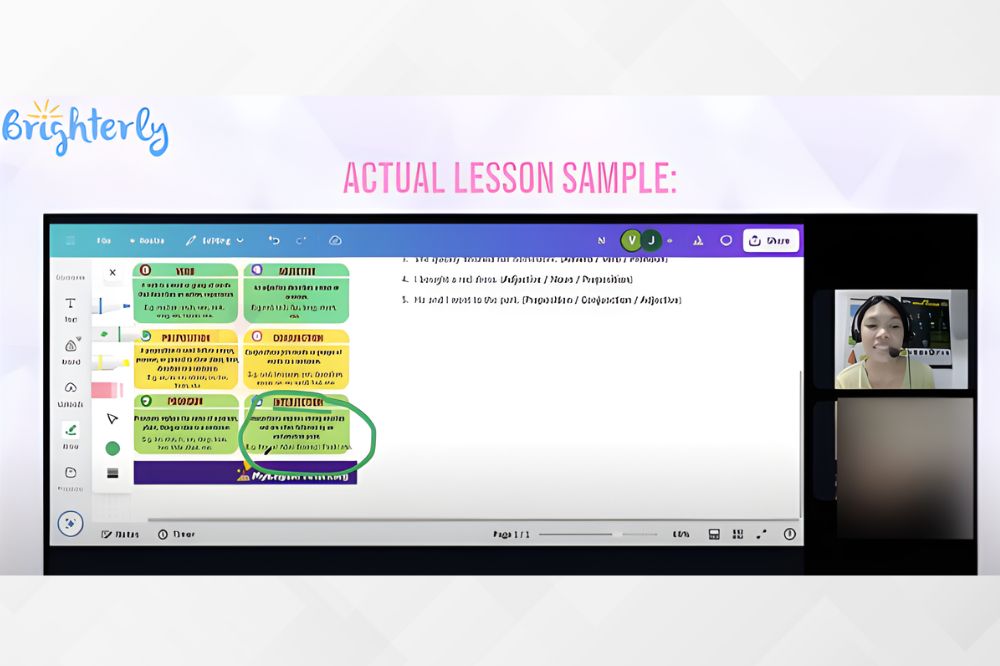
This is a key tactic of Brighterly’s reading tutors online, who use gamified learning and personalized curricula to keep children continually improving, all while having fun.

Brighterly Actuall Lesson Sample

Use Structured Practice Tools

Alongside games, there is a range of dedicated learning resources available at your fingertips. Fun reading activities like word searches, flashcards, and worksheets help your child think outside of the box and give them new ways to reinforce their reading. You can also enlist tools like coloring crayons to support reading and ask kids to color-code words, make sight word art, or color in their visualizations — the sky is the limit!

Set Your Child Up For Reading Success

When your child has strong reading comprehension skills, they’ll find more challenging literacy learning, like structuring paragraphs or deciphering the main idea of a story, much easier. With these simple tips, you can help improve your child’s reading comprehension and ensure they never fall behind.


April 13, 2026 0 comments
0 FacebookTwitterPinterestPocketEmail
Life Insurance for Parents Why It’s Essential for Your Family’s Future
Teach Mama Community

Life Insurance for Parents: Why It’s Essential for Your Family’s Future

by Hannah April 10, 2026
written by Hannah

As a parent, your primary concern is the safety, security, and well-being of your children. But what would happen to your family if you were no longer there to provide for them? Life insurance is an essential part of securing your family’s future, especially when you’re the primary breadwinner. While it may not be the easiest topic to think about, having the right life insurance coverage in place can provide peace of mind, knowing that your loved ones will be financially protected if something were to happen to you.

In this article, we’ll explore why life insurance is crucial for parents, the types of coverage available, and how it can help safeguard your family’s financial future.

What Is Life Insurance and Why Is It Crucial for Parents?

Life insurance is a contract between you and an insurance company, where you agree to pay premiums in exchange for a lump sum payout (the death benefit) to your beneficiaries in the event of your death. This payout can help cover your family’s expenses, such as mortgage payments, childcare, education costs, and day-to-day living expenses, ensuring that they can maintain their lifestyle even without your income.

For parents, life insurance is particularly important. In the event of an untimely death, your family could be left without the financial resources to cover their needs. Life insurance can help alleviate this burden, ensuring that your children’s education and future are not compromised. Moreover, it can provide the stability your spouse or partner needs to manage the household and raise your children without the added stress of financial hardship.

Types of Life Insurance: What’s the Best Option for Parents?

When it comes to life insurance, there are several different types of policies to choose from. The two most common types are term life insurance and whole life insurance.

  • Term Life Insurance: This is the most affordable type of life insurance. It provides coverage for a set period (typically 10, 20, or 30 years). If you pass away during the term of the policy, your beneficiaries will receive a death benefit. Term life insurance is often the best choice for parents, as it offers substantial coverage at a much lower cost than whole life insurance. It’s ideal for parents who need coverage for a specific period, such as while their children are growing up or while they’re paying off a mortgage.
  • Whole Life Insurance: This type of life insurance provides lifelong coverage and also builds cash value over time. While it offers permanent protection, it comes with a significantly higher premium than term life insurance. Whole life insurance may be suitable for those who want lifelong coverage and are prepared to pay the higher premiums, but for most parents, term life insurance offers sufficient protection at a more affordable price.

How Much Life Insurance Coverage Do You Need?

Determining how much life insurance coverage you need depends on several factors, including your income, debts, and future obligations. A good rule of thumb is to have coverage that is 10 to 12 times your annual income. However, there are other factors to consider, such as:

  • Mortgage: How much is left on your home mortgage? Life insurance can help pay off the mortgage so that your family can stay in the home.
  • Children’s Education: If you have young children, consider how much money will be needed for their education. Life insurance can help fund their schooling, ensuring they have the opportunity to pursue their academic goals without financial barriers.
  • Existing Debts: Do you have outstanding loans, credit card balances, or other debts? Life insurance can help pay these off, reducing the financial burden on your spouse or partner.
  • Spouse’s Income: If your spouse or partner relies on your income, factor in how much money they would need to maintain the household. Life insurance can replace that lost income for a specified period.

When calculating how much coverage you need, be sure to consider both immediate and long-term expenses. It’s better to have more coverage than not enough, as the goal is to provide your family with security and stability during a difficult time.

When Is the Right Time to Buy Life Insurance?

The best time to purchase life insurance is when you have dependents or significant financial responsibilities. If you are just starting a family, buying life insurance early can ensure that your children are protected if something were to happen to you. It’s also wise to consider life insurance if you’ve recently purchased a home or taken on significant debt.

Buying life insurance while you’re young and healthy is crucial, as premiums tend to be lower at younger ages. Moreover, securing coverage early means you’ll have it in place before any major life changes occur. The earlier you buy, the more affordable the premiums will be, and the more financial security you can provide for your family.

What Happens If You Don’t Have Life Insurance?

If you don’t have life insurance, your family may be left struggling financially if you were to pass away unexpectedly. Without coverage, your spouse or partner might be forced to sell assets, take on additional debt, or make lifestyle sacrifices to cover essential expenses.

While it’s uncomfortable to think about, not having life insurance can leave your family vulnerable to financial hardship. The loss of income, combined with the costs of daily life and children’s education, can create significant strain. Life insurance alleviates these worries, providing a safety net for your loved ones.

Happy and financially stable family

The Emotional and Practical Benefits of Having Life Insurance

While the financial protection that life insurance provides is the most obvious benefit, there are also emotional advantages. Having life insurance means you can rest easy knowing that your family will be taken care of financially, even if you’re not there to provide for them. This peace of mind can help you focus on living in the moment with your loved ones, knowing that their future is secure.

Moreover, life insurance can help ease the burden on your surviving family members during a difficult time. Instead of worrying about how to pay the bills or fund education, they can focus on grieving and healing without added financial stress.

Conclusion

Life insurance is one of the most important investments a parent can make to ensure their family’s financial future. Term life insurance, with its affordability and flexibility, offers an excellent option for parents who need substantial coverage at a reasonable cost. By securing the right amount of coverage and purchasing it early, you can protect your family from the unexpected and provide them with the financial support they need to move forward in your absence. Don’t wait—take the time today to evaluate your life insurance needs and ensure your family’s future is secure.

April 10, 2026 0 comments
0 FacebookTwitterPinterestPocketEmail
How to Succeed in College Physics Study Tips and Time Management Strategies
Teach Mama Community

How to Succeed in College Physics: Study Tips and Time Management Strategies

by Hannah April 10, 2026
written by Hannah

College physics is one of the most rewarding yet challenging subjects students encounter. Whether you’re majoring in a STEM field or taking it as part of your general education, mastering physics is essential to your academic success. However, the complexity of the concepts and the problem-solving required can often lead to stress and frustration. That’s why developing a solid study routine and time management strategy is crucial to succeeding in physics.

In this article, we will provide you with a variety of strategies that can help you succeed in college physics. From active learning techniques to effective time management, these tips will help you improve your study habits, retain the material, and ultimately perform better in your courses.

Embrace Conceptual Learning: Understanding the “Why” Behind the Equations

One of the first mistakes students make when studying physics is focusing solely on memorizing equations and formulas without understanding the underlying concepts. While formulas are important, they are tools for explaining real-world phenomena. Before diving into the equations, spend some time trying to grasp the physical principles behind them.

For example, understand the concepts of forces, energy, and motion before jumping into the equations that represent them. Visualize how these principles apply to real-world scenarios—such as how gravity pulls objects toward the Earth or how energy is transferred in a moving vehicle. By grasping the “why” behind the equations, you will find it much easier to apply them in problem-solving situations.

Develop Active Learning Strategies

Active learning is a powerful approach for mastering physics. Instead of passively reading through notes or textbooks, engage with the material by actively practicing what you’ve learned. One effective way to do this is by solving problems. Don’t just read the solutions—try to solve problems on your own first. Even if you get stuck, the process of attempting to find the solution will help you understand the material better.

Another active learning strategy is teaching the material to someone else. Whether it’s a classmate or even yourself explaining concepts aloud, teaching is a great way to reinforce your understanding. If you can explain a concept clearly to someone else, it means you truly understand it. Furthermore, revisit challenging problems and try solving them in different ways. This will help you develop a deeper understanding of the concepts.

Time Management: Mastering Your Physics Schedule

Physics courses often involve multiple assignments, readings, and exams, all of which can be overwhelming if not managed properly. Time management is one of the most effective ways to reduce stress and stay on top of your work.

Start by creating a study schedule. Plan out when you will study for each class and stick to your schedule. Be sure to dedicate enough time to regular review sessions—don’t leave everything until the night before an exam. One helpful technique is time-blocking, where you allocate specific time blocks each day for studying. For example, set aside 1 hour in the morning for physics problem-solving, then 30 minutes in the afternoon for reviewing notes.

Additionally, the Pomodoro Technique can help increase focus and productivity. Set a timer for 25 minutes, work on physics problems or review material, and then take a 5-minute break. After four 25-minute sessions, take a longer break (15–30 minutes). This method helps prevent burnout and keeps your brain engaged.

Break Complex Problems into Manageable Steps

Physics problems can often seem intimidating, especially when you don’t know where to start. Instead of trying to solve the entire problem at once, break it down into smaller, more manageable steps. First, read the problem carefully and identify the known and unknown variables. Write down all relevant formulas and principles you think might apply to the problem.

Then, tackle one part of the problem at a time. Solve for one unknown, then move on to the next step. Focusing on one part of the problem reduces the feeling of overwhelm and helps you approach the solution systematically.

College student studying

Use Visual Aids and Diagrams

Many physics concepts are easier to understand through visuals. When dealing with problems involving forces, motion, or energy, draw diagrams to represent the situation. A free-body diagram is an excellent way to visualize forces acting on an object, while a graph can help you better understand relationships between variables, such as speed and time.

Additionally, online simulations and physics apps can help you visualize concepts that might be hard to grasp through reading alone. Websites like PhET Interactive Simulations offer free, interactive simulations that let you explore physics concepts and see them in action. These tools can enhance your understanding by giving you a hands-on, visual experience.

Use Supplemental Resources: Don’t Hesitate to Seek Help

While your textbooks and class notes are essential, they’re not always enough. It’s important to use additional resources when necessary. Websites like Khan Academy and YouTube channels like MinutePhysics and Veritasium provide alternative explanations of complex physics topics. If you’re struggling to grasp a particular concept, sometimes hearing it explained in a different way can make all the difference.

If you’re still having difficulty, physics tutoring can be an excellent resource for additional help. Whether online or in person, tutors can offer personalized assistance to help clarify difficult topics and provide you with strategies to improve your problem-solving skills. Tutors can help you work through challenging equations and explain concepts in a way that fits your learning style.

Join Study Groups: Collaborate with Peers

Physics can be a challenging subject, but you don’t have to go through it alone. Consider joining or forming a study group with classmates. Study groups are a great way to collaborate on problem sets, share different perspectives on difficult problems, and reinforce what you’ve learned. Sometimes, explaining a concept to someone else can help clarify your own understanding.

Moreover, group study sessions can serve as a motivational tool, as everyone holds one another accountable for staying on track with their studies. If your classmates are tackling the same material, discussing it together can deepen your understanding.

Stay Calm During Exams: Manage Stress and Anxiety

Exams are a major source of stress, but it’s important to manage your anxiety and stay calm. The best way to do this is by being well-prepared. Start studying early and practice solving a variety of problems so that you’re comfortable with the material. On the day of the exam, take deep breaths, read each question carefully, and approach problems methodically. Don’t rush; instead, focus on applying your knowledge systematically.

If you find yourself feeling anxious, take a short break to clear your mind and refocus. A relaxed, confident mindset will help you approach your physics exam with clarity.

Conclusion

Succeeding in college physics requires a combination of effective study techniques, time management, and persistence. By adopting active learning strategies, staying organized, breaking down complex problems, and utilizing available resources, you can excel in this challenging subject. Don’t hesitate to seek additional support, whether through tutoring or online resources, to help clarify difficult concepts. Remember that physics is a subject that requires consistent effort, and with the right strategies in place, you can conquer it successfully.

April 10, 2026 0 comments
0 FacebookTwitterPinterestPocketEmail
MICRO-VOLUNTEERING FOR MINIS EDUCATIONAL SERVICE PROJECTS FOR AGES 5-8
Teach Mama Community

Micro-volunteering For Minis: Educational Service Projects For Ages 5-8

by Hannah April 9, 2026
written by Hannah

Micro-volunteering is a fun way for kids aged 5-8 to make a difference in their communities. You can help by making cards for hospital patients, picking up litter in parks, or starting a garden. These small acts of kindness build confidence and teach teamwork. Plus, they help kids connect with others and grow emotionally. Want to discover even more exciting ideas and ways to get involved? There’s so much more you can do!

UNDERSTANDING MICRO-VOLUNTEERING: WHAT IT IS AND WHY IT MATTERS

Micro-volunteering is a fun and meaningful way for kids aged 5-8 to make a difference, even in small ways. It’s like being a superhero in your community!

When you participate in micro-volunteering, you help others, learn new skills, and see how your actions create a positive impact on the community. Whether it’s making cards for people in hospitals or helping to clean up a local park, every little bit counts.

The micro-volunteering benefits aren’t just for those you help; you gain confidence and feel proud of your contributions. You’re not just a kid; you’re a changemaker!

Why Micro-Volunteering Matters for Kids’ Development

When you get involved in micro-volunteering, you’re not just helping others; you’re also growing and learning in amazing ways. This experience can greatly impact your development, providing you with essential skills and insights.

Here are four key benefits:

  1. Social Skills: You’ll interact with diverse people, enhancing your communication and collaboration abilities.
  2. Community Awareness: You’ll learn about local issues, fostering a sense of belonging and responsibility.
  3. Emotional Growth: Helping others nurtures empathy and emotional intelligence, essential for personal growth.
  4. Teamwork Benefits: Working with others teaches you how to effectively share ideas and work towards a common goal.

Through micro-volunteering, you’ll gain valuable life lessons while embracing creative expression and cultural understanding!

Exciting Micro-Volunteering Ideas for Kids Aged 5-8

Looking for fun ways your child can help the community?

Organizing a community clean-up or making creative cards for those in need are perfect micro-volunteering ideas!

These activities not only make a difference but also let kids show off their creativity and teamwork skills.

Fun Community Clean-Up

Cleaning up your community can be a fun adventure for kids aged 5-8! You’ll learn how to help nature and meet new friends while making your neighborhood look great.

Here are some exciting ways to get involved:

  1. Community Gardening: Plant flowers or veggies together to make your area beautiful and tasty!
  2. Park Restoration: Help fix up local parks by picking up trash and clearing paths.
  3. Litter Patrol: Grab a trash bag and walk around your neighborhood, collecting litter.
  4. Nature Art: Use found items to create art installations that celebrate your clean environment.

These activities not only brighten your community but also teach the importance of caring for the planet.

Creative Card Making

Creating colorful cards is a fun and heartfelt way for kids aged 5-8 to spread joy and kindness in their community!

With just a few art supplies like markers, colored paper, and stickers, you can plunge into exciting card design. Start by thinking of someone who might need a smile—a neighbor, a friend, or even someone in a hospital.

Next, let your creativity flow! Draw, write a sweet message, or add fun decorations to make each card unique.

Once you’ve crafted your masterpieces, deliver them with a big smile or even mail them. You’ll see how a simple card can brighten someone’s day and inspire others to share joy, too.

Starting Micro-Volunteering at Home

While you might think volunteering is just for adults, getting your little ones involved in micro-volunteering at home can be a fun and rewarding experience.

You can create meaningful memories while teaching them the value of helping others. Here are some easy home activities to kickstart family projects:

  1. Card Making: Craft colorful cards to brighten someone’s day.
  2. Toy Donation: Sort through toys together and choose ones to donate.
  3. Neighborhood Cleanup: Grab some gloves and pick up litter in your area.
  4. Baking Treats: Bake goodies to share with neighbors or local shelters.

These activities not only bond your family but also instill a sense of community in your little ones.

Start small, and watch them grow into compassionate volunteers!

TEAM UP WITH LOCAL GROUPS FOR FUN PROJECTS

Teaming up with local groups can make volunteering even more exciting for you and your friends!

These partnerships often lead to fun activities that keep you engaged while helping the community.

Whether it’s planting flowers or organizing a food drive, there’s a project out there that you’ll love!

Local Partnerships Matter

Partnering with local organizations can turn micro-volunteering into exciting, hands-on adventures for kids aged 5 to 8. Through these community connections, kids learn valuable lessons while having fun.

Here are some partnership benefits:

  1. Skill Development: Kids can acquire new skills through engaging activities.
  2. Social Interaction: Working with others helps build friendships and teamwork.
  3. Community Impact: Children see how their efforts can positively affect their neighborhood.
  4. Increased Engagement: Local projects keep kids interested and motivated to help.

Engaging Activities for Kids

When kids join forces with local groups for micro-volunteering, they get to engage in fun and meaningful activities that spark their creativity. One exciting option is interactive storytelling, where children can create their own stories while collaborating with peers and community members. This not only boosts their imagination but also builds teamwork skills.

Another fantastic activity is gardening. Kids can help plant flowers or vegetables in local community gardens, learning about nature while making their environment greener.

These hands-on experiences provide a sense of accomplishment and connection to the community. By teaming up on these projects, kids not only have a blast but also contribute positively to their neighborhoods, making a difference one small step at a time!

Learning Through Micro-Volunteering

Micro-volunteering offers a fun and engaging way for kids aged 5-8 to learn important life skills while helping others.

Through these small acts of kindness, children can gain valuable educational benefits and boost their community awareness.

Here are four key skills they can develop:

  1. Teamwork: Working together with peers fosters collaboration and communication.
  2. Responsibility: Completing tasks nurtures a sense of ownership and reliability.
  3. Creativity: Finding innovative solutions encourages imaginative thinking.
  4. Empathy: Understanding the needs of others builds compassion and social awareness.

How Micro-Volunteering Builds Empathy and Kindness

Helping others through micro-volunteering is a great way for kids to understand and practice empathy and kindness.

When you engage in small acts of service, like making cards for seniors or collecting items for those in need, you’re not just helping others—you’re also learning about their feelings.

This empathy development helps you see the world from different perspectives, fostering deeper connections with others.

As you show kindness through these simple acts, you cultivate an inner sense of compassion that will stay with you as you grow.

Plus, when you see the smiles you create, it feels amazing!

Micro-volunteering helps you build a kinder, more understanding world, one small deed at a time.

How to Celebrate Kids’ Volunteer Achievements

Celebrating kids’ volunteer achievements can make their experiences even more meaningful and exciting. Recognizing their hard work boosts their confidence and encourages future participation.

Here are some celebration ideas to make their achievements stand out:

  1. Host a Mini-Ceremony: Gather family and friends to honor their contributions with a small ceremony.
  2. Create a Recognition Certificate: Design a colorful certificate showcasing their volunteering efforts.
  3. Share Their Story: Write a short story or blog post about their experience and share it with your community.
  4. Volunteer Together Again: Plan another micro-volunteering event where they can contribute and feel the joy of helping others once more.

These ideas not only provide achievement recognition but also inspire kids to continue making a difference!

Resources for Finding Micro-Volunteering Opportunities

Finding the right micro-volunteering opportunities for young kids can be an exciting adventure that helps them continue their journey of making a difference.

Start by exploring online platforms designed for families and children, like VolunteerMatch or JustServe. These sites often list age-appropriate activities that encourage fun while giving back.

Local community boards are another great resource—check libraries, schools, and community centers for projects that welcome young volunteers.

You might find activities like helping at food drives or participating in park clean-ups, especially in communities connected to families with older siblings enrolled in an accredited high school online, where service and outreach are often encouraged.

Conclusion

Incorporating micro-volunteering into your child’s routine not only fosters a sense of community but also enriches their development. As the saying goes, “Many hands make light work.” By engaging in small acts of kindness, kids aged 5-8 can learn valuable lessons about empathy and teamwork. So, why not start today? With countless opportunities available, you can inspire your little ones to make a big difference, one tiny act at a time!

April 9, 2026 0 comments
0 FacebookTwitterPinterestPocketEmail
Why CCA Is the Top Virtual School for Students in Rural Pennsylvania
Teach Mama Community

Why CCA Is the Top Virtual School for Students in Rural Pennsylvania

by Hannah April 9, 2026
written by Hannah

For rural Pennsylvania parents, access to a high-quality education for children is paramount. Local schools may face challenges in offering specialized instruction that helps students thrive. If you’re looking for a personalized and comprehensive learning experience, consider cyber charter schools with career-focused courses. What are the top-rated virtual schools for students in rural areas of Pennsylvania?  

The Difference When Attending Commonwealth Charter Academy

Commonwealth Charter Academy (CCA) is a top public charter school in Pennsylvania. This institution offers free enrollment and is accredited by the Middle States Association Commission on Elementary and Secondary Schools. Enrolling your child in CCA gives them a change of pace and a worthwhile education. 

Public schools require your children to live in the district. Meanwhile, public cyber charter schools expand opportunities by delivering instruction online. This approach has let CCA encourage innovative teaching methods and improve learning. As part of the CCA family, you are the center of your child’s educational experience. 

How Rural Students Benefit From a CCA Education

Living in rural Pennsylvania offers a unique quality of life. However, there may be limited opportunities to advance your child’s education. Here are six reasons why CCA is uniquely positioned to fill the gaps most commonly faced by families. 

1. Internet Subsidies and Technology

Researchers say rural Americans disproportionately lack broadband access, which affects their livelihoods. CCA makes life easier for students and their families by offering an instructional technology support subsidy. This credit makes high-speed internet more affordable. 

Another critical benefit for rural families is CCA’s technology assistance. Upon enrollment, your child receives the devices needed for their education. The online school provides a free laptop, an additional monitor and a printer to increase mobility. Each computer includes preloaded software and learning programs. If your family is traveling, the kids can take their schooling with them. 

2. Expansive Course Selection

CCA tailors the educational experience to the student, accounting for interests and goals. The standards-aligned curriculum ensures your child will have career- and college-ready skills by the time they graduate. Its educational program starts with math, science, language arts and social studies. Then, your student can take advantage of college- and AP-level courses as they enter high school. 

There are over 100 courses with evolving curricula. At CCA, you can rest assured that the teachers incorporate best practices into lessons while aligning with Pennsylvania and national standards. STEM opportunities are abundant, featuring marine biology, extended lesson labs and real-world applications. 

3. Advanced Academic Opportunities

CCA is among the top-rated virtual schools for students in rural areas because it offers challenging courses. If your student needs advanced classes, enroll in CCA’s honors program starting in third grade. Upon reaching high school, your child can participate in AP and college courses. While demanding, these classes are enriching and explore topics in-depth.  

The school works with the teaching staff and your family to identify students with gifted characteristics. If eligible, your child can take honors courses in every core discipline. Students taking AP classes can take an exam at the end of the course to test their mastery. Additionally, CCA offers fun electives approved by the NCAA Eligibility Center. 

4. Personalized Learning Pace

In a traditional classroom, the teacher may move on to the next topic regardless of whether every student has grasped the current one. CCA uses a self-paced structure to best serve the student. Each program is tailored to meet individual needs and strengths, and students can learn at different times.  

Personalized learning is essential to the innovative CCA approach. You and your child get to choose which courses they take, thus optimizing their learning experience. Your student gets a safe learning environment to process new information and hone their skills. The school’s teachers are trained to support different learning styles, providing pupils with individualized attention. 

5. Career-Focused Pathways

Career readiness is paramount for parents statewide. That’s why CCA is among the top-rated virtual schools for students in rural areas of Pennsylvania. This institution dedicates itself to preparing your child for the jobs of tomorrow. Whether college or technical school, they’ll be ready for the next step. The Career Pathways program and college preparation services ensure graduates are prepared to succeed. 

As a public charter school, CCA can design a customized curriculum with hands-on learning. Through each class, your child hones 21st-century skills and receives hands-on training. For example, its Capital Campus in Harrisburg is renowned for its aquaponics facility. Here, CCA students learn about the benefits of using fish waste instead of soil. 

6. Reduced Transportation Time and Costs

While school starts at the bell, the day starts much earlier with the morning commute. By choosing CCA, families can eliminate the daily travel burden and reap the benefits. The school offers flexible scheduling rather than a mandatory start time. Synchronous live lessons are available, though the personalized curriculum permits coursework at the student’s pace. 

The financial savings are tangible for Pennsylvania families. You no longer have to use fuel for daily drop-offs and pickups. Parents can also preserve their tires and go longer between oil changes, which typically occur every 10,000 miles for new cars. Besides monetary benefits, your family gains time back with a less frantic morning routine and more quality time.    

Why Top-Rated Virtual Schools Are Essential for Students in Rural Areas of Pennsylvania

Virtual schools help families in rural areas solve the fundamental challenges of public education. 

The primary issue is equity. For decades, a student’s educational destiny was tied to their ZIP code. Your local school district may have a teacher shortage, which is about 4,000 professionals statewide. CCA standardizes access to high-quality resources, even if students live in remote areas of the state. 

Opportunity is another critical pillar, considering the economy’s globalization and digitalization. Children are expected to prepare for professional life despite the lack of opportunities in their communities. CCA students can use the Career Pathways program to develop skills in high-demand fields. 

A high-quality education relies on modernization and personalized learning experiences. If you live in a rural area, you may need help getting targeted support in under-resourced classrooms. CCA’s curriculum works with your family to decide the best pace. It also fosters digital natives by developing technological literacy that’s essential in modern colleges and workplaces. 

Choosing the Best Educational Path for Your Child

Choosing the Best Educational Path for Your Child

Geography and resource limitations can make educational choices more challenging for rural Pennsylvania families. CCA addresses these hurdles by incorporating educational equity and opportunity. Each student works with certified teachers and receives the technology they need. The school’s partnership with families ensures a modern and personalized education to prepare students to succeed after graduation.

April 9, 2026 0 comments
0 FacebookTwitterPinterestPocketEmail
Psychiatric Clinics for Teen Mental Health Support
Teach Mama Community

LA’s 5 Best Psychiatric Clinics for Teen Mental Health Support

by Teach Mama April 5, 2026
written by Teach Mama

Teen mental health needs in Los Angeles run the full spectrum. Some families need quick access to board-certified psychiatry for medication management. Others are searching for affordable nonprofit therapy that won’t stretch an already tight budget. Still others need private outpatient clinics staffed by highly trained therapists who know adolescent development inside and out. Child and adolescent psychiatrists remain in short supply across California, so access often comes down to knowing where to look. Telehealth has opened doors, bringing psychiatric evaluations and medication management to families who can’t make the drive across LA. At the same time, nonprofit community centers have created pathways to quality therapy regardless of income. This guide features five LA-area providers selected in 2026 that collectively address these varied needs. You’ll see telehealth psychiatry, private outpatient practices, a nonprofit counseling center, and full-service psychiatric clinics with both outpatient care and direct links to higher levels of support.

How to Select Top Psychiatric Clinics in Los Angeles for Teen Mental Health

Each provider was evaluated against verifiable credentials, adolescent treatment experience, service breadth, cost transparency, and fee flexibility. Here’s what mattered most in 2026.

  • Clinical qualifications and licensure: Only licensed therapists (LCSW, LMFT, LPCC) or board-certified psychiatrists with demonstrated adolescent caseloads were included; unlicensed or unsupervised practitioners were excluded.
  • Adolescent-specific therapeutic approach: Programs built around teen developmental needs (family participation, school coordination, age-appropriate methods) were ranked higher than adult-focused practices that occasionally see younger patients.
  • Cost accessibility and fee flexibility: With private teen psychiatry sometimes costing hundreds per session, providers accepting major insurance, working on sliding scales, or offering nonprofit rates earned priority.
  • Range of services beyond individual therapy: Group programs, parent coaching, telehealth visits, or pathways to intensive or residential care signal a provider can adapt as your teen’s needs change.
  • Therapist matching and family involvement: Practices that intentionally pair teens with the right clinician and build parent consultation or family therapy into the program (not just as an afterthought) received higher marks.

List of the Best Psychiatric Clinics in Los Angeles for Teen Mental Health

These five providers represent different models of adolescent mental health care across LA and the Valley.

  1. Reimagine Psychiatry
  2. My LA Therapy
  3. Child & Teen Counseling
  4. Mental Fitness Clinic
  5. BNI Clinics

LA’s Best Psychiatric Clinics for Teen Mental Health

1. Reimagine Psychiatry

  • Launched in 2024 as a California-wide telehealth psychiatry practice directed by Dr. Sham Singh, a board-certified psychiatrist who completed residency training at UCLA; psychiatric evaluations are scheduled within three days of first contact.
  • Adolescents and adults receive video-based care for anxiety, ADHD, OCD, depression, PTSD, agoraphobia, panic disorder, and mood conditions through HIPAA-secured platforms; English and Spanish-speaking providers are on staff.
  • Treatment combines medication management with lifestyle adjustments, supplement suggestions, and pharmacogenetic testing to pinpoint the best medication before the first prescription is issued.
  • Coverage includes Aetna, Anthem Blue Cross, Blue Shield of California, ComPsych, and Meritain Health; all appointments are virtual, so travel is never required.
  • Symptom improvement typically appears within four to six weeks; standardized assessment tools monitor progress and inform any medication adjustments along the way.

Company Overview: Dr. Sham Singh’s 2024 telehealth practice delivers psychiatric evaluations in three days and provides ongoing medication management for teens dealing with anxiety, ADHD, depression, OCD, PTSD, and mood disorders. For LA families stuck on weeks-long waitlists at in-person clinics, this is the fastest entry point to board-certified psychiatric care on the list. Major insurance plans are accepted, and genetic testing lets you personalize medication choice before your teen takes the first dose.

Best For: LA-area teenagers needing rapid, insurance-covered telehealth psychiatry for anxiety, ADHD, depression, or mood concerns without waiting weeks for an in-person appointment.

Standout Feature: Three-day turnaround on board-certified psychiatric evaluations via telehealth, paired with genetic testing to select the right medication upfront; no other provider on this list matches that speed.

2. My LA Therapy

  • West Los Angeles group practice located at 12100 Wilshire Blvd, 8th Floor, Los Angeles, CA 90025, serving West LA, Brentwood, Santa Monica, Venice, Malibu, and Sherman Oaks; both in-office and online sessions are offered.
  • Every therapist holds LCSW, LMFT, or LPCC licensure and is hand-vetted by the practice founder for clinical competence, empathy, and deep knowledge of adolescent development before joining the team.
  • A Therapist Matching Specialist conducts a free, detailed intake conversation to pair your teen with the ideal fit; if you’re not satisfied with the match, the practice backs it with a money-back guarantee.
  • Treatment methods span CBT, EFT, CPT, psychodynamic therapy, somatic therapy, hypnotherapy, NLP, and life coaching; the style is active and tool-focused, not passive or listen-only.
  • Teens and adults are treated for anxiety, depression, trauma, ADHD, eating disorders, behavioral struggles, substance concerns, and relational issues; parent education and family therapy complement individual work.

Company Overview: This West LA practice rigorously screens every therapist before matching them with families through a free consultation call tailored to your teen’s specific needs. The money-back matching guarantee and active, change-oriented therapy approach (CBT, EFT, somatic therapy, hypnotherapy) set it apart from impersonal directory listings or clinicians who just nod along. Parent education and family sessions run side by side with individual teen therapy.

Best For: Families who want a carefully vetted, precisely matched licensed therapist for their teenager, backed by a money-back guarantee and a hands-on, practical therapeutic style rather than passive conversation.

Standout Feature: A dedicated Therapist Matching Specialist personally screens and pairs each teen with the best-fit licensed clinician from a curated roster, and guarantees satisfaction with a money-back policy.

3. Child & Teen Counseling

  • 501(c)(3) nonprofit community counseling center at 5550 Topanga Canyon Blvd, Suite 150, Woodland Hills, CA 91367; Executive Director Kent Toussant, LMFT, leads the organization; operates as the sister center to Teen Therapy Center.
  • Cash-only model (insurance is not accepted); individual sessions cost $90 with rates adjusted based on family financial need; group therapy runs $30 per session, one of the lowest rates on this list.
  • Clinicians are master ‘s-level graduate trainees enrolled in MFT, LPCC, or LCSW programs and supervised by fully licensed professionals; this teaching-clinic structure mirrors teaching hospitals, delivering strong care at reduced fees.
  • Therapy on Campus brings free counseling directly to three local partner schools, eliminating barriers for students who can’t reach the office.
  • Group offerings include “Girls Who Glow” for high school girls and a middle school boys group meeting on Tuesdays at 6 pm for $30; individual therapy, family therapy, and couples counseling round out the services.

Company Overview: Kent Toussant, LMFT, directs this Woodland Hills nonprofit, which charges $90 per session with flexible pricing and offers group therapy for just $30. Supervised master ‘s-level trainees who provide counseling under a teaching-clinic model that keeps quality high and costs low. The Therapy on Campus initiative takes free sessions to three partner schools, meeting students exactly where they are.

Best For: LA and San Fernando Valley families needing high-quality, affordable therapy for children and teens, including nonprofit group programs, school-based counseling, and sliding-scale individual rates.

Standout Feature: Nonprofit pricing model with $30 group sessions and a free Therapy on Campus program at three schools; this is the most budget-friendly option for teen therapy on the entire list.

4. Mental Fitness Clinic

  • Dr. Neevon Esmaili, MD, a dual-board-certified psychiatrist, opened the practice in 2015; the group clinic is located at 11400 W Olympic Blvd, Suite 660, Los Angeles, CA 90064, in West Los Angeles.
  • Services cover in-person and telehealth psychiatry, psychotherapy, and neuropsychological testing for children, adolescents, adults, and athletes at every level; all clinicians are board-certified and hold active California licenses.
  • Insurance accepted for medication management and psychiatry includes Aetna, Anthem Blue Cross of California, and Cigna; neuropsychological testing is out-of-network with a superbill provided; scheduling includes early-morning slots starting at 7 am.
  • Each treatment plan blends psychotherapy, medication, and lifestyle modifications based on the individual; care is structured as a true partnership between patient and provider.
  • The practice maintains dedicated sports psychiatry programs for child, adolescent, and adult athletes, a rare specialization within the LA teen psychiatry space.

Company Overview: Dr. Neevon Esmaili, MD, started this West LA group practice in 2015 to offer in-person and telehealth psychiatry, psychotherapy, and neuropsychological testing for children, adolescents, adults, and athletes. All providers hold board certification and California licensure, and the clinic works with Aetna, Anthem Blue Cross of California, and Cigna for psychiatry and medication management. What makes it stand out is its formal sports psychiatry track for young and adult athletes alike, an uncommon focus in the LA teen psychiatry field.

Best For: LA-area teenagers, especially student athletes, who need board-certified outpatient psychiatry (in-person or telehealth), neuropsychological testing, and coverage through Aetna, Anthem Blue Cross CA, or Cigna.

Standout Feature: A formal sports psychiatry program designed for child and adolescent athletes alongside standard teen psychiatry; few LA psychiatric clinics on this list offer that level of sports-mental-health focus.

5. BNI Clinics

  • Two USC-educated psychiatrists, including Dr. Oliver Ahmadpour (fellowship in Adult, Child, and Adolescent Psychiatry at USC Keck School of Medicine; active in the American Psychiatric Association and Society of Addiction Medicine), established the clinic in 2008 in Agoura Hills, Los Angeles.
  • Full-spectrum outpatient services include child and adolescent psychiatry, psychotherapy (CBT, DBT, psychodynamic therapy, family therapy), psychological evaluations, TMS (Transcranial Magnetic Stimulation) therapy, ketamine therapy, and outpatient detox.
  • The team brings together neurologists, psychiatrists, psychologists, and certified therapists who follow evidence-based protocols and participate in ongoing training; no referral is usually required to book an appointment.
  • BNI Clinics is the sister organization to BNI Treatment Centers, a separate residential and partial hospitalization/intensive outpatient facility in Agoura Hills and Calabasas, providing a direct escalation route when outpatient care isn’t enough.
  • Children, teens, and adults are treated for anxiety, depression, ADHD, trauma, behavioral conditions, substance use, OCD, and other psychiatric diagnoses; most PPO plans are accepted, but Medi-Cal, Medicare, IEHP, Kaiser, and government-funded plans are not.

Company Overview: Founded in 2008 by two USC psychiatrists, including Dr. Oliver Ahmadpour, a child and adolescent psychiatry specialist and American Psychiatric Association member, BNI Clinics delivers the widest service menu of any standalone outpatient practice on this list. Standard psychiatry sits alongside neurological evaluations, TMS therapy, ketamine therapy, and outpatient detox. As the sister clinic to BNI Treatment Centers (a separate residential and intensive-outpatient teen program), it offers a seamless pathway to higher levels of care if outpatient work is no longer sufficient.

Best For: Families looking for a full-service outpatient psychiatric clinic with USC-trained child and adolescent psychiatrists, advanced interventions like TMS, and a built-in referral path to a residential teen treatment program.

Standout Feature: The sole clinic here that functions as the outpatient arm of a dedicated residential teen treatment center, enabling smooth, single-network referrals from outpatient to residential or intensive care when a teen’s needs grow.

Factors to Consider When Choosing a Psychiatric Clinic for Teen Mental Health in Los Angeles

Know the Difference Between Therapy and Psychiatry Before You Search

Therapists (LCSW, LMFT, LPCC) deliver talk-based care and cannot write prescriptions; psychiatrists are medical doctors authorized to diagnose, prescribe, and manage psychiatric medications. Most teens with moderate to severe conditions benefit from both, so understanding which type your teen needs first will save you from appointments with the wrong kind of provider.

Match the Cost Model to Your Family’s Budget

Therapy and psychiatry for teenagers in LA range from $30 nonprofit group sessions to hundreds of dollars for private psychiatric evaluations. Before reaching out, confirm whether a provider accepts your insurance, offers sliding-scale pricing, or operates on nonprofit pricing; the financial model will dictate whether treatment remains sustainable over the weeks or months it usually takes.

Prioritize Providers Who Involve Parents in the Process

Adolescent mental health outcomes improve when parents participate actively. Providers who structure parent consultations, family therapy, or parent coaching directly into the program (rather than offering them as optional) create home environments that support the gains your teen makes in sessions.

Verify That the Therapist or Psychiatrist Has Documented Adolescent Specialisation

General adult therapists and psychiatrists are not the same as adolescent specialists. Ask outright whether the clinician who will personally see your teen has specific training or a documented caseload in adolescent mental health; developmental knowledge makes a real clinical difference at this life stage.

Ask About the Pathway to Higher Care If Needed

Teen mental health conditions can worsen, and a clinic that can refer directly to its own or a trusted partner’s intensive outpatient or residential program keeps continuity intact instead of forcing you to start over. Ask any outpatient provider what their escalation plan looks like if your teen’s condition intensifies during care.

Final Thoughts

Begin with an independent clinical assessment by a board-certified child and adolescent psychiatrist or a licensed therapist who specializes in teens. That evaluation will clarify the right level and type of care before factors like cost, location, or convenience steer the decision. Get insurance coverage, fee structures, and provider qualifications confirmed in writing before you commit; both can shift, and confirming upfront stops unpleasant surprises once treatment begins. If your teen is in crisis right now or talking about self-harm or suicide, call or text the 988 Suicide and Crisis Lifeline immediately. In situations of immediate danger, ring 911 without delay.

April 5, 2026 0 comments
0 FacebookTwitterPinterestPocketEmail
How to Help Prepare Your Kids for College
Teach Mama Community

How to Help Prepare Your Kids for College

by Hannah March 31, 2026
written by Hannah

At some point during your children’s schooling years, you’ll need to discuss the prospect of post-secondary education. Many teens will want to pursue education beyond high school, whether it’s at a college or university, a community college, a trade school, or a specialized institution. When they do, you’ll want them to be as prepared as possible for the next step. While it’s up to your children to decide what their futures will look like, you can help set them up for success in the following ways: 

Discuss Finances

As much as you might want to shield your children from discussions around finances, it’s important for them to understand that college can be expensive. That’s why discussing money early on can be essential. 

You can let them know about any savings programs you’ve started for them, such as CST Spark RESP plans, which are ETF-based mutual funds, and the ways they can save for themselves. Don’t be afraid to discuss the ins and outs of tuition fees and student loans and offer budgeting advice. The more they know, the easier it can be for them to make wise financial decisions as they get older. 

Develop Their Life Skills

You may take care of your children’s laundry, cooking, basic cleaning, and errands now, but they’ll need to do those things for themselves when they head off to college. As a result, it makes sense to have them develop these crucial life skills before they leave home.

Teach them how to cook simple meals, wash their own clothes, make appointments on their own, and perform all the chores they need to live comfortably and cleanly, such as vacuuming, cleaning bathrooms and kitchens, and disinfecting surfaces. 

Preparing Your Kids for College

Build Good Academic Habits

Good study habits in secondary school can carry through to post-secondary education and may even help make learning new subjects less overwhelming. With that in mind, help your teens develop a consistent study routine that includes note-taking and test-prep strategies. If you believe they are struggling in this area, consider hiring a tutor. 

Encourage Exploring Interests

From a young age, many children and teens know that they’ll pursue a university or college education. However, that doesn’t mean they yet know what for. That’s why encouraging them to explore their interests is so important. They can find out what they like and what excites them, which could help them choose the right educational path for them. As a parent, your encouragement can take the form of supporting their extracurricular activities, such as sports, arts, and clubs, and encouraging volunteering or part-time jobs. 

Research Colleges Together

Change can be scary. For many teens, the thought of leaving home and going off to college is exciting but daunting. Help them prepare by researching colleges together. Compare different types of schooling, such as small colleges versus large universities, and visit campuses where possible. 

You should also ask your teen about the environment they prefer, such as far away, close to home, rural, or urban. When they make their decision, they know that they’ve made it themselves, but with your support and encouragement. 

Preparing your children for college isn’t about taking over the process to improve their chances of making all the right decisions. It’s about providing encouragement and support as you teach them what it takes for them to thrive on their own. Teach them about money, life skills, and robust academic habits, and they can have the fundamentals of success as they start their educational journey.  

March 31, 2026 0 comments
0 FacebookTwitterPinterestPocketEmail
How to Design a Themed Backyard Playground
Teach Mama Community

How to Design a Themed Backyard Playground Kids Will Love?

by Teach Mama March 20, 2026
written by Teach Mama

A themed backyard playground transforms an ordinary yard into an exciting space where kids can explore, play, and use their imagination every day. Instead of just a simple swing set, a thoughtfully designed theme creates an entire world for children to enjoy. The key to a successful themed playground is choosing a theme kids love, carefully planning the layout, and adding features that match the theme while keeping safety and budget in mind.

Parents don’t need a large yard or expensive equipment to create something special. Simple materials like wood, rope, and paint can turn a small space into a pirate ship, jungle hideout, or fairy garden. The goal is to build a place where kids want to spend time outdoors and can create their own adventures.

This guide will walk you through selecting the right theme, planning the space, and adding elements that bring the playground to life. The process starts with understanding what kids enjoy and ends with a backyard that becomes their favorite place to play.

Planning and Designing a Themed Playground

A successful themed playground starts with three core decisions: the theme itself, the available space, safety requirements, and equipment that matches the ages of children who will use it. These elements work together to create a backyard space that balances fun with function.

Choosing a Playground Theme

The theme forms the foundation for every other decision in playground design. Popular choices include pirate ships, castles, space stations, jungle adventures, and farm settings. Parents should think about what most often sparks their children’s imagination during play.

The best themes leave room for creative play instead of restricting it. For example, a simple woodland theme can evolve as children grow, while a very specific theme might quickly lose its appeal. The chosen concept should also fit with the yard’s existing features, like trees, slopes, or fencing.

Budget plays a role in theme selection, too. Some themes require custom elements that cost more, while others use standard equipment arranged in creative ways. Outdoor playsets from retailers like Extreme Kids World offer modular pieces that adapt to different themes without requiring custom fabrication.

Color schemes and small details help bring themes to life without spending a lot. Paint, flags, signs, and decorations transform simple structures into themed environments. A few well-chosen accessories often have more impact than elaborate custom pieces.

Assessing Space and Safety Needs

The playground’s footprint depends on both yard size and safety zone requirements. Each piece of equipment needs a fall zone around it. Swings require at least 6 feet of clearance in front and back, while slides need clear landing areas.

Measure the available space before selecting equipment. A cluttered playground creates hazards and reduces play value. Most experts recommend leaving 12 feet between separate play structures to prevent collisions.

Surface material affects both safety and maintenance. Options include:

  • Wood chips: affordable, natural look, requires regular replacement
  • Rubber mulch: more durable, softer falls, higher initial cost
  • Poured rubber: offers the most protection, a permanent solution, and professional installation is needed
  • Artificial turf: low maintenance, good drainage, moderate price

The yard’s drainage patterns are important too. Low spots that gather water cause muddy conditions and can damage equipment. Gentle slopes improve drainage, but steep grades restrict where equipment can safely go.

Selecting Age-Appropriate Equipment

Equipment selection must match the developmental stages of the children who will use the playground. Toddlers need low platforms, gentle slides, and simple climbers. School-age children want more challenge through higher structures, complex climbers, and faster slides.

Mixed-age families benefit from zones within the playground. A section with equipment for younger children sits separately from areas with challenging features for older kids. This setup allows siblings to play nearby while each uses age-appropriate equipment.

Height limits provide basic safety guidelines. Platforms for children under 5 should stay below 4 feet, while equipment for older children can reach 6 to 8 feet. Guardrails and barriers prevent falls from elevated areas.

Consider these factors for each age group:

Age Range Platform Height Best Features
2-5 years Under 4 feet Single slides, low swings, spring riders
5-12 years 4-8 feet Multiple slides, climbing walls, overhead bars

The number of activity options influences how long the playground keeps children’s interest. A variety of equipment supports different play styles and physical abilities. Swings, climbers, slides, and imaginative play elements each serve unique purposes in child development.

Bringing the Theme to Life

Once the playground theme is selected, the next step is to turn that vision into a physical space. The right play zones, color choices, and decorative details all work together to create an environment that sparks imagination and keeps children engaged.

Incorporating Creative Play Zones

A themed playground requires distinct areas that match the chosen concept. For a pirate theme, designers should include a ship-shaped play structure with a captain’s wheel and crow’s nest. Space themes benefit from rocket-shaped climbers and dome structures resembling planets. Nature themes call for different elements. Tree stump step spots create natural pathways. Log balance beams test coordination skills. A small garden area allows children to dig and explore real plants.

Adventure themes need obstacle courses and climbing walls. These features challenge physical abilities while keeping kids active. A small tunnel system can represent caves or secret passages. Rope bridges connect different play structures and add excitement.

Water play zones work well with ocean or jungle themes. Simple splash pads or water tables provide sensory experiences. Sand areas complement beach themes and allow for creative construction projects.

Using Color and Materials Effectively

Colors should match the theme and create visual impact. Jungle themes use greens, browns, and bright tropical colors. Ocean themes rely on blues, teals, and sandy beiges. Space themes incorporate dark blues, purples, and metallic silver.

Materials need to be durable and safe. Natural wood works well for rustic or nature themes, blending with outdoor surroundings and aging gracefully. Painted metal structures suit modern or fantastical themes, enduring weather, and keeping bright colors.

Surface materials must be carefully chosen. Rubber mulch comes in many colors to match any theme, providing safety and defining zones. Artificial turf creates grassy areas without needing maintenance. Sand works perfectly for beach themes, but needs borders to contain it.

Texture adds depth to the design. Smooth surfaces contrast with rough bark or rope elements. Soft foam shapes on the ground add comfort and visual interest.

Adding Personalized Decor and Accessories

Small details complete the themed experience. Flags and banners add movement and color. A pirate theme needs a skull-and-crossbones flag. Castle themes benefit from pennant banners in royal colors.

Signs and labels help define spaces. Hand-painted wooden signs direct children to different areas. They can mark territories like “Dragon’s Den” or “Astronaut Training Center.” Chalkboard surfaces let kids create their own decorations.

Props enhance imaginative play. Steering wheels, telescopes, and periscopes fit nautical themes. Butterfly nets and bug boxes suit garden themes. Dress-up hooks near play structures store themed costumes and accessories.

Planters and garden beds tie into many themes. Sunflowers and tall grasses create jungle vibes. Herbs and vegetables teach about nature. Flower boxes on play structures add life and color to any design.


A themed backyard playground transforms outdoor space into a fun area where children love to spend time. Parents should focus on a clear theme that matches their child’s interests, then add play structures and decorations that support that vision. The key is to balance fun with safety and create different zones for various activities.

A well-planned playground grows with children and provides years of active play. With careful design choices and attention to detail, any backyard can become a special retreat that sparks imagination and keeps kids active outdoors.

March 20, 2026 0 comments
0 FacebookTwitterPinterestPocketEmail
Best Netflix Shows for Kids 5
Kids Media

20+ Best Netflix Shows for Kids – Ages 4-6 (Educational & Low Stim)

by Hannah March 19, 2026
written by Hannah

If you’ve ever opened Netflix looking for a show for your 4, 5, or 6-year-old and instantly felt overwhelmed, you’re definitely not alone. Many kids’ shows today are bright, fast-paced, and nonstop — they grab attention quickly but don’t always leave children feeling calm, focused, or ready to move on to the next part of their day.

As parents, what we truly look for is something a bit different. We want shows that keep our kids engaged without overstimulating them… shows that support learning, ignite imagination, and model positive behavior — not just capture their attention.

The good news is that Netflix has many great options — you just need to know what to look for.

Research and child development experts consistently emphasize that slower-paced, lower-stimulation shows help children better understand what they’re watching, support language development, and even foster creativity and problem-solving. Instead of overwhelming their senses, these kinds of shows give kids space to think, process, and connect what they see to real life.

In this post, you’ll find a carefully chosen list of the best Netflix shows for kids ages 4, 5, and 6 — along with a few to avoid — so you can feel confident pressing play the next time screen time arrives.

Use one of the buttons below to quickly jump to a section!

Best Netflix Shows For 4-6 ▸Netflix Shows To Avoid ▸

How We Picked These Netflix Shows (And Why They Work for Ages 4–6)

Best Netflix Shows for Kids 6

When choosing shows for kids ages 4, 5, and 6, it’s not just about what’s popular — it’s about what truly supports how young children learn, focus, and grow.

At this age, kids are developing important skills like attention, problem-solving, language, and emotional regulation. And what they watch can either support that… or work against it.

Research shows that just a few minutes of fast-paced, highly stimulating cartoons can temporarily impact a child’s attention, memory, and self-control. Other studies have also connected frequent exposure to overstimulating content with decreased focus and developmental issues over time.

That doesn’t mean screen time is “bad” — it just means what kids watch matters. So for this list, we focused on shows that are not only engaging but also developmentally appropriate for this age group.

Here’s what we prioritized:

  1. Slower, easy-to-follow pacing – Shows that give kids time to process what’s happening instead of jumping quickly from scene to scene. This helps support attention and understanding.
  2. Simple, clear storylines—At ages 4–6, kids learn best when stories are easy to follow and build on familiar ideas. This supports understanding and boosts confidence.
  3. Positive social and emotional lessons – We selected shows that showcase kindness, problem-solving, cooperation, and everyday scenarios that kids can relate to.
  4. Age-appropriate language and learning moments — Naturally introduce new vocabulary, basic concepts, and early learning skills without feeling overwhelming.
  5. Lower stimulation overall – We prioritized shows that avoid constant noise, rapid cuts, or overly “busy” visuals — because overstimulation can make it harder for kids to focus, process, and regulate after watching.

We also looked at what parents actually experience daily — like how kids behave after watching a show. Are they calm? Engaged? Inspired to play or ask questions? Or are they wired, distracted, or having a hard time transitioning?

Because at the end of the day, the best shows aren’t just the ones kids love — they’re the ones that leave them feeling balanced, curious, and prepared for what’s next.


What Actually Makes a Kids’ Show Worth Watching (Ages 4–6)

Best Netflix Shows for Kids 4 5 6

Not all kids’ shows are equally good — especially for ages 4, 5, and 6.

At this stage, children are learning how to focus, follow stories, solve problems, and understand emotions. The shows they watch can either support those skills or make them harder to develop.

So what truly makes a show “good” for this age?

It’s not whether it’s labeled educational — it’s about how the content is presented.

Research has shown that fast-paced, highly stimulating shows can make it harder for young children to focus, remember information, and control their behavior — even after brief viewing periods. Conversely, calmer, more deliberately paced shows give kids time to process what they see and connect it to what they already know.

Here’s what to look for:

  1. Slower pacing – Good shows don’t rush from one scene to the next. They give kids time to watch, think, and understand what’s happening.
  2. Clear, simple storylines – Stories that follow a logical path help kids build comprehension and confidence. If a show feels confusing or chaotic, it’s usually not the best fit for this age.
  3. Positive social and emotional modeling – Look for characters who solve problems, show kindness, work through challenges, and express emotions in healthy ways. These moments matter more than we often realize.
  4. Opportunities for learning (without pressure) — The best shows naturally introduce vocabulary, numbers, problem-solving, or real-world concepts — without feeling overwhelming or overly “academic.”
  5. Calm visuals and sound – Shows that avoid constant noise, flashing scenes, or nonstop action tend to be easier for kids to process and less likely to leave them feeling overstimulated.
  6. Encourages imagination or real-world play – After watching, do kids want to pretend, build, explore, or ask questions? That’s a great sign that the show is supporting healthy development.

At the end of the day, a “good” show isn’t just one that keeps kids entertained — it’s one that helps them feel calm, engaged, and ready to keep learning long after the screen is off.


How to tell if a show is too stimulating

Best Netflix Shows for Kids 4-6

Not all overstimulating shows are obvious. Some seem harmless, but still leave your child feeling off after watching.

The key isn’t just what’s on the screen — it’s how your child responds during and after the show.

Research shows that fast-paced, highly stimulating content can make it harder for young children to focus, remember, and regulate their behavior — even after short periods of watching.

During the show

  • Your child seems “zoned out” or glued to the screen
  • The show has constant action or rapid scene changes
  • There are a lot of loud sounds, flashing visuals, or chaos
  • The content feels overly unrealistic or nonstop “busy”

After the show (biggest clues)

  • Trouble turning the TV off
  • Hyper or “wired” behavior
  • Irritability or meltdowns
  • Short attention span
  • Difficulty transitioning to calmer activities

A simple test

After the show ends, ask:

  • Are they calm and ready to move on?
  • Or overstimulated and asking for more?

That answer tells you everything.

What you want instead

A good show should leave your child:

  • Calm, not overwhelmed
  • Engaged, but not “zoned out”
  • Ready to play, imagine, or move on

Because the best shows don’t just entertain — they help your child feel balanced even after the screen is off.


TIPS FOR MAKING NETFLIX MORE EDUCATIONAL 

Best Netflix Shows for Kids 4

Screen time doesn’t have to be passive. With just a few small adjustments, it can become a valuable part of how kids learn and engage with the world.

For children ages 4–6, even simple interactions can make a big difference in how much they take away from what they watch.

Here are a few easy ways to make Netflix time more meaningful:

Ask simple follow-up questions

After an episode, try questions like:

  • “What was the problem in the story?”
  • “How did they fix it?”
  • “What would you do?”

These help build comprehension and critical thinking.

Encourage storytelling and retelling – Let kids explain what happened in their own words. This strengthens memory, sequencing, and communication skills.

Pause and talk during key moments – If a character is making a decision or experiencing a big emotion, take a second to talk about it. These moments are great for building emotional awareness.

Connect shows to real-life experiences – If a show focuses on counting, kindness, or trying something new, look for ways to bring that into everyday routines.

Follow up with play or activities – Shows can inspire hands-on learning—whether it’s building, drawing, pretending, or exploring a new idea.

These small habits help turn screen time into something active, engaging, and beneficial—without adding extra stress to a busy day.


The List! Best Netflix Shows For 4-6 Year Olds

Finding the right shows for kids this age can feel overwhelming — there are so many options, and not all of them support how young children actually learn and grow.

These picks are different.

Each one strikes that balance parents are looking for — fun and engaging for kids, but also calm, thoughtful, and developmentally appropriate.

You’ll find shows here that support real learning in a natural way — whether that’s building early math and language skills, encouraging creativity and imagination, or modeling positive social behaviors kids can carry into everyday life.

Most importantly, these are the kinds of shows that don’t just hold your child’s attention…
they leave them feeling calm, engaged, and ready for what’s next.

1. Ask the StoryBots

Ask the StoryBots

Where to Watch: Netflix

Ages: 4–6 years old

Episodes: 20–25 minutes

Teach Mama Rating:

Ask the StoryBots is one of the strongest educational picks for this age group, turning everyday “why” questions into fun, easy-to-understand lessons kids actually remember.

Why parents love it:

  • Explains complex topics (science, tech, the human body) in simple, kid-friendly ways
  • Uses music and repetition to help concepts stick
  • Covers a wide range of early learning topics in one show
  • Engaging and energetic without feeling overly chaotic or overwhelming

Best For:

  • Kindergarten readiness and early STEM learning
  • Curious kids who ask lots of questions
  • Building general knowledge through fun, memorable lessons

2. Team Zenko Go

Team Zenko Go

Where to Watch: Netflix

Ages: 4–6 years old

Episodes: 20–25 minutes

Teach Mama Rating:

Team Zenko Go is a feel-good series that focuses on kindness, teamwork, and helping others in everyday situations—perfect for building strong social skills in young kids.

Why parents love it:

  • Reinforces positive behaviors like helping, sharing, and teamwork
  • Simple, easy-to-follow storylines that are great for younger viewers
  • Focuses on problem-solving without conflict-heavy scenes
  • Encourages empathy and community awareness in a gentle, age-appropriate way

Best For:

  • Social-emotional learning and kindness
  • Kids learning how to work together and solve problems
  • Reinforcing positive, real-world behaviors

3. Trash Truck

Trash Truck

Where to Watch: Netflix

Ages: 4–6 years old

Episodes: 15–17 minutes

Teach Mama Rating:

Trash Truck is a gentle, slow-paced show that follows a young boy and his best friend—a friendly trash truck—through everyday adventures filled with imagination and heart.

Why parents love it:

  • Calm pacing that’s perfect for winding down or quiet time
  • Strong focus on friendship, kindness, and emotional development
  • Encourages imaginative play and simple problem-solving
  • Minimal overstimulation compared to many modern kids’ shows

Best For:

  • Emotional development and friendship skills
  • Calm and relaxed screen time
  • Kids who enjoy imaginative, real-world adventures

4. Puffin Rock

Puffin Rock

Where to Watch: Netflix

Ages: 4–6 years old

Episodes: 20 minutes

Teach Mama Rating:

Puffin Rock is one of the calmest, most soothing shows on Netflix, following a young puffin and her brother as they explore nature and everyday life on a quiet island.

Why parents love it:

  • Extremely gentle pacing with soft narration and calming visuals
  • Introduces kids to animals and nature in a simple, meaningful way
  • Reinforces kindness, curiosity, and problem-solving
  • Ideal for reducing overstimulation and promoting relaxed viewing

Best For:

    • Low-stimulation, peaceful viewing
    • Learning about animals and the natural world
    • Sensitive kids or wind-down time before bed

5. Go! Go! Cory Carson

Go! Go! Cory Carson

Where to Watch: Netflix

Ages: 4–6 years old

Episodes: 20–22 minutes

Teach Mama Rating:

Go! Go! Cory Carson is a warm, family-centered show that follows Cory and his friends through everyday childhood experiences like school, friendships, and growing independence.

Why parents love it:

  • Focuses on real-life situations kids can relate to (school, family, emotions)
  • Strong social-emotional learning with clear, positive messages
  • Teaches problem-solving and decision-making in age-appropriate ways
  • Engaging and fun without being overly fast-paced or chaotic

Best For:

  • School readiness and everyday life skills
  • Emotional development and understanding feelings
  • Kids navigating friendships and new experiences

6. Word Party

Word Party

Where to Watch: Netflix

Ages: 3–5 years old

Episodes: 12–14 minutes

Teach Mama Rating:

Word Party is a vocabulary-building show designed to help young kids learn new words through repetition, songs, and simple interactions with adorable baby animals.

Why parents love it:

  • Strong focus on early vocabulary and language development
  • Uses repetition and songs to reinforce learning
  • Short episodes that are easy for younger kids to follow
  • Simple structure that keeps things predictable and easy to understand

Best For:

    • Early language development and vocabulary building
    • Younger viewers within the 4–6 range
    • Short, simple learning sessions without overstimulation

7. Numberblocks

Numberblocks

Where to Watch: Netflix

Ages: 4–6 years old

Episodes: 5-7 minutes

Teach Mama Rating:

Numberblocks is one of the best early math shows available, using fun characters and simple stories to teach counting, addition, and number sense in a way kids truly understand.

Why parents love it:

  • Builds strong early math skills through visual, hands-on concepts
  • Breaks down numbers and operations into simple, easy-to-follow lessons
  • Short episodes that keep kids engaged without overstimulation
  • Makes math fun, approachable, and confidence-building

Best For:

    • Kindergarten readiness and early math skills
    • Learning counting, addition, and number relationships
    • Kids who benefit from visual, step-by-step learning

8. The Creature Cases

The Creature Cases

Where to Watch: Netflix

Ages: 4–6 years old

Episodes: 20–25 minutes

Teach Mama Rating:

The Creature Cases is a fun, mystery-style show where two agents solve animal-related cases, teaching kids about wildlife while encouraging curiosity and critical thinking.

Why parents love it:

  • Combines problem-solving with real animal facts and habitats
  • Encourages curiosity and asking questions about the natural world
  • Introduces basic critical thinking through simple mysteries
  • Engaging format without being overly chaotic or overwhelming

Best For:

    • Learning about animals and ecosystems
    • Building problem-solving and thinking skills
    • Kids who enjoy mysteries and discovery

9. True and the Rainbow Kingdom

True and the Rainbow Kingdom

Where to Watch: Netflix

Ages: 4–6 years old

Episodes: 22–25 minutes

Teach Mama Rating:

True and the Rainbow Kingdom is a colorful, imaginative series that follows True as she solves problems using empathy, creativity, and thoughtful decision-making.

Why parents love it:

  • Teaches empathy, kindness, and helping others
  • Encourages problem-solving through thoughtful choices
  • Promotes creativity and imaginative thinking
  • Positive messaging with clear, age-appropriate lessons

Best For:

    • Social-emotional learning and empathy
    • Creative problem-solving skills
    • Kids who enjoy imaginative, story-driven shows

10. Deepa & Anoop

Deepa & Anoop

Where to Watch: Netflix

Ages: 4–6 years old

Episodes: 20–25 minutes

Teach Mama Rating:

Deepa & Anoop is a bright, music-filled series that follows Deepa and her pet elephant as they help guests at their family hotel, solving problems with creativity and teamwork.

Why parents love it:

  • Promotes teamwork, responsibility, and helping others
  • Incorporates music and movement to keep kids engaged
  • Introduces cultural elements in a fun, accessible way
  • Encourages creative problem-solving in everyday situations

Best For:

    • Social skills and teamwork
    • Creative thinking and problem-solving
    • Kids who enjoy music, movement, and imaginative play

11. Shaun the Sheep

Shaun the Sheep

Where to Watch: Netflix

Ages: 4–6 years old

Episodes: 7–10 minutes

Teach Mama Rating:

Shaun the Sheep is a charming, dialogue-free comedy that follows Shaun and his flock through funny, clever adventures on the farm.

Why parents love it:

  • Encourages problem-solving and critical thinking without dialogue
  • Gentle humor that’s engaging without being overwhelming
  • Short episodes that are easy to fit into a quick viewing session
  • Promotes creativity and understanding through visual storytelling

Best For:

    • Independent thinking and visual comprehension
    • Kids who enjoy humor and imaginative situations
    • Short, engaging episodes without overstimulation

12. Gabby’s Dollhouse

Gabby’s Dollhouse

Where to Watch: Netflix

Ages: 4–6 years old

Episodes: 22–25 minutes

Teach Mama Rating:

Gabby’s Dollhouse is a creative, interactive-style show that blends animation and live action as Gabby explores a magical dollhouse filled with fun characters, crafts, and mini adventures.

Why parents love it:

  • Encourages creativity through crafts, pretend play, and problem-solving
  • Promotes a growth mindset with positive, can-do messaging
  • Interactive feel keeps kids engaged and participating
  • Fun and colorful without being overly chaotic

Best For:

    • Creative thinking and imaginative play
    • Building confidence and a growth mindset
    • Kids who enjoy hands-on activities and storytelling

13. Emily’s Wonder Lab

Emily's Wonder Lab

Where to Watch: Netflix

Ages: 4–6 years old

Episodes: 25–30 minutes

Teach Mama Rating:

Emily’s Wonder Lab is a live-action science show where host Emily Calandrelli performs exciting experiments that help kids understand how the world works.

Why parents love it:

  • Demonstrates real science concepts through fun, visual experiments
  • Encourages curiosity and hands-on learning at home
  • Makes STEM feel exciting and approachable for young kids
  • Engaging without relying on fast-paced or chaotic animation

Best For:

    • Early science exploration and STEM curiosity
    • Kids who enjoy experiments and hands-on learning
    • Building interest in how things work in the real world

14. Octonauts

Octonauts

Where to Watch: Netflix

Ages: 4–6 years old

Episodes: 20–25 minutes

Teach Mama Rating:

Octonauts is an adventure-based educational show where a team of explorers dive into the ocean to rescue sea creatures and learn about marine life.

Why parents love it:

  • Teaches real facts about ocean animals and habitats
  • Combines learning with simple, engaging adventure stories
  • Encourages teamwork, helping others, and problem-solving
  • Structured episodes that balance excitement without being overwhelming

Best For:

    • Learning about marine biology and ocean life
    • Learning about marine biology and ocean life
    • Building curiosity about the natural world

15. Chip and Potato

Chip and Potato

Where to Watch: Netflix

Ages: 4–6 years old

Episodes: 20–25 minutes

Teach Mama Rating:

Chip and Potato follows a young pug starting school and navigating everyday experiences with her secret best friend, Potato, by her side.

Why parents love it:

  • Focuses on real-life moments like starting school, friendships, and routines
  • Strong social-emotional learning with clear, gentle lessons
  • Helps kids understand feelings like nervousness, confidence, and independence
  • Easy-to-follow stories that feel relatable and reassuring

Best For:

    • School readiness and new experiences
    • Emotional development and understanding feelings
    • Kids adjusting to routines and independence

16. Ada Twist, Scientist

Ada Twist, Scientist

Where to Watch: Netflix

Ages: 4–6 years old

Episodes: 20–25 minutes

Teach Mama Rating:

Ada Twist, Scientist follows a curious young scientist who explores big questions through experiments, teamwork, and creative thinking—making STEM fun and approachable for kids.

Why parents love it:

  • Encourages curiosity, questioning, and scientific thinking
  • Introduces basic STEM concepts in a fun, relatable way
  • Promotes perseverance and learning through trial and error
  • Positive teamwork and friendship themes throughout

Best For:

    • Positive teamwork and friendship themes throughout
    • Curious kids who love asking “why” and “how”
    • Building confidence through exploration and discovery

17. Beat Bugs

Beat Bugs

Where to Watch: Netflix

Ages: 4–6 years old

Episodes: 20–25 minutes

Teach Mama Rating:

Beat Bugs is a music-driven animated series featuring songs inspired by The Beatles, following a group of friends as they learn life lessons through everyday adventures.

Why parents love it:

  • Introduces classic music in a fun, kid-friendly way
  • Reinforces positive themes like friendship, teamwork, and kindness
  • Combines storytelling with music to keep kids engaged
  • Gentle pacing compared to many music-heavy kids shows

Best For:

    • Gentle pacing compared to many music-heavy kids shows
    • Social skills and friendship lessons
    • Kids who enjoy singing along and storytelling

18. PAW Patrol

PAW Patrol

Where to Watch: Netflix

Ages: 4–6 years old

Episodes: 20–25 minutes

Teach Mama Rating:

PAW Patrol follows a team of rescue pups led by Ryder as they work together to solve problems and help their community through exciting missions.

Why parents love it:

  • Reinforces teamwork, responsibility, and helping others
  • Clear problem-solving structure that’s easy for kids to follow
  • Encourages bravery, cooperation, and community awareness
  • Action-packed but still appropriate for young viewers

Best For:

    • Teamwork and cooperation skills
    • Problem-solving and helping others
    • Kids who enjoy action with positive messages

19. The Magic School Bus Rides Again

The Magic School Bus Rides Again

Where to Watch: Netflix

Ages: 5–7 years old

Episodes: 25–30 minutes

Teach Mama Rating:

The Magic School Bus Rides Again brings science to life through exciting field trips, where Ms. Frizzle and her class explore everything from space to the human body.

Why parents love it:

  • Strong science focus with real educational concepts
  • Encourages curiosity and asking questions about how things work
  • Combines learning with imaginative, engaging adventures
  • Builds on classic educational content in a modern, kid-friendly way

Best For:

    • Early science learning and STEM exploration
    • Curious kids who enjoy discovery and experimentation
    • Building foundational knowledge in a fun, memorable way

20. Super Monsters

Super Monsters

Where to Watch: Netflix

Ages: 4–6 years old

Episodes: 20–25 minutes

Teach Mama Rating:

Super Monsters follows a group of preschoolers with famous monster parents as they learn to use their powers while building friendships and solving everyday challenges.

Why parents love it:

  • Reinforces kindness, sharing, and teamwork in every episode
  • Simple storylines that are easy for kids to follow
  • Teaches emotional regulation and problem-solving
  • Light fantasy elements without being too intense or scary

Best For:

    • Social-emotional learning and friendship skills
    • Kids learning to manage emotions and behaviors
    • Gentle introduction to imaginative, fantasy-based stories

21. Tayo the Little Bus

Tayo the Little Bus

Where to Watch: Netflix

Ages: 4–6 years old

Episodes: 11–13 minutes

Teach Mama Rating:

Tayo the Little Bus follows a group of friendly buses as they learn about responsibility, teamwork, and everyday life while navigating their busy city.

Why parents love it:

  • Teaches simple lessons about responsibility and helping others
  • Easy-to-follow storylines that are great for younger viewers
  • Introduces basic concepts like rules, routines, and cooperation
  • Short episodes that are perfect for quick viewing sessions

Best For:

    • Younger viewers within the 4–6 range
    • Learning routines, rules, and everyday behavior
    • Simple, predictable stories without overstimulation

22. Chico Bon Bon: Monkey with a Tool Belt

Chico Bon Bon: Monkey with a Tool Belt

Where to Watch: Netflix

Ages: 4–6 years old

Episodes: 12–14 minutes

Teach Mama Rating:

Chico Bon Bon: Monkey with a Tool Belt follows a clever monkey and his Fix-It Force team as they solve problems using tools, teamwork, and basic engineering thinking.

Why parents love it:

  • Introduces early engineering and problem-solving concepts
  • Encourages creative thinking and “how things work” curiosity
  • Shows teamwork and collaboration in every episode
  • Short, engaging episodes that keep kids interested without overstimulation

Best For:

    • Early STEM and engineering thinking
    • Problem-solving and critical thinking skills
    • Kids who enjoy building, fixing, and figuring things out

23. Dragons: Rescue Riders

Dragons: Rescue Riders

Where to Watch: Netflix

Ages: 4–6 years old

Episodes: 22–25 minutes

Teach Mama Rating:

Dragons: Rescue Riders follows a group of young heroes and their dragons as they protect their village, solve problems, and work together on rescue missions.

Why parents love it:

  • Emphasizes teamwork, helping others, and problem-solving
  • Introduces light adventure without being too intense or scary
  • Clear storylines that are easy for kids to follow
  • Encourages bravery, responsibility, and cooperation

Best For:

    • Teamwork and cooperation skills
    • Kids ready for slightly more adventurous stories
    • Building confidence through problem-solving and helping others

Netflix TV shows to avoid for kids

NETFLIX SHOWS TO AVOID FOR 4, 5, & 6 YEAR OLDS

While there are many great options, there are also shows that may not be the best fit for this age group.

Some can be overly fast-paced, rely heavily on loud or chaotic humor, or model behaviors that don’t align with the habits many parents are trying to encourage.

That doesn’t mean they’re “bad” shows—but they may not support focus, learning, or positive behavior in the same way.

This section highlights a few to be mindful of and why.

1. Booba

Booba

Where to Watch: Netflix

Ages: 3–6 years old

Episodes: 3–5 minutes

Teach Mama Rating:

Booba is a fast-paced, slapstick-style cartoon that follows a curious creature exploring the world—but its chaotic style and lack of structure make it a less ideal choice for kids ages 4, 5, and 6.

Why parents may want to avoid it:

  • Fast, chaotic pacing with lots of noise and exaggerated reactions
  • Lacks clear educational value or meaningful lessons
  • Relies heavily on silly, sometimes disruptive behavior
  • Minimal dialogue or storyline, making it harder for kids to follow or learn from

Best to avoid if your goal is:

    • Calm, low-stimulation screen time
    • Shows with clear learning or positive messaging
    • Encouraging thoughtful behavior and problem-solving

2. CoComelon

Cocomelon

Where to Watch: Netflix

Ages: 2–4 years old

Episodes: 3–5 minutes per segment

Teach Mama Rating:

CoComelon is a highly popular nursery rhyme show, but its fast-paced style and repetitive structure make it less ideal for kids ages 4, 5, and 6, especially if you’re aiming for calm, educational screen time.

Why parents may want to avoid it:

  • Very fast scene changes that can be overstimulating
  • Heavy repetition without deeper learning or problem-solving
  • Encourages passive viewing rather than active thinking
  • Limited storytelling or meaningful character development

Best to avoid if your goal is:

    • Slower-paced, calming content
    • Strong educational value beyond basic repetition
    • Encouraging focus, creativity, and critical thinking

3. Oggy and the Cockroaches

Oggy and the Cockroaches

Where to Watch: Netflix

Ages: 6+ years olds

Episodes: 7–10 minutes

Teach Mama Rating:

Oggy and the Cockroaches is a fast-paced, slapstick cartoon centered around constant chases and conflict, which can make it a less ideal choice for younger kids in the 4–6 age range.

Why parents may want to avoid it:

  • Heavy focus on chaotic, nonstop conflict and chasing
  • Relies on exaggerated, sometimes aggressive behavior for humor
  • Minimal meaningful lessons or positive problem-solving
  • Fast pacing that can feel overstimulating for younger viewers

Best to avoid if your goal is:

    • Calm and low-stimulation screen time
    • Positive behavior modeling and problem-solving
    • Shows with clear educational or social-emotional value

4. Grizzy and the Lemmings

Grizzy and the Lemmings

Where to Watch: Netflix

Ages: 6+ years olds

Episodes: 7–10 minutes

Teach Mama Rating:

Grizzy and the Lemmings is a high-energy, slapstick cartoon centered around constant competition and chaos, which can make it overwhelming and less beneficial for younger kids.

Why parents may want to avoid it:

  • Nonstop chasing, crashing, and chaotic scenes
  • Heavy use of exaggerated, competitive, and sometimes disruptive behavior
  • Little to no educational value or meaningful lessons
  • Fast pacing that can be overstimulating for ages 4–6

Best to avoid if your goal is:

    • Relaxed and low-stimulation screen time
    • Positive behavior modeling and cooperation
    • Shows with clear learning or developmental value

5. Masha and the Bear

Masha and the Bear

Where to Watch: Netflix

Ages: 3–6 years olds

Episodes: 7–10 minutes

Teach Mama Rating:

Masha and the Bear is a popular animated series, but the main character’s frequent misbehavior and lack of clear consequences can make it a less ideal choice for kids ages 4, 5, and 6.

Why parents may want to avoid it:

  • Main character often ignores rules and boundaries
  • Misbehavior is sometimes played for humor without clear consequences
  • Can model disruptive or impulsive behavior
  • Focuses more on chaos than thoughtful problem-solving

Best to avoid if your goal is:

    • Encouraging positive behavior and listening skills
    • Reinforcing respect, rules, and self-control
    • Shows with clear lessons and strong role models

6. Angry Birds: Summer Madness

Angry Birds: Summer Madness

Where to Watch: Netflix

Ages: 3–6 years olds

Episodes: 10–12 minutes

Teach Mama Rating:

Angry Birds: Summer Madness follows the well-known characters at a summer camp, but it’s fast-paced humor and conflict-driven storylines make it less ideal for younger kids in the 4–6 range.

Why parents may want to avoid it:

  • Heavy focus on conflict, rivalry, and revenge-style humor
  • Fast pacing with lots of chaotic and exaggerated reactions
  • Limited emphasis on problem-solving or meaningful lessons
  • Characters often model impulsive or reactive behavior

Best to avoid if your goal is:

    • Calm and relaxed viewing
    • Positive behavior modeling and cooperation
    • Shows with clear educational or social-emotional value

7. Oddbods

Oddbods

Where to Watch: Netflix

Ages: 5–7 years olds

Episodes: 7-10 minutes

Teach Mama Rating:

Oddbods is a slapstick-style cartoon driven by exaggerated reactions and silly conflicts, which can make it less suitable for kids ages 4, 5, and 6—especially when focusing on calm, meaningful content.

Why parents may want to avoid it:

  • Relies heavily on chaotic, over-the-top humor and reactions
  • Frequent conflict with little emphasis on resolution or learning
  • Minimal dialogue or structure, limiting educational value
  • Fast-paced scenes that can feel overstimulating

Best to avoid if your goal is:

    • Gentle, low-stimulation viewing
    • Positive behavior modeling and cooperation
    • Shows with clear lessons and meaningful storytelling

CLOSING

There’s no such thing as perfect screen time—and it doesn’t have to be all or nothing.

What matters most is being intentional.

At ages 4, 5, and 6, kids are learning quickly and picking up on more than we realize. The shows they watch can support how they think, solve problems, and interact with others.

Choosing calmer, more thoughtful content is a small shift that can make a big difference over time.

And when screen time is paired with conversation, play, and real-life connection, it becomes something even more valuable.

March 19, 2026 0 comments
0 FacebookTwitterPinterestPocketEmail
6 Reasons Why a Career in Nursing is the Best
Teach Mama Community

6 Reasons Why a Career in Nursing is the Best

by Hannah March 18, 2026
written by Hannah

Nursing is one of the most rewarding careers to pursue. While we know that this is a subjective opinion, hear us out first. Nurses are among the most selfless people on earth. Their job is intense, and they are often dealing with people at their worst. But in the end, the reward is immeasurable, at least in material standards that is. Here’s why we think nursing is one of the best careers to be in. 

1. It’s a rewarding career

Nursing is one of those rare careers where you can see the impact of your work almost immediately. Whether it’s helping someone through a scary diagnosis, supporting a family during a tough moment, or simply making a patient feel heard, nurses play a huge role in people’s lives. 

Some days are emotionally heavy, no doubt about it. But those moments when a patient improves, thanks you, or just feels a little less alone can make everything worth it. That sense of purpose is hard to match in many other professions.

2. You have job security

Healthcare is here to stay, and nurses will always be in demand. As the population ages and healthcare services expand, demand continues to grow across hospitals, aged care, mental health services, community care, and specialist clinics. 

This means nurses often enjoy strong job security and flexibility. If one area no longer suits you, there’s usually another setting where your skills are just as valuable. This means nurses often have strong job security and flexibility. The demand for qualified registered nurses is consistently high worldwide and across various sectors of healthcare. 

If one clinical area or setting no longer suits your professional interests or lifestyle, there’s almost always another setting, such as specialty clinics, school nursing, travel nursing, public health, or even administrative roles, where your valuable skills and experience are just as necessary and sought after. This adaptability makes nursing a career choice that endures.

3. You can grow

One of the biggest advantages of nursing is how many directions it can take you. You might start out in general nursing and later move into mental health, emergency care, paediatrics, aged care, or community health. 

Some nurses move into education, leadership, research, or policy roles. Others specialise clinically and become advanced practice nurses or nurse practitioners. The learning never really stops, which is ideal if you enjoy developing your skills over time.

4. There’s a high salary potential

While many people don’t choose nursing solely for the financial rewards, it remains a practical career option. Nursing salaries are competitive, and income tends to rise with experience, additional qualifications, and areas of specialisation. 

Opportunities for overtime pay and advanced roles can significantly enhance earnings, particularly in high-demand fields such as mental health, critical care, and remote healthcare services.

5. Each day is unique

Nursing is not predictable. Every shift brings new patients, new challenges, and new situations. For people who struggle with routine or desk-based roles, this variety keeps things interesting. You’re constantly problem-solving, communicating, and adapting, which makes the work engaging even on tough days.

6. It’s a faster way into the medical field

Compared to many medical careers, nursing offers a more direct and achievable pathway into the healthcare field. With clearly defined training routes, it is possible to qualify, gain hands-on experience, and begin working with patients without spending a decade in study. 

This means you can start contributing to the healthcare system and making a real difference in people’s lives much sooner. For those considering a career change later in life, this accessibility is a major advantage. Nursing allows people to bring transferable skills from other industries while stepping into a role that offers purpose, stability, and ongoing opportunities for growth.

Reasons Why a Career in Nursing is the Best

Would you like to become a nurse? 

Nursing isn’t for everyone; it takes patience, compassion, and loads of empathy. However, for those who wish to pursue a rewarding career like this or advance their nursing career, studying for a graduate certificate for registered nurses is a step in the right direction. 

Final thoughts

As a nurse, your job is to see people through some of their most difficult moments. In addition to that, nurses are always in need around the world, and you have space to grow in your career; it’s a job that never gets boring, and you have the potential to earn a solid salary. These are some of the reasons why nursing is one of the best careers. 

March 18, 2026 0 comments
0 FacebookTwitterPinterestPocketEmail
Tobios Watercolor Set
Teach Mama Community

How Watercolor Painting Helps Kids Learn and Grow

by Hannah March 18, 2026
written by Hannah

As parents, we are always looking for activities that keep our kids engaged, off screens, and actually learning something in the process. It can feel like a tall order, especially on those long afternoons when the dreaded words “I’m bored” start floating around the house. But here’s a little secret that teachers and art therapists have known for years: watercolor painting is one of the most powerful learning tools hiding in plain sight.

It’s not just about creating pretty pictures. When children sit down with a set of watercolors, a brush, and a blank page, they’re building skills that reach far beyond the art table. From fine motor development to emotional regulation, watercolor painting quietly supports the kind of growth every parent hopes to see in their child.

It Builds Fine Motor Skills and Hand-Eye Coordination

Think about what it takes to load a brush with just the right amount of paint, guide it across wet paper without pressing too hard, and fill in a shape without going over the edges. That level of control requires the same small muscle movements kids need for writing, buttoning a coat, and tying their shoes. Watercolor painting is gentle and forgiving enough that kids can practice these movements without the frustration that sometimes comes with pencil-and-paper tasks.

For younger children especially, painting helps strengthen the muscles in their hands and fingers while teaching them to coordinate what their eyes see with what their hands do. It’s a workout disguised as fun, and they’ll never complain about doing it.

Watercolors Teach Patience and Problem-Solving

Unlike markers or crayons, watercolors don’t always do exactly what you expect. The paint bleeds, colors blend on their own, and sometimes the whole page turns into a beautiful, unplanned surprise. For kids, this is an incredible lesson in patience and adaptability. They learn to wait for a layer to dry before adding the next one. They figure out that mixing too many colors creates mud, and that sometimes the happy accidents turn out to be the best part of the painting.

This kind of open-ended problem-solving is exactly what early childhood educators love to see. It teaches kids that mistakes aren’t failures. They’re just part of the creative process. And that’s a mindset that will carry them through school, friendships, and every challenge life throws their way.

How Watercolor Painting Helps Kids Learn and Grow

A Screen-Free Activity That Actually Holds Their Attention

We all know the struggle of pulling kids away from tablets and TVs. The truth is, children crave hands-on experiences. They want to touch, mix, and create. Watercolor painting gives them a sensory-rich activity that holds their focus in a way that few other screen-free alternatives can. There’s something almost meditative about it. Watch your child paint for ten minutes and you’ll notice how quiet and focused they become. Their breathing slows, their body stills, and they enter a state of calm concentration that many parents didn’t even know their child was capable of.

This is one of the reasons art therapy is so widely used with children. Painting helps regulate emotions, reduce anxiety, and give kids an outlet for feelings they might not yet have words for. If your household could use a little more calm and a little less chaos, a watercolor session might be exactly what everyone needs.

It Sparks Curiosity and Cross-Subject Learning

One of my favorite things about watercolor painting is how naturally it connects to other subjects. Want to teach your child about color theory? Hand them a palette with primary colors and let them discover secondary colors on their own. Curious about weather or seasons? Paint a rainy day scene or a fall landscape together. Studying animals, plants, or the ocean? Watercolor illustrations bring those lessons to life in a way that worksheets simply cannot.

You don’t need a formal art lesson plan to make this happen. Just set out the supplies, suggest a theme, and let their curiosity take over. Some of the most meaningful learning moments happen when kids are free to explore on their own terms, and painting creates the perfect space for that kind of discovery.

Getting Started Is Easier Than You Think

If you’re thinking that watercolor painting sounds great but you have no idea where to start, you’re not alone. A lot of parents feel overwhelmed by the idea of buying the right supplies, especially if they don’t consider themselves artistic. The good news is that you don’t need to be an artist to paint alongside your child, and you definitely don’t need to spend hours researching which brushes and paints to buy.

All-in-one watercolor kits are a great solution for families who want to dive in without the guesswork. One option worth checking out is tobioskits.com, which offers curated kits designed to make starting simple, calming, and enjoyable. Their sets come with everything you need in one box, including quality paints, a waterbrush, a walnut wood palette, cotton paper, and even an illustrated guide to help beginners find their footing. It takes the stress out of the setup so you can focus on the fun part: actually painting with your kids.

Making It a Family Habit

The best part about watercolor painting is that it’s not just for kids. When you sit down and paint alongside your child, you’re modeling curiosity, creativity, and the willingness to try something new. You’re showing them that grown-ups need creative outlets too, and that spending time together doesn’t always have to involve a structured activity or a screen.

Try setting up a weekly “paint night” at your kitchen table. Put on some soft music, pour yourself a cup of tea, and let everyone paint whatever they want. No rules, no expectations, no right or wrong way to do it. You might be surprised at how quickly it becomes the highlight of your family’s week.

You can also weave painting into everyday moments. Make watercolor cards for friends, illustrate a family recipe book, or paint postcards to send to grandparents. Let your kids design their own bookmarks, create nature journals after a backyard walk, or paint portraits of the family pet. When art becomes a natural part of daily life rather than a once-in-a-while activity, kids start to see creativity as something that belongs to them, not just something they do in art class at school.

Every Brushstroke Counts

Watercolor painting is one of those rare activities that checks almost every box a parent could ask for. It’s educational, calming, screen-free, affordable, and genuinely enjoyable for kids and adults alike. It builds skills that matter, from patience and problem-solving to fine motor control and emotional expression, all while giving your family a chance to slow down and create something beautiful together.

So the next time your child says “I’m bored,” skip the tablet and reach for the paintbrush instead. You might just discover a new favorite family tradition in the process.

March 18, 2026 0 comments
0 FacebookTwitterPinterestPocketEmail
The Comedy Barn
Teach Mama Community

Planning a Kid-Friendly Trip Filled With Laughter and Entertainment

by Hannah March 18, 2026
written by Hannah

Planning a trip with kids is exciting, but it also comes with its own set of challenges. You want everyone to have fun, stay engaged, and come home with great memories. Kids don’t always enjoy long sightseeing tours or slow-paced travel plans. What they remember most are the moments filled with laughter, excitement, and activities that invite them to participate.

That’s why choosing the right destination is so important. Family-friendly places often combine entertainment, outdoor adventures, and interactive attractions that keep children interested throughout the trip. When a destination offers plenty of activities designed specifically for families, planning becomes much easier for parents.

One location that many families enjoy visiting is Pigeon Forge, Tennessee. Known for its lively entertainment scene and welcoming atmosphere, the town offers a wide range of attractions that appeal to visitors of all ages. Nestled near the Great Smoky Mountains, it combines scenic beauty with a variety of shows, attractions, and family-friendly experiences. If you’re looking for a place where kids can laugh, explore, and stay entertained, planning a trip that includes engaging activities in Pigeon Forge can be a great choice.

Choose a Destination That Offers Fun Entertainment for All Ages

When you’re planning a trip with kids, the destination can make a big difference in how enjoyable the vacation becomes. Some places are designed with families in mind, offering activities that entertain children while still being enjoyable for adults.

Pigeon Forge is one of those destinations. The town is known for its lively entertainment, welcoming atmosphere, and attractions that encourage families to spend time together. From interactive museums to amusement rides and outdoor adventures, there’s always something happening that keeps kids interested.

Many parents plan their itineraries around family shows in Pigeon Forge because live performances bring energy, humor, and audience interaction that children love. One well-known example is The Comedy Barn Theater, a popular attraction that has entertained families for years. The show combines clean comedy, live music, juggling, and ventriloquism in a performance designed for all ages. Because the humor is family-friendly and interactive, both kids and adults can laugh together throughout the show.

Experiences like these often become the highlights of a family trip. Watching performers engage with the audience and seeing children react with genuine laughter creates memories that stay with families long after the vacation ends.

Build a Flexible Itinerary That Keeps Kids Excited

One common mistake parents make when planning a family vacation is trying to pack too many activities into a single day. While it’s tempting to schedule everything, kids usually enjoy trips more when there’s a balance between planned events and free time.

A flexible itinerary allows you to adjust the pace of your trip depending on how everyone feels. Some days, your family may feel excited to explore attractions and attend shows. On other days, you might simply want to relax and enjoy the surroundings.

When planning your schedule, try mixing high-energy activities with slower moments. For example, you might spend the morning exploring local attractions, enjoy a relaxed lunch, and then attend a live show in the evening. This balance keeps kids from feeling overwhelmed while still providing plenty of entertainment.

Flexibility also leaves room for spontaneous fun. Sometimes the best travel memories happen when you stumble upon something unexpected, like a street performance or a local festival.

Choose Activities That Encourage Family Participation

Kids enjoy experiences that allow them to take part rather than simply watch. That’s why interactive activities often become the most memorable parts of a family trip.

Live entertainment is a great example of this. Many family shows invite audience participation, encouraging children to laugh, clap, and even join performers on stage. These moments make kids feel like they’re part of the experience rather than just spectators.

Interactive attractions, mini-games, and hands-on exhibits can also keep children engaged. When kids are involved in the activity, they stay excited and curious throughout the day.

Another idea is planning friendly family competitions. Whether it’s a scavenger hunt, a mini-golf challenge, or a trivia game during dinner, small competitions can add fun energy to the trip and encourage everyone to participate.

Add Outdoor Adventures to Balance Entertainment

While shows and attractions are exciting, it’s also important to give kids time outdoors. Fresh air and open spaces allow children to burn off energy and stay active during the trip.

Destinations near natural landscapes make it easy to add outdoor adventures to your travel plans. In the Smoky Mountains area, families can enjoy scenic trails, picnic areas, and beautiful viewpoints. Even a short nature walk can become an adventure when kids are encouraged to look for wildlife or interesting plants along the way.

Outdoor time also provides a nice break from busy attractions. After a morning of entertainment, spending a few hours outside can help everyone recharge before the next activity.

Keep Kids Comfortable and Energized During the Trip

Happy kids make for a much smoother travel experience. Keeping children comfortable during the trip helps prevent fatigue and frustration.

Simple preparations can make a big difference. Bringing snacks and water keeps kids energized between meals, especially during busy travel days. Planning regular rest breaks allows children to relax and recharge before moving on to the next activity.

Maintaining a reasonable bedtime is also helpful, even while traveling. While vacations naturally involve a different routine, getting enough rest ensures that kids wake up excited and ready for another day of exploration.

When children feel comfortable and cared for, they are more likely to enjoy each activity and stay positive throughout the trip.

Capture the Moments That Make the Trip Special

Family trips are filled with moments worth remembering. Taking time to document those experiences helps you preserve the memories long after the vacation ends.

Photos are one of the easiest ways to capture the highlights of your trip. Consider creating fun photo challenges for kids, such as finding the most colorful attraction or the funniest moment of the day.

Some families also enjoy keeping simple travel journals where kids can write about their favorite activities. Drawing pictures or collecting small souvenirs can make the experience even more personal for younger travelers.

These keepsakes allow everyone to relive the excitement of the trip months or even years later.

Planning a kid-friendly vacation doesn’t have to be complicated. The key is choosing a destination that offers plenty of entertainment, creating a balanced itinerary, and focusing on activities that bring the whole family together.

Places like Pigeon Forge make it easier to plan trips filled with laughter and shared experiences. With interactive shows, outdoor adventures, and family-friendly attractions, children stay engaged while parents enjoy watching their excitement.

When you combine thoughtful planning with opportunities for fun and relaxation, your trip becomes more than just a getaway. It becomes a collection of joyful moments that your family will remember for years to come.

March 18, 2026 0 comments
0 FacebookTwitterPinterestPocketEmail
How Group Homes in Austin Help Struggling Teen Girls Build Confidence and Stability
Teach Mama Community

How Group Homes in Austin Help Struggling Teen Girls Build Confidence and Stability

by Hannah March 17, 2026
written by Hannah

Teen girls who struggle with emotional or behavioral challenges often need more support than traditional therapy or outpatient programs can provide. Group homes in Austin offer a structured environment where these young women can work through their difficulties while they continue their education. These programs combine therapy, daily routines, and peer support to help girls develop the skills they need to face life with greater self-assurance and emotional balance.

Group homes provide 24-hour supervision and care in a setting that feels more personal than a hospital but more structured than a typical household. Girls receive individual counseling and participate in group therapy sessions that address their specific needs. The focus extends beyond crisis management to teach practical life skills and healthy coping strategies.

Austin group homes serve girls between the ages of 13 and 17 who face challenges such as anxiety, low self-esteem, behavioral issues, or difficulty with social relationships. The programs work closely with families to create a path forward that addresses both immediate concerns and long-term growth. Through consistent support and clear expectations, these homes help struggling teens rebuild their confidence and create a more stable foundation for their future.

The Role of Group Homes in Supporting Struggling Teen Girls

Group homes offer teen girls a safe space to heal through daily structure, professional support, and connection with peers who face similar challenges. These environments provide the tools and guidance needed for young women to rebuild their lives.

Structured Daily Routines and Predictability

Teen girls who struggle often come from unstable environments where chaos has become normal. A group home for teen girls in Austin creates order through consistent daily schedules that include set times for meals, therapy, education, and recreation. This predictability helps residents feel safe because they know what to expect each day. The routine removes the stress of constant decision-making and allows girls to focus on their personal growth. Staff members maintain these schedules while also teaching residents how to manage their own time effectively.

Girls learn to take responsibility for basic tasks like keeping their living spaces clean and completing homework on schedule. These small accomplishments build confidence as teens see themselves capable of meeting expectations. The structure also helps regulate sleep patterns and healthy eating habits, which often suffer before placement.

Access to Therapeutic Resources

Professional counselors work with each resident to address the specific issues that brought them to the group home. Individual therapy sessions allow girls to process trauma, anxiety, depression, or behavioral problems in a private setting.

Group therapy brings residents together to share experiences and learn from one another. These sessions teach communication skills and help girls recognize they are not alone in their struggles. Therapists also provide specialized treatment for issues like substance abuse, self-harm, or eating disorders.

Many homes offer family counseling sessions that work to repair damaged relationships. Parents and siblings participate in guided conversations that address conflict and rebuild trust. Educational support ensures girls stay on track academically while receiving mental health treatment.

Peer Connection and Social Skill Development

Living alongside other teen girls creates natural opportunities to form friendships and practice social skills. Residents bond over shared experiences and develop empathy as they support each other through difficult moments. This peer environment becomes less intimidating than traditional social settings.

Girls learn conflict resolution through daily interactions with roommates and housemates. Staff members guide them through disagreements and teach healthy communication methods. These lessons transfer to relationships outside the group home.

The community aspect helps repair damaged self-esteem. Teen girls often arrive feeling isolated and ashamed of their behavior. However, surrounded by others who understand their struggles, they begin to see themselves differently. Residents earn privileges through positive choices, which teaches them that their actions have meaningful consequences.

Building Confidence and Stability in Austin Group Homes

Building Confidence and Stability in Austin Group Homes

Group homes in Austin provide structured environments where teen girls receive personalized support, learn practical skills, and access educational resources. These programs focus on creating stable foundations through consistent care and targeted development opportunities.

Individualized Care Plans

Each teen girl receives a care plan tailored to her specific needs and challenges. Staff members assess her background, trauma history, and personal goals to create a roadmap for progress. These plans address mental health concerns, behavioral patterns, and family relationships.

Therapists and counselors meet with residents regularly to track progress and adjust strategies. The personalized approach recognizes that each girl faces unique circumstances. For example, one teen might need intensive trauma therapy, while another focuses more on anger management or social skills.

Care plans include measurable goals that help teens see their own growth over time. Staff document achievements and setbacks to refine treatment methods. This individualized attention helps girls feel valued as individuals rather than just another resident in a program.

Life Skills Training

Group homes teach practical abilities that prepare teens for independent adult life. Residents learn to cook nutritious meals, manage personal finances, and maintain clean spaces. These daily tasks build competence and self-reliance.

Programs cover job readiness through resume creation, interview practice, and workplace behavior. Girls also develop communication skills, conflict resolution strategies, and decision-making abilities. Many group homes include community service projects that connect residents to the broader Austin area.

The structured environment provides opportunities to practice these skills in real-world settings. Staff members offer guidance and feedback as teens take on increasing responsibility. This hands-on approach builds confidence through repeated success in manageable challenges.

Academic Support and Personal Growth Opportunities

Educational support helps teens catch up on missed coursework or prepare for high school completion. Tutors and teachers work with residents to address learning gaps and develop study habits. Many programs partner with local schools or provide on-site instruction.

Beyond academics, group homes offer activities that develop talents and interests. Art therapy, music programs, and recreational activities give girls healthy outlets for expression. These experiences help them discover strengths they may not have recognized before.

Personal growth extends to emotional and social development. Group therapy sessions teach healthy relationship skills and peer support. Girls learn to trust others and build positive friendships within a safe community setting.

Conclusion

Group homes in Austin provide structured support that helps teen girls develop confidence and stability during difficult times. These programs combine therapy, education, and daily routines to address behavioral challenges and build life skills. Girls receive individual attention and participate in activities that strengthen their self-worth and decision-made abilities.

The combination of professional guidance and peer support creates an environment where struggling teens can heal and grow. Families also benefit from involvement in the process, which helps maintain progress after girls return home.

March 17, 2026 0 comments
0 FacebookTwitterPinterestPocketEmail
Newer Posts
Older Posts

About Me

About Me

Hi! I'm Hannah.

A mother of one, I am passionate about inspiring mamas and educators with hands-on, meaningful learning ideas that make everyday moments fun, purposeful, and filled with curiosity.

Follow Teach Mama

13.4K Fans Like
2.8K Subscribers Subscribe
132K Followers Follow Us

Recent Posts

  • Effective Techniques for Teaching Complex Historical Topics

    June 13, 2026
  • 4 Neighborhood Adventures That Teach Kids Real-World Skills

    June 12, 2026
  • What Does an Urgent Care Visit Cost in Manhattan Without Insurance?

    June 12, 2026
  • Future Trends Influencing Enterprise Learning Management System Adoption

    June 10, 2026
  • How to Survive Your Husband’s Grad School Years Without Going Broke

    June 9, 2026
  • How Technology is Reshaping the Rules of Education

    June 9, 2026

LEARN

PLAY

CRAFTS

PRINTABLES

About Me

A mother of one, I am passionate about inspiring mamas and educators with hands-on, meaningful learning ideas that make everyday moments fun, purposeful, and filled with curiosity.

Useful Links

  • About
  • Contact

Popular Posts

  • Words 3 Ways: Learning Sight Words For Kindergarten

    May 17, 2012
  • Quick Trick: Magnetic Letters (How To Use Them With Your Kids!)

    December 1, 2010

Recent Posts

  • Effective Techniques for Teaching Complex Historical Topics

    June 13, 2026
  • 4 Neighborhood Adventures That Teach Kids Real-World Skills

    June 12, 2026
  • Facebook
  • Pinterest
  • Youtube
Teach Mama
  • Reading
  • Early Literacy
  • Writing
  • STEM
  • Activities
  • Digital Literacy

Shopping Cart

Close

No products in the cart.

Close