Teach Mama
  • Reading
  • Early Literacy
  • Writing
  • STEM
  • Activities
  • Digital Literacy
Top Posts
Summer Learning Activities for Kids: A Low-Pressure Guide...
Effective Techniques for Teaching Complex Historical Topics
4 Neighborhood Adventures That Teach Kids Real-World Skills
What Does an Urgent Care Visit Cost in...
Future Trends Influencing Enterprise Learning Management System Adoption
How to Survive Your Husband’s Grad School Years...
How Technology is Reshaping the Rules of Education
How Advances in Artificial Intelligence Are Making Modern...
How Technology is Transforming Learning Experiences
A Practical Guide to Managing Family Finances Without...
Teach Mama
  • Reading
  • Early Literacy
  • Writing
  • STEM
  • Activities
  • Digital Literacy
Teach Mama
Teach Mama
  • reading
  • early literacy
  • writing
  • STEM
  • Activities
  • digital literacy
  • Contact
july 4th funky sparkle flag pen
holidaysjuly 4th

Ringin’ In The 4th With Sparkle Pens And Flag Treats

by Teach Mama July 4, 2010
written by Teach Mama

This year we didn’t ring in the 4th with our annual July 4th party, and that’s okay.

Baby showers, weddings, beach trips, and day trips, have been keeping us busy, so Independence Day was upon us before we knew it. That doesn’t mean that we forgot about our Nation’s Big Day, though.

Here’s how we’re celebrating July 4th, today:

  • Sparkle Pens: I revved up our pen jar a bit and surprised Maddy, Owen, and Cora when they went to write names this morning in their Everyday Name Books.

Inspired by an idea I saw in the July 2010 issue of Family Fun, all I did was cut apart some July 4 bling I picked up at the craft store and taped it to some basic, plain-Jane pens.
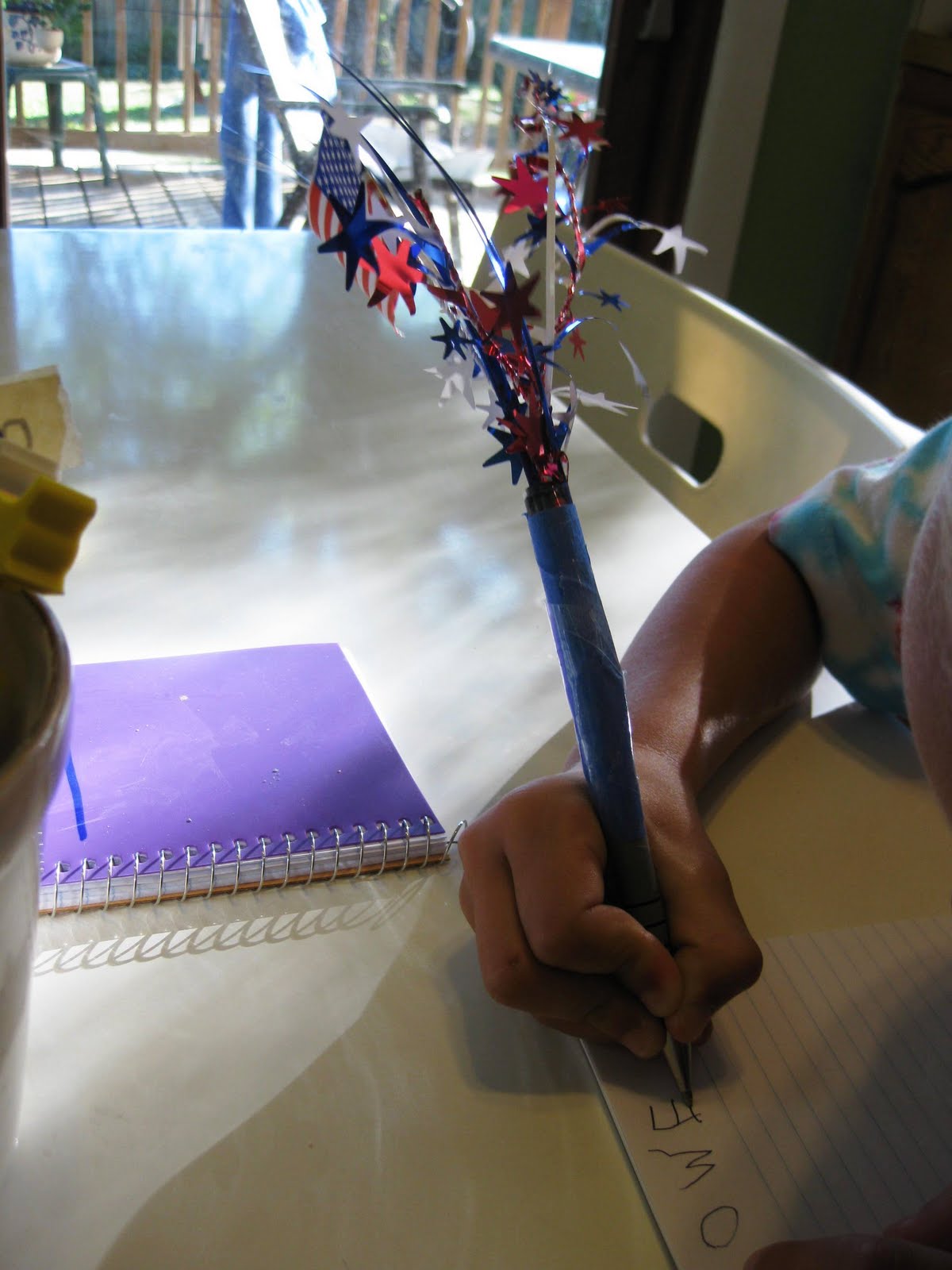
july 4th funky sparkle flag pen

I always kept a jar of crazy pens in my classroom when I was teaching–kids love to use them, even if they’re the big guys in high school. When my own kiddos woke up to these at the breakfast table, they knew they were in for a happy, sparkly 4th of July.
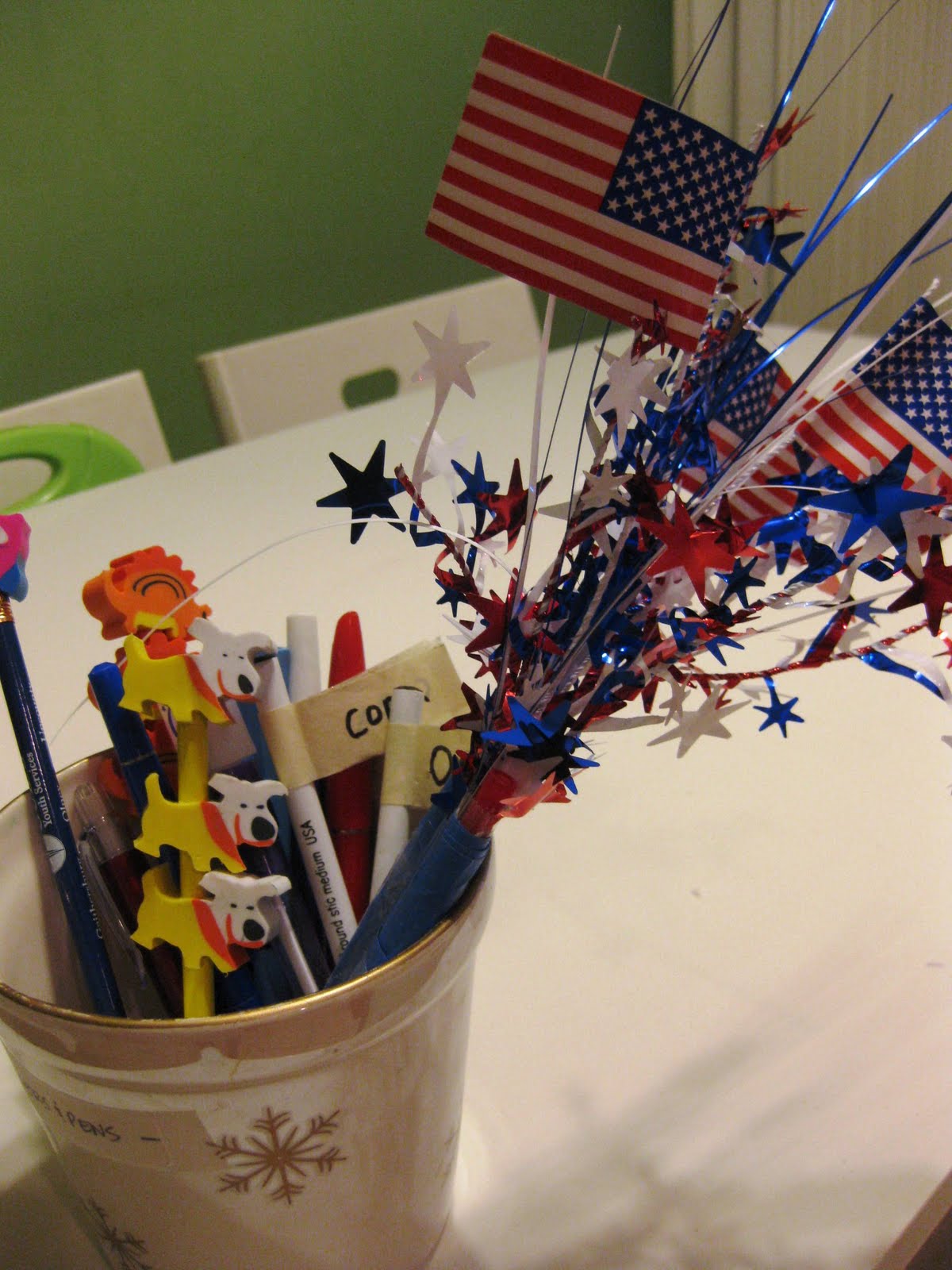
july 4th funky sparkle flag pen


  • Rice Krispie Treat Candy Flag: We usually stick to our old faithful, Flag Cake but decided to mix it up a bit this year. (And I wanted to get rid of a ton of candy we had in the house!)

I had Maddy, Owen, and Cora separate the red candy from the blue candy while I whipped up the RK treats.
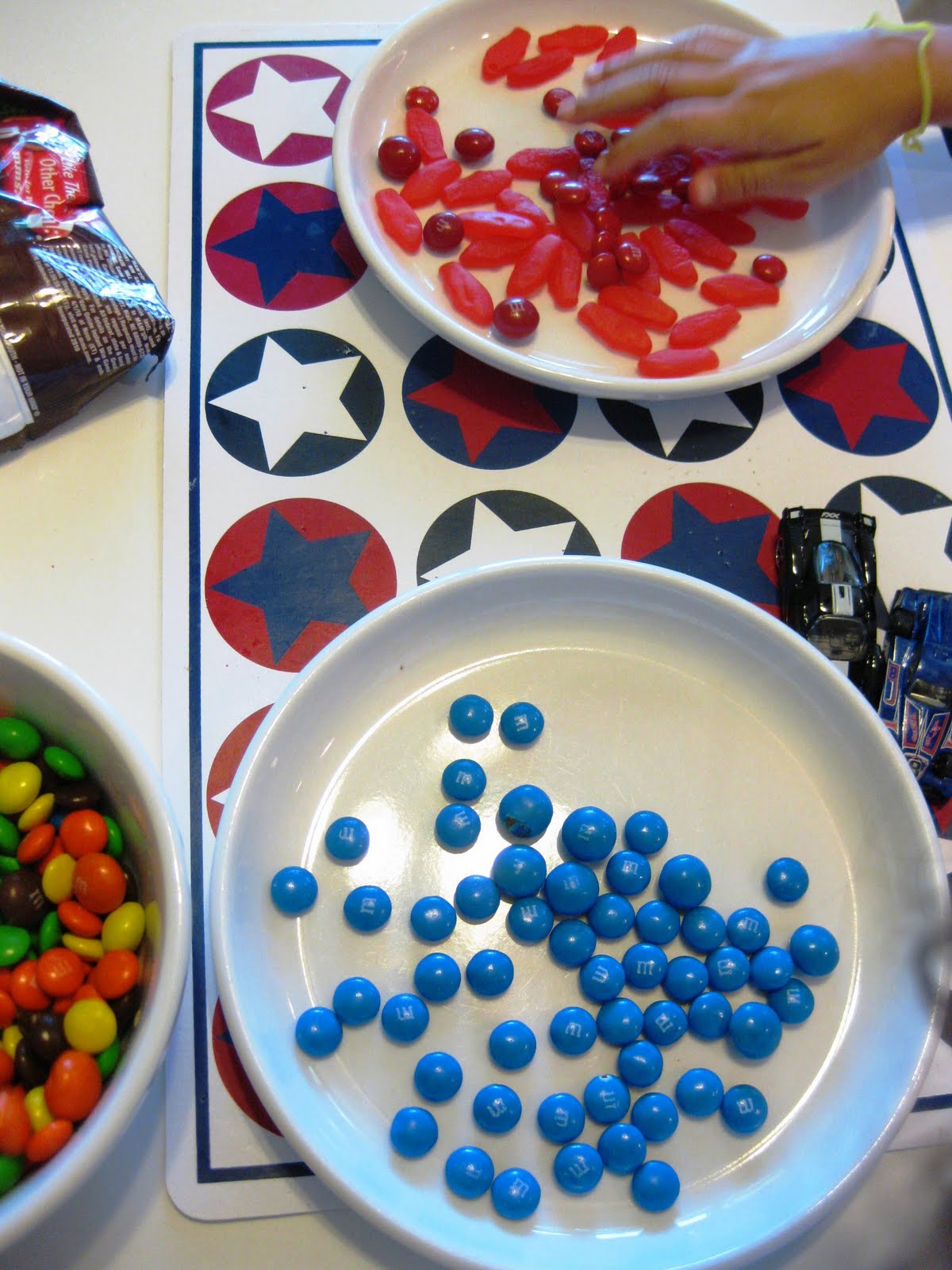
patriotic rice krispie treat flagFirst we separated the blue and red candy from the rest. . .

patriotic rice krispie treat flag

. . . and then we got ready to make our flag!
patriotic rice krispie treat flag

We squished the blue candy in the corner for the stars, and we lined up the red candy–M & M’s, red fish, and red jelly beans–for the stripes.

When we finished, it was one big, beautiful, sweet and totally unhealthy picnic treat in all its glory.

Two easy, fun, and patriotic treats on a sunny Independence Day here at our house, sneaking in a little–and okay, I mean little–writing, sorting, and cooking fun along the way.

Happy 4th!

July 4, 2010 1 comment
0 FacebookTwitterPinterestPocketEmail
make connections with poems we love
comprehensionconnectingreading

Making Connections With Poems We Love

by Teach Mama June 2, 2010
written by Teach Mama

Lately, we’ve been so busy. May flew by, like it always does for us–a blur of end-of-school activities, yard work, picnics, park dates, and now pool time.

So I’ve tried to sneak in what I can, when I can. Most of our learning has been happening through read-alouds, either our newspaper reading at breakfast, or during books at bedtime or before rest time. And believe me, I’m not downplaying it–there’s tons that can be done during those small bits of reading time, and really, there’s not a lick of prep or clean-up involved. Woo-hoo!

And seriously, kids don’t even need to know how to read in order for parents to start teaching reading comprehension strategies; all the parents need are some easy tools up their sleeve.

I’ve been trying to focus on making connections with Owen and Cora:

  • Reading Comprehension Strategy–Making Connections: We always seem to go on poetry-kicks around here, and we’re on one now. Owen, Cora, and I have been reading our favorite poetry books before rest time most days because the poems are short and catchy, and they’re beginning to say them along with me. (And memorizing is super for little brains!)

So what I’ve been trying to do as we read is simply model how a person makes connections with a text. Nothing crazy, nothing fancy, nothing super-wild. I’ll read a poem like “Berry Picking” from Bobbi Katz’s Poems for Small Friends (1989) and say, Oh I cannot wait to go strawberry picking this summer. It’s so hard to put those strawberries in our buckets without eating them, especially when they’re so red and ripe like the ones in this picture. Yum.


Making connections is so easy, but it is muy importante
for emerging readers.

And maybe we’ll chat a little about what we remember from last summer’s strawberry picking at the farm. Just a minute or two–or if they really want to talk, we’ll talk more. Not a big deal. But the time it takes for me to show Owen and Cora that I (and they) have a personal connection to this poem will help them to remember it. It will help them to understand it better, and it will help them to begin making connections to the texts they read (or books they look at) when I’m not there. And making connections is something that all strong readers do naturally.


Because these are rich texts filled with super poetry, I could demonstrate some sort of connection–either to myself, to some other poem we’ve read, or to something in the world around us–for every poem in the book. But I don’t. I don’t want to make connection-making annoying, and I don’t want to make it a pain for them. Every other poem, or every two is fine. It needs to be natural.


Bobbi Katz’s Pocket Poems is full of funny poems–short ones that have silly pictures that make my kids giggle. We often stop at the dog page (go figure!) and talk about Brady when we read “The Dog Show” or “Maggy’s Dog”. I’ll say, Maggy’s dog and our dog have “friendly and waggy” tails. I’m glad that our Brady boy isn’t “vicious and grim” looking from the front. I love our happy-faced dog.


I’ve shared my own childhood dream of squirting out a whole tube of toothpaste into the sink (SO crazy!) when I read “from Toothpaste“: When I was little, I always, always wanted to squirt out a whole tube of toothpaste into the sink. I wanted it to spray it “everywhere except inside my mouth”, too! But even though we want to do things like this, we can’t–or there’d be a lot of wasted toothpaste and one big mess. . .


Connection-making is easy. Essentially, we’re making comparisons between the text and us, between the text and another text, or between the text and some event in the world around us. We can say things like:

  • Hey! This situation reminds me of…
  • This girl is starting a new dance class, and you’re starting new on swim team…
  • I felt the same way as (character) when…
  • Remember reading about the dog in (another book)? They’re alike because…
  • The farmer had bad storm ruin his crops, just like the storm we read about in the paper yesterday…

Really, that’s all there is to connections, at least for these little guys. When students are a little older, I’ll discuss the importance of making distinctions between connections (text-to-self; text-to-text; text-to-world), and I’ll give them the language they need to talk about those connections. But for now, the simple act of me verbalizing the connections we have to the poems we’re reading demonstrates for Owen and Cora that that is what readers do–they read something, and they automatically figure out how it relates to them.


It’s a pretty interesting chain of events: when little ones learn reading comprehension strategies through their parents’ (or caregivers’ modeling), they will naturally begin to practice those same strategies when they begin to read. It’s awesome. They won’t even know they’re doing it or how important it is, but it will help to make them stronger readers in the long run.

It’s no secret that “good readers are active and use a variety of strategies as they read” (Keene & Zimmerman), or students need to be taught these strategies through explicit instruction from day one. By helping to create “active, engaged” readers, “teachers enable them to gain competence and a sense of self-effacy” (Gutherie, 2002). We are able to create active readers even if our kids aren’t decoding on their own. So why not start now?

From Scharlach, T. (2008, September). START Comprehending: Students and Teachers Actively Reading Text. The Reading Teacher, 62 (1).

Still want more? I found Gregory & Cahill’s “Kindergartners Can Do It, Too! Comprehension Strategies for Early Readers” (The Reading Teacher, 2010 March) to be extremely interesting and worth my time–it’s full of ways that one super-cool Kindergarten teacher taught her class the language of comprehension strategies and actions to go along with them!

And that’s it for today. Easy, super-sneaky reading comprehension strategy modeling, and my kiddos didn’t even know they were learning! Happy connecting!

fyi: this post contains affiliate links
June 2, 2010 3 comments
0 FacebookTwitterPinterestPocketEmail
early literacy and math grid games: rainy day
concepts of printreading

Early Literacy And Math Grid Games: Rainy Day

by Teach Mama May 17, 2010
written by Teach Mama

Today, on this rainy, cool, gray Monday, we rocked it with an oldie but goodie:Sunny-Rainy Grid Games. Or Rainy-Sunny Grid Games, depending on how you’re feeling or the weather outside.

We’ve played this game before, but not for a while, and last time we did, Maddy, Owen, and I played; today, Owen, Cora, and I played.

We were feeling tired and lazy after lunch and before rest time, so we plopped onto Owen’s floor, pulled out our Rainy Boards, and got counting.

  • Rainy-Sunny Grid Games: We’ve played grid games many times before, so Owen knows the ropes.

early literacy and math grid games sunny rainy | teachmama.com


Cora, on the other hand, is the queen of independent play. She could easily trump Maddy and Owen in time spent alone, playing with dolls, cars, or stuffed animals, so it takes more of an effort for me to ‘reel her in’ and get her interested in the games and activities that Maddy and Owen would drop almost anything to play.


I grabbed our sunny rainy grid games, which can be downloaded as a pdf here. It’s now one document with four boards: Easy Rainy, Tough Rainy, Easy Sunny, and Tough Sunny.


I also chose to use the shiny ‘jewels’ that Cora loves to play with, hoping that they might entice her to join in our game. You can use any markers you’d like–Foamies, Cheerios, stickers, M & M’s, or you could have your little one practice making X’s or O’s.


early literacy and math grid games sunny rainy | teachmama.commulti-tasking Cora . . .
early literacy and math grid games sunny rainy | teachmama.com

I said, Cora and Owen, it’s a super day for Rainy Grid Games because it’s just so rainy outside. Let’s take a minute to do some counting and see who can fill their board first! We can use these beautiful glass beads to keep count for us.


With all grid games, the goal is to be the first person to have all of the pictures on the board covered with markers. Players do this by rolling dice, counting the number of dots on the side, and then covering that number of objects on their board. Objects have to be covered from left to right, top to bottom, just like the left-right return sweep in reading.


Cora played with the Easy Rainy board, and Owen and I used a Tough Rainy board. Cora dumped and re-played her board three times before Owen beat me by one, covering his board first. She was only somewhat into it; it took a lot of cheerleading on my part to be more interesting than her Lego guys.


early literacy and math grid games sunny rainy | teachmama.com

early literacy and math grid games sunny rainy | teachmama.com

Hmmmmm. Just when I thought I had things down, my number three throws me for a curve in every which way. I’ll be reaching for all new things to get this little one rolling with us this summer, I can see it now. . .

I’m trying really hard to look back into our game boxes for some activities that will benefit–and interest–Cora, since she is ready to start taking some bigger steps into school readiness. I anticipate having to re-vamp what I have and searching for and creating different ways of getting her moving. What better reason to keep reading and researching on my part!? Give me a hand, my smart friends!

And just a re-posted fyi on why we love grid games:

Grid games as I’ve said before, are a super tool for teaching one-to-one correspondence which emergent readers need to understand that every single number and letter is important and that a group of letters is makes one word. Grid games also work on emphasizing the movement of left to right on a page and the return sweep–reading one whole line from start to finish before moving to the line below.

Math-wise, grid games work on counting–whether it’s dots on a die or a number on a card–and then translating that number to a specific amount on a page, or the number of objects that are covered by a game piece.

(And that’s why I’ll keep trying grid games now and again with my tiniest one!)

Want to throw in a Grid Game now and again? Here are just a few. Read on if you really want to know why Grid Games deserve some love:

  • Rainy-Sunny Grid Games
  • Open Grid Games (for stamps or stickers or letter practice)
  • Cats, Hats, and Pumpkins Grid Games
  • Bunny Grid Game
May 17, 2010 0 comments
0 FacebookTwitterPinterestPocketEmail
abc exercise cards
early literacyreading

ABC Exercise Cards For Your Kids. . . Hooray!

by Teach Mama March 16, 2010
written by Teach Mama

Thank you, ABC Exercise Cards, for giving us a fun and burn-some-steam kind of activity this afternoon!

After a rainy weekend and another rainy–but exciting!–morning at the College Park Aviation Museum with Owen’s class, I found that by the afternoon, my kids had crazy energy to burn.

After playing dress-ups and swinging from the downstairs rings, we used this set of ABC Exercise Cards to keep us busy, make us laugh a lot, and get little brains moving–and reading–along the way.

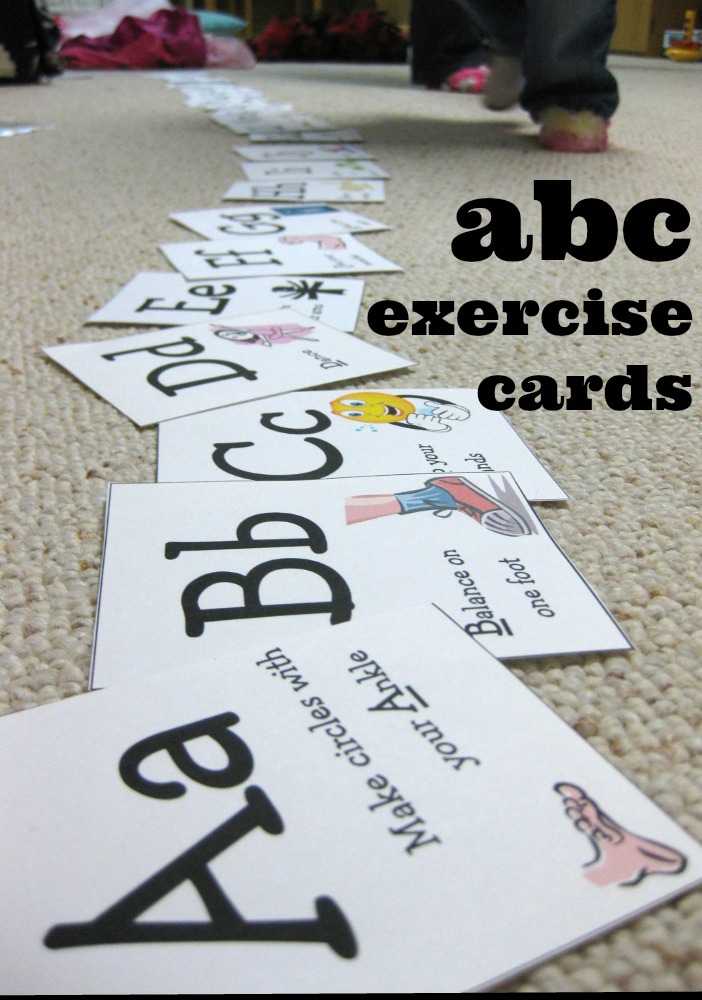
  • ABC Exercise Cards: These are simple cards each with an uppercase and lowercase letter on them and an action that begins with that letter.

They are similar to our Action, Action 123 Cards, but these cards have the pictures already included and have one action for each letter of the alphabet. And we didn’t use a dice for this game to indicate the number of times to do each action, but you certainly could.


If you’d like to download a set of the ABC Exercise Cards, please visit Homeschool Share, a fantastic site rich with resources for parents and teachers.  I found them under ‘My Body Lapbook‘.


abc exercise cards


Owen’s rockin it out, running in a zig-zag. Obviously.

Owen was in a game-playing mood, so when he suggested we an alphabet board game that we’ve been playing every day (almost for the last two weeks), I said, Hey, I have an idea. I think we have a game that has the letters of the alphabet in it, but it will get us moving and grooving. And I think we all have some energy to burn. Let me get it.


I dumped the bag of cards onto the floor and said, Now here I have a card with an action for each letter of the alphabet. When it’s your turn, you’ll pick a card, we’ll read it, and then you’ll do that action. And what do you think we’ll do with the card after we’re finished?

Owen yelled, Put it in a line! (He has such a good memory from all of our ABC- Style Hide-and-Seek playing. . . )

Exactly, I said. We’ll put the cards in alphabetical order. And if we need to, we can just sing the ‘ABC Song’ to help us. Okay, the first person to spot a circle in the room goes first. Ready, search!


Owen found a circle first, so he led the party, and we went through the entire pile of cards, jumping, hopping on one foot, riding a unicycle (on our backs), waving our arms (like windmills), acting like an inchworm, running in place, and touching our toes–all from A to Z.


abc exercise cards cora leg

Maddy, in her princess shoes, is hopping on one pretty little foot.

When we finished the first time, Maddy and Owen immediately asked to play a second time (Cora was too busy dressing up and playing kitchen). I said, Let’s play tomorrow. Why don’t you go through the pile and read and follow the cards you want? Soon it’ll be dinnertime.

And so they did, and soon it was, and as soon as I slapped my husband five, I grabbed my bags and headed out the door to tutor. A busy, happy Monday it was.

Not only did these cards get us moving, but they also reinforced the all-important letters of the alphabet. Putting the letters in alphabetical order after we completed each card gave Maddy and Owen more practice in understanding where the letters of the alphabet fit in relation to each other, and pictures next to the action instructions made reading easier.

abc exercise cards

Other variations of this activity (that we’ll probably try later this week) include:

  • hiding the cards around the room and having the kiddos find them;
  • trying to do the actions in order, from A to Z and then Z to A;
  • having the kids spell their names with the cards and then complete the actions for their name;
  • spelling our last name and then completing the actions together as a family ‘routine’ (just kidding. . . but not really);
  • giving the kids 3-5 cards and then allowing them to pick an action, demonstrate that action, and then we could guess what letter they had.

Who knew ABC Exercise Cards could be so much fun?

A long while back, I found the ABC Exercise Cardson someone’s website, and (gulp!) I’m not sure whose site it was or who actually created this great resource. However, you can download the same pdf that I downloaded and saved by clicking here: ABC Exercise Cards.

My most sincere apologies go out to the talented creator of these cards, which I did link back to Homeschool Share. I feel strange sharing them without proper linking–which I do feel is extremely important in the world of educational resource sharing–but I am sharing them today because we used them, because I think they’re awesome, and because with rainy spring on its way, I think many others may want to use them, too. Anyone who knows where they originated, please let me know, and I’ll link more properly.

UPDATE, 9/10/11: I did hear back from the sweet Ami, of Homeschool Share, and she asked that I direct readers to The Homeschool Share site, My Body Lapbook, to download this resource. Thank you, Ami, for sharing your incredible work at HSS!!

Happy ABC Exercising and sneaking in a little bit of learning!

Want a few more alphabet activities? Check out:

  • backyard alphabet hunt
  • homemade alphabet book
  • leafy letter learning
  • ABC hunt
  • on the road ABC hunt
  • lowercase ABC hunt
  • build your own bingo: uppercase and lowercase match
  • ABC cards and clothespin match
  • alphabet letter splash
  • alphabingo (play with lowercase letters)
  • alphabet letter lids
  • leafy outdoor alphabet hunt
  • build your own board game
  • clothespin letter match
  • 10 fun ways to learn the alphabet

Follow us on pinterest, and check out our literacy pins:

Follow Teach Mama’s board literacy on Pinterest.

March 16, 2010 16 comments
0 FacebookTwitterPinterestPocketEmail
help kids with letters b and d
writing

Help Kids With Letters B and D

by Teach Mama March 4, 2010
written by Teach Mama

As I’ve said very recently, letter reversals are quite normal for emerging readers and writers. But there’s absolutely nothing wrong with helping our kiddos remember the tough ones.

Back in January, I saved a Word World episode because I thought that the way it handled the tricky letters b and d was really awesome. Every so often we watch it again, just so I can try to make this catchy little song stick in Maddy, Owen, and Cora’s heads.

Sometimes they need reminding. Tonight was one of those nights.

Here’s the skinny. . .

  • Putting the b- and d- Confusion to Bed: Tonight while I was helping a tired Maddy complete her “Read to Me, Talk with Me” assignment (fyi: these are very simple activities for kindergartners to complete after they read a book with a parent), she paused and looked at me after she wrote a letter ‘p’.

I don’t know if that’s a ‘p’ or a 9, and I don’t really care, she said. I’m going to hope it’s a ‘p’, though, because I’m adding ‘picture’ to my list. (She was making a list of all of the things she could see in Baby Bear’s messy room from the book, Goldilocks and The Three Bears, by James Marshall, 1988.)

I said, Maddy, it’s okay to ask for help, though, if you want some. Yesterday when we started this, you wrote the number ’49’ on the page. Remember, you counted 49 books in Baby Bear’s room? Maybe that will help you. We all need help sometimes.

She looked up and saw 49, and she said, Oh, I remember.


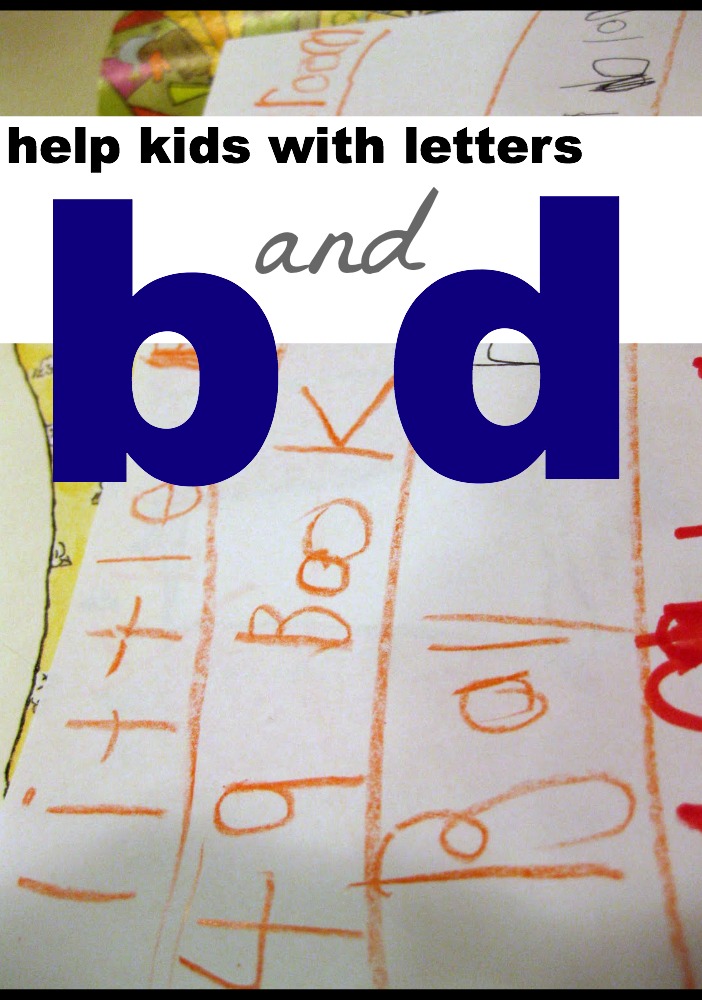
help kids with letters b and d
Maddy was one tired list-writer tonight,
and the b’s and d’s were giving her trouble. . .

But when she got to the ‘d’ in ‘teddy bears’, she looked at me again. She said, I know ‘d’s because they’re in my name, but sometimes I mix them up in other words. I think I need help with d’s.

That was all I needed to bust out with, Liiiiine and circle is the lettaaa ‘bbbbeeeee’, circle and liiiiiine is the lettaaaa ‘ddddeeee’. . .

The episode of PBS’s Word World that I mentioned above contains a crazy-catchy song that helps kiddos remember how to distinguish letters b- and d-. It’s cute. It’s funny, and I think it can help.


Because I know it will come up again sometime soon, I made a b- and d- sheet for Maddy to use–not so much to bore her out of her mind as much as I want to get her drawing and thinking.

It contains the lyrics to Frog’s b- and d- song, a place to practice b’s and d’s, and a place to draw some words just like they do in Word World.

We want our children to write freely, without stressing over whether they are writing the letters correctly. But we also want them to have some tricks up their sleeve to call on when they want or need them.

I’ve always “drawn words” with the students I’ve tutored when they got stuck on g’s, p’s, d’s, or b’s. Whether it’s ‘dog’ with a face in the circle, an ear made out of the line, and a tail sticking out of the ‘g’, or it’s a crazy bug made out of the letters b-u-g, I’ve tried what I can. And the sillier the better.

I really, really like the way Word World handles b’s and d’s with ‘bed’–the song, the picture, the whole thing–works well for little guys; I just wish I could find the song to share here, but my search was fruitless. Bummer.

help kids with letters b and d

Here are the lyrics to Frog’s song, but you really need to hear it to love it:

Which is the ‘b’? Here’s a trick that’s great. First is the line, standing tall and straight.

Next is the circle, like a pillow for your head. That’s ‘b’, the first letter in ‘bed’.

Which is the ‘d’? This trick beats them all.

First comes the circle, round like a ball. Next comes the line, tall and straight. That’s the letter ‘d’.

Isn’t that great? Line and circle is the letter ‘b’. Circle and line is the letter ‘d’. . .
from Word World, season 3, episode 7 (09/08/09).

And that was our later-night b- and d- learning for today.


Update (5/06/10): thanks to @pbsparents, the videos are now on the PBS site!

  • Here’s the infamous ‘bed’ video and song
  • Here’s another song from the same episode

Thanks, PBS!

Thanks for subscribing to teachmama! Have a good one!
March 4, 2010 2 comments
0 FacebookTwitterPinterestPocketEmail
Farm-Full Of Rich Vocabulary Words
readingvocabulary

Farm-Full Of Rich Vocabulary Words

by Teach Mama February 25, 2010
written by Teach Mama

I always cringe when I hear parents talking in baby voices and using baby words when interacting with their not-so-babyish children. Or other people’s not-so-babyish children, especially once those kiddos are out of Baby Bjorns and are walking, jumping, feeding themselves, and hanging up their own coats at preschool.

I usually bite my tongue, but what I want to yell is something along the lines of C’mon, Buddy. Are you serious? Vocabulary is a critical component of reading success! Get crazy–use bigger, better words–they can handle it! And they’ll love you for it later!!

Part of what I love about the rich literature available today is stumbling upon a well-written book that plays with words–one that goes beyond “nice, good, bad”.

One of our old-time favorites, The Farmer, by Mark Ludy is a great piece of literature on so many levels, but I’ve had vocabulary on my mind ever since reading an article on Word Consciousness early this week, so that’s what Maddy, Owen, and I talked about when Maddy chose this at bedtime tonight: vocabulary.

  • Farm-Full of Rich Words: The Farmer is an incredible story about a generous and hardworking farmer who loves his animals and his farm, and even when times are tough, the farmer remains steadfast in his devotion to God and in his kindness to others.

Not only does the story provoke thoughtful discussion, the illustrations are gorgeous. The colors are vivid, and the characters–people and animals–are developed through careful detail and expressions.

The whole work comes together in a really amazing way that makes it hard not to fall in love with the farmer, his animal pals, and okay, even the Frump Family who turns around in the end.


So tonight, when Maddy chose the book, she said, I know you like this one, Mom. She was right.

We read the story, like we usually do, and we searched on each page for Squeakers. But instead of sliding by some of the more challenging words, tonight I stopped–briefly–to chat about them.

The Farmer makes me want to dance.

After the farmer re-plants his crops, I read, ‘He is patient. He perseveres. And when soft rains fall, he kneels in thanks.’ I said, The farmer ‘perseveres’. He worked really hard after the fire; he re-plants his crops, and he doesn’t give up. He perseveres. What do you think ‘perseveres’ means?

Maddy said, Um, maybe that he’s a hard worker?

Owen added, That he is a hard worker, and he’s not crying.

I said, You’re right. The farmer is a hard worker, and he’s not crying or giving up. He’s determined to get his farm growing again. He’s working hard even though things are tough. When you persevere, you work hard even though things are not easy, and you don’t give up.

Maddy said, Kind of like he’s determined?

Yes. Woo-hoo! You got it.

We also talked about “pleasant”, the “mature” garden, and “bounty”. We didn’t talk long; I tried not to break the flow of the story, but we talked long enough.

This was also not our first reading of the book–we’ve had it for years and years, so their familiarity with the text also allowed me more time to stop now and again.

Tomorrow, and for the next few days, I’m going to try to use these words in our every day conversations so that Maddy, Owen, and even Cora can add them to their working vocabulary. We’ll throw around a few high-fives and woo-hoo’s when they use them. And I’ll probably even do a little dance.

fyi: This kind of word consciousness, or being aware of new words, new ways of using words, and talking about those super-cool words we run across every day, is an integral component of language development and one of the predictors of success in reading comprehension.

When children are word conscious, they “are motivated to learn new words and able to use them skillfully” (Lane & Allen, The Vocabulary Rich Classroom: Modeling Sophisticated Word Use to Promote Word Consciousness and Vocabulary Growth, in February 2010’s The Reading Teacher.)

And really, why wouldn’t we want our kiddos to play with words and to develop their vocabulary? Vocabulary knowledge has long been identified as one of the best predictors of reading comprehension, reading performance in general, and school achievement (Lane & Allen citing Davis; Thorndike; Beck, McKeown, & Kucan in the article mentioned above).

another fyi: Not only do I have a secret crush on Mark Ludy (I seriously Googled him years ago because after falling in love with The Farmer; I was convinced he’d be a perfect match for one of my good pals, but he was already married), but now I also love him because his website rocks, he and his wife and three kids run a coffee house in Colorado, he blogs, and he spends time chattin’ with people about writing, art, following your dreams, and faith.

What’s not to love?

(And thanks to Amazon.com for the photos from the book!)

Thanks for subscribing to teachmama! Have a good one!
February 25, 2010 2 comments
0 FacebookTwitterPinterestPocketEmail
president's day coin polishing
mathnumbers

President’s Day Coin Polishing

by Teach Mama February 4, 2010
written by Teach Mama

No, it’s not President’s Day. But we’re getting close.

No, today was just another no-school snow day. And when I walked into Maddy’s room after Cora and I changed everyone’s sheets, I noticed that she and Owen had dumped the contents of Maddy’s piggy bank onto the floor.

They were counting, clinking, playing with the dirty coins. This had to be the perfect time for us to head down to the kitchen for a little coin-cleaning and science experimenting.

So that’s what we did.

  • Coin Cleaning: I grabbed some old toothbrushes, some plastic take-out containers and lids, some towels, and tiny bowls.

Then I found our Baking Soda and vinegar, and I poured some baking soda into each small bowl. I added water to make a wet, gooey, paste, and then I brought them to the table.

Cora’s scrubbing her dirty coins.
And yes, that’s a half-eaten grape on her tray.

Then I said, Okay, are you ready for some crazy, magic, bubbles? Look what this tiny bit of vinegar does to the water and baking soda in the bowl. . .

And on cue, Maddy, Owen, and Cora sent up a collective Wow! Oh my gosh! Ahhhh!
(It really is pretty cool if you ask me!)

I told them that if they wanted to make their gross and dirty coins more shiny, then they needed to use their muscles to scrub, scrub, scrub. And after they scrubbed, they had to rinse their coin in water, then dry it with the tiny towel.

Owen rinses his penny.
He said he really missed his old car toothbrush. It was great reunion.

On this snowy, stuck-inside morning, they did just that: they scrubbed, rinsed, and dried until their little fingers were pruney and their coins were a-shinin’.

While they cleaned, we talked about coins–not as detailed as we did before–but this time for some reason, Owen was really interested in the “guys on the front of the coins”.

It certainly wasn’t a full-fledged history lesson, but we talked a little about George and Abe and about why they’re on the coins.

To make today’s activity all the more worthwhile, right before I made dinner, I went through Maddy’s backpack and found her February Letter from her teachers.

It explained that they were going to chat about presidents! About Abe Lincoln and George Washington! About pennies, nickels, dimes, and their values!
And she had a homework assignment to hunt for pennies–2000 through 2008!

Talk about crazy-coincidental timing (okay, and some major luck).

numismatist sheet


After dinner, we searched through our shinin’ gleamin’, gorgeous pennies, found what we could, and taped them to Maddy’s paper.

The cleaning of the coins this morning was really great for Maddy, Owen, and Cora’s little fingers to get moving (como se dice, ‘fine motor skills’?) and for them to practice following a set procedure: scrub, rinse, dry.

The vinegar and baking soda combo–bubbles, textures, you name it–is hands-on science right at your kitchen table.

The hunting for dates (or numbers–however you explain it) is super for practicing number recognition.

And of course, if you get into the heart of why old Abe and George and all of those big-presidentes are on our coins, it’s a history lesson shoved in as well.

Happy snow day, coin-cleaning!

fyi: The Numismatist Sheet is here to download (not great quality, my apologies, since Maddy’s already had most pennies on it by the time I remembered to scan it!). Made by her teachers, and it’s pretty darn cool! Thanks, teachers!

Thanks for subscribing to teachmama! Have a good one!
February 4, 2010 2 comments
0 FacebookTwitterPinterestPocketEmail
easy stained glass heart craft
holidaysvalentine's day

Easy Stained Glass Heart Craft

by Teach Mama January 29, 2010
written by Teach Mama

Valentine’s Day is almost here!

You better believe that our house has been heart-happy and all fancied-up in pink and red since last weekend. I’ve always loved decorating for the holidays, and why not? Any reason to celebrate, right?

This is a craft that we made last year but just brought out for our windows again this year: Beautiful Valentine’s Day Stained Glass Hearts.

They’re so easy to make, and the simple cutting of tissue paper, extra plastic goodie bags, and streamers actually might even count as a little fine-motor skill tuning for our little ones!

(fyi: This is basically a re-post from last year, but I thought it was worth sharing! )

  • Valentine’s Day Hearts: I picked up some contact paper this week, and here’s what we did: I taught Maddy and Owen how to make a heart by folding construction paper in half (how fun!), and they cut the hearts I traced.

stained glass heart craft | teachmama.com

These beautiful hearts make me smile every time I see them.

Then we cut red, white, and pink tissue paper, leftover plastic goodie bags, and silver sparkles up into tiny pieces. We put the heart on the sticky side of contact paper, then carefully placed the tiny pieces of pretty paper in the center.


stained glass heart craft | teachmama.com

stained glass heart craft | teachmama.com


When we were finished, we put another piece of contact paper over the whole thing and cut around the edges.

We put them on the windows, and they looked awesome, especially against the falling snow. Cora loved picking out which tissue paper she wanted in the center of her hearts, and it was a great activity for scissor practice for Maddy and Owen. All preschoolers need scissor practice. . .


stained glass heart craft | teachmama.com


Thanks to the cool ladies in my MOMS group for sharing the idea with me when we decorated NIH last year. It’s a super-easy activity, and it doesn’t take too much time at all. And the holiday possibilities are endless: shamrocks, eggs, pumpkins, fall leaves. . . fun!

This year’s Valentine’s Day craft totally rocks; we’ve been working on it for the last two days, and it’s really cool. Hopefully I’ll get around to sharing it this weekend–

Want a TON of other cool Valentine’s Day ideas?
Check it out:

Follow Teach Mama’s board valentine’s day on Pinterest.

January 29, 2010 0 comments
0 FacebookTwitterPinterestPocketEmail
time to rhyme: play rhyme Go Fish!
early literacyrhyming

time to rhyme–go fish!

by Teach Mama January 26, 2010
written by Teach Mama

Lately all Maddy wants to do is read, read, read, which is fine with me. She’ll read to me, my husband, and she’ll read to Owen or Cora.

She’ll read to anyone who will listen.

And it’s great that she is so willing to do this, because it gives me a chance to hear how she’s progressing. I’m able to give her high-fives for what she’s doing well or sneak in some extra teeny-tiny bits of fun learning in areas that might help.

I noticed that lately she needed more work with short e and short i sounds–reading even simple words quickly, automatically, and correctly–so for the last few days we’ve played with the short vowel families.

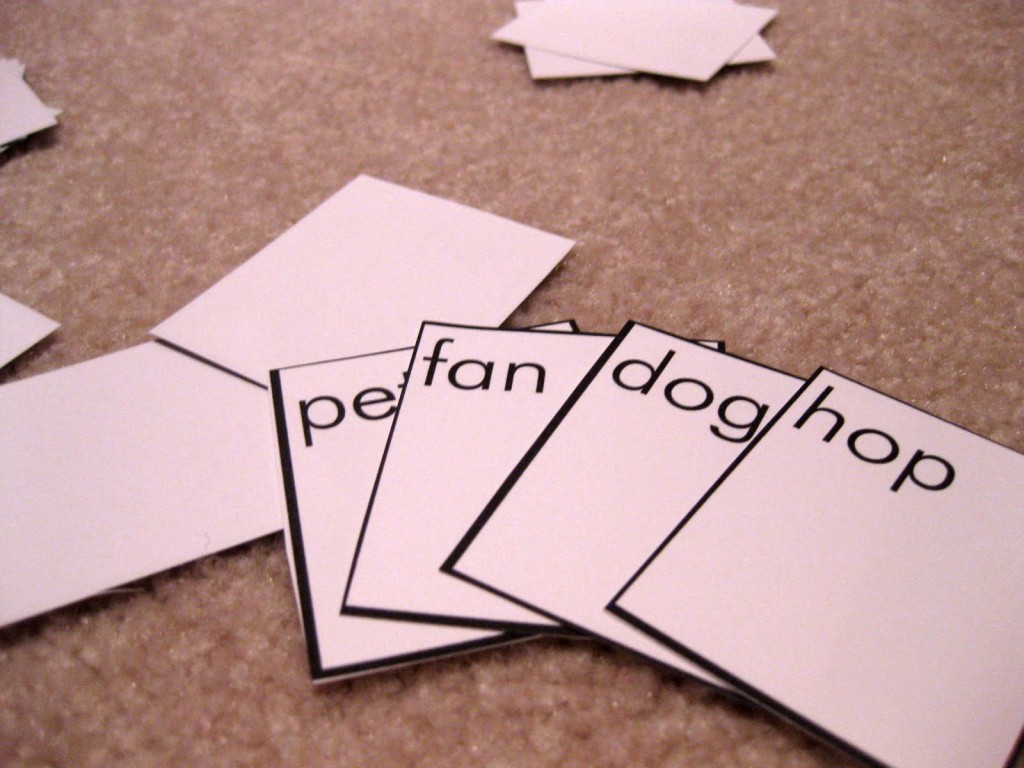
The ‘Go Fish’ format works well with anything, so all I did was crank out some easy, short vowel rhyme cards for this simple game.

Here’s the skinny. . .

Rhyme Time Go Fish:

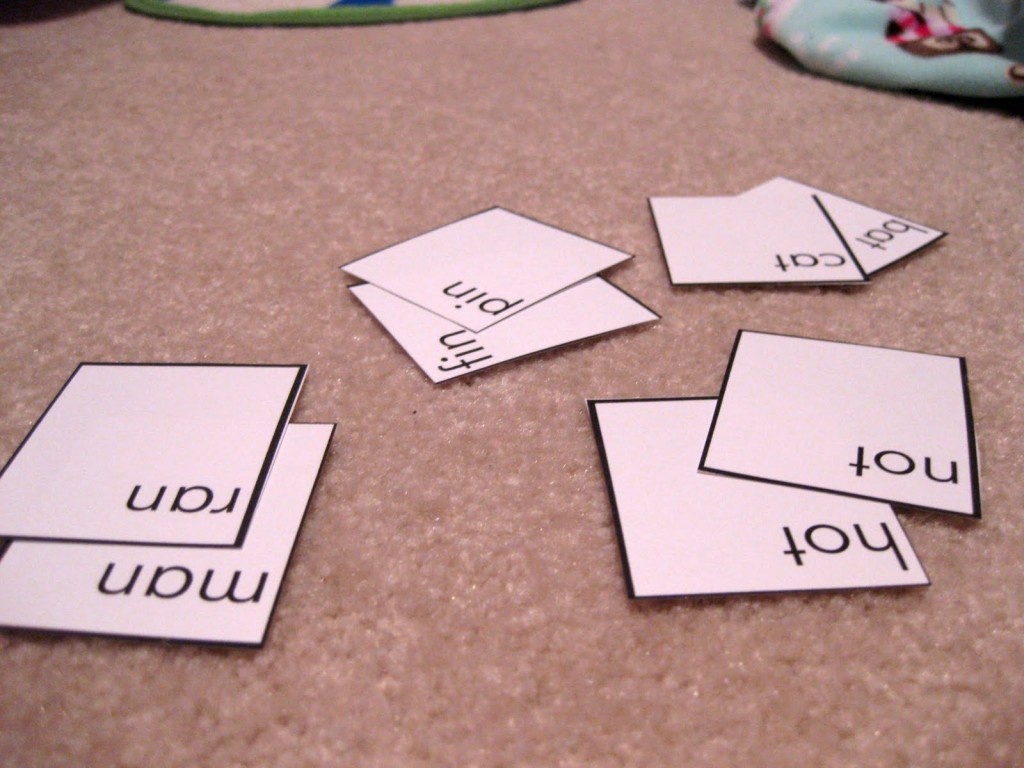
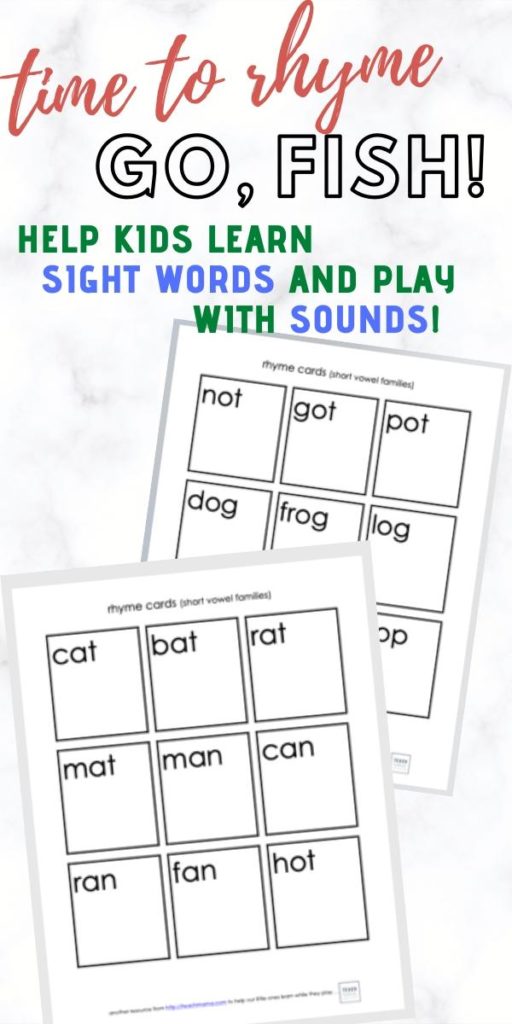
These game contains rhyming words with all of the short vowel sounds. There’s at least two or four rhyming words from the -at, -an, -ot, -op, -og, -en, -et, -ug, -ut, -it, and -in families.

The Rhyme Time Go Fish Cards (okay, actually, they’re just short vowel rhyming word cards, but that just sounds so boring. . . ) are here to download if you’d like.

rhyme go fish

Maddy’s rhyming pairs

The game is verrry simple.

All I said to Maddy, the first time we played, was, Hey, you big-time kindergartner reader. Are you up for beating your old mom at a game of ‘Rhyme Time Go Fish‘? It’s just like regular ‘Go Fish’, but it’s with rhyming words. Some of the words will be easy, and some will be tough. Ready to beat me?

And of course she was. And of course most of the words were way too easy for her. But some of them she had to think about, and that was my goal–to just get her a little more familiar–more confident–with all of the short vowel sounds before she’s introduced to some of the long vowel patterns.rhyme cards

my left-over, un-matched, very lonely cards

We turned all of the cards face down in a pile in the middle, and we each picked six cards.

(She wanted six instead of five, since she just turned six.)

We put down all of our rhyming pairs, face up in front of us.

Then we picked up more cards if we needed to so that we each started the game with six cards in our hand.

Then I said, Okay, when it’s your turn, you say, ‘Mommy, do you have a word that rhymes with–and then you say one of the cards in your hand.‘ Okay?

Like I might say, ‘Maddy, do you have a word that rhymes with ‘dog’? Because right here, I have the word ‘dog’ in my hand. And if you do have a word that rhymes with ‘dog’, you give it to me. If not, you say, ‘Go fish’. Make sense?

So we played. And we played some more.

And the person who has the most pairs at the end wins–as long as she’s able to read all of the words.

Looking back, sure, I could have focused entirely on one or two sounds, maybe contrasting a sound she’s totally got with one that she’s just learning, but I wanted this to be fun and not really that much work.

And the last thing I want to do at the end of a busy day of school for Maddy is to turn her away from these kind of games or give her early school-burnout. I’ve still got to be sneaky, right?

Anyway, this game is pretty cool because it continues to develop and increase the number of known features in the Letter-Name Alphabetic Stage.

The Letter-Name Alphabetic Stage is an early stage of word learning, which is where Maddy–and many of her kindergarten pals–are developmentally.

Do you want the cards? Grab them here:

In an interesting article in the March 2009 The Reading Teacher, Pikulski and Chard recall Ehri’s 1998 study on fluency, saying that when encountering a printed word such as ‘bug’ as few as four times, children come to “accurately, instantly identify the word bug without attending to the individual letters, sounds, or letter-sound associations” (Fluency: Bridge Between Decoding and Reading Comprehension).

This automatic recognition of words makes things easier!! It ultimately increases fluency so students can focus on comprehending the text instead of decoding words. Wooo-hoo! Bring it on, Rhyme Time Go Fish!

Cheers, and happy reading during this incredibly exciting journey!

A few more literacy-related posts worth reading. . . (click on image to read!)
what to say when kids make reading mistakes teachmama.com.png
5 things to never say to emerging reader
literacy terms every parent must know
talk to kids about books
how to help kids choose just right books
Want a little more help with all things literacy?  
Follow Teach Mama’s board literacy on Pinterest.

fyi: Some of the links in the post above are “affiliate links.” This means if you click on the link and purchase the item, I will receive an affiliate commission. Forever and always I recommend only products or services I use personally and believe will add value to my readers. I am disclosing this in accordance with the Federal Trade Commission’s 16 CFR, Part 255: “Guides Concerning the Use of Endorsements and Testimonials in Advertising.”  For more information, please see teachmama media, llc. disclosure policy. 

January 26, 2010 3 comments
0 FacebookTwitterPinterestPocketEmail
disney dollars: kids earn 'money' for their disney trip
parentingtravel

Disney Dollars: Kids Earn ‘Money’ For Their Disney Trip

by Teach Mama January 19, 2010
written by Teach Mama

In early December, I received an invitation to attend a really awesome event this February–

It’s an event created by Resourceful Mommy Media, Mom Bloggers Club, 5 Minutes for Mom, Mom Select, and–of course–the good people at Walt Disney World!The Social Media Moms Conference at Walt Disney World.

It is the first-ever event of its kind: a family-friendly social media conference, where participants will be able to hear incredible speakers, participate in relevant workshops, and spend time enjoying one of the greatest theme parks of all time–Walt Disney World!

We are beyond excited; I can hardly wait to meet the many talented planners–and bloggers–who will attend, and it will be my family’s first trip to Disney.

So, in order to control the crazies that seemed to have hit my three little ones as they wait not-so-patiently for this big trip, we’re trying a few things: our countdown calendar and Disney Dollars.

disney dollars | save for your disney trip teachmama.com
disney dollars | save for your disney trip teachmama.comour countdown to Disney calendario

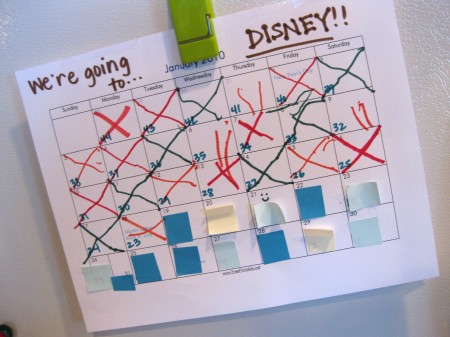
Countdown Calendar: Right after the holidays, I hit a site I love for calendar-creating and made my own. Then I counted backwards to the last week of December and covered each number with a Post-It Note square.

Then Maddy, Owen, and Cora started taking turns tearing off the Post-It Note and putting a big ‘X’ over the day. It’s been easy for Maddy and Owen, but my little Cora is really benefiting from practicing her x’s!

Our Countdown Calendar is here for friends to download and use themselves (even though it’s getting close!

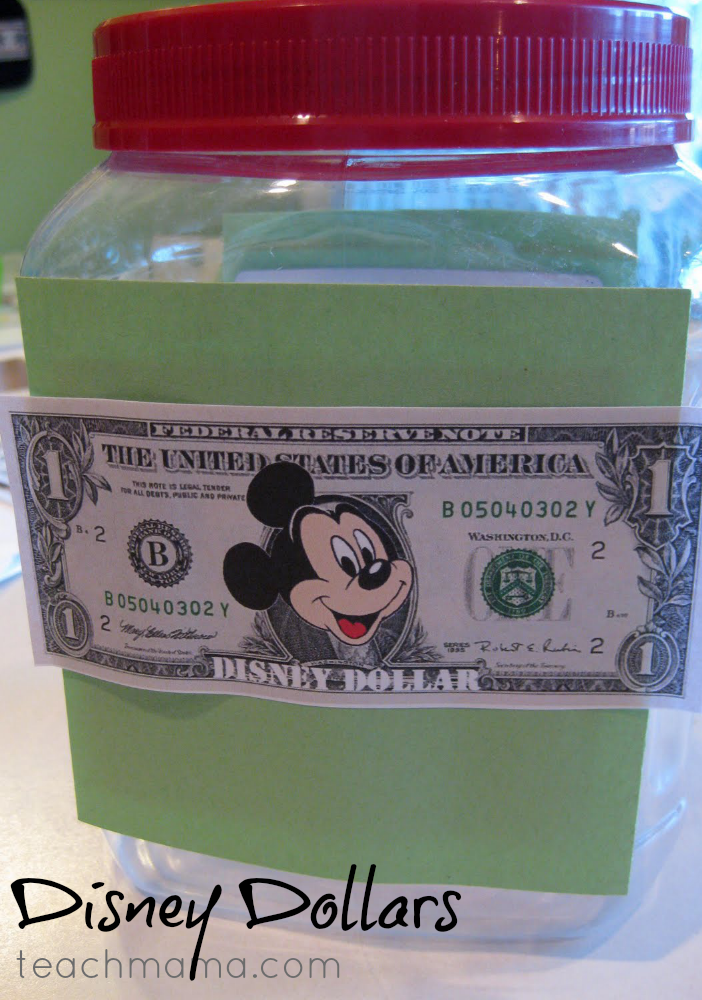
Disney Dollars: Because I remember my Disney-savvy pal, Amy, telling me that her family used Disney Dollars in the weeks that preceded their first trip to the park, I thought I’d totally use her idea for our family. And so far, Maddy, Owen, and Cora are rolling right along.

disney dollars | save for your disney trip teachmama.comsome of our Disney dinero

disney dollars are just pretend dollars I ‘doctored’ a little that Maddy, Owen, and Cora can earn by being caught doing anything super: cleaning up without being asked, helping someone with something, being extra kind to each other, extra patient, extra-special good kids. That’s all.

Want to print them out? Here are the disney dollar sheets

disney dollars | teachmama.com


My husband or I hand one of the kids a Disney Dollar, and the ‘money’ goes into their collective Disney Dollars container. This is a group effort; they’re working towards earning a special treat they will all enjoy. It’s not intended to be a competition between siblings.

Once we hit the park, theirDisney Dollars will turn into some sort of special treat at the Park or souvenirs that they can take home.

Nothing big–believe me, this impromptu trip is gift enough. We’re thinking a special dessert one night or something small to take home.

Because our kids are so young, they will not stress over the correspondence of Disney Dollars to real dollars, so we’re lucky in that way. Really, this is just a little something to help the kids behaviorally during these otherwise nutty, stuck-inside-way-too-much, way-too-long winter weeks before our trip.

And who knows? Maybe if the Disney Dollars work, I’ll use doggie dollar sheet (money to go towards our dream dog) and beach buck sheet(leading up to our summertime beach trip) when we return. I’m dollar-doctoring crazy. Unstoppable.

So that’s how we’re passing time until our trip. For all my friends who will not be there this year, don’t be sad!

It looks like they’ll be doing this conference again in the future, so if you’re interested in going, please consider joining one–or some–of the social media networking groups that are hosting the event or join us virtually by following us on Twitter: #DisneySMMoms

And please feel free to leave a comment or contact me to let me know you’ll be there!

Here are a few other ways to countdown or celebrate your own Disney vacation: 

  • Disneyland funfact lunchbox notes
  • Disney Word Searches
  • Disney pin trading 
  • Disney Surprise Scavenger Hunt
  • Homemade Disney autograph books
  • Countdown to Disney with Disney Dollars
  • Disney fun fact lunchbox love notes
  • Lessons from Disney Social Media Moms Celebration
January 19, 2010 3 comments
0 FacebookTwitterPinterestPocketEmail
sight word memory
early literacysight words

Sight Word Memory

by Teach Mama December 3, 2009
written by Teach Mama


Several times over the last few weeks, Maddy, Owen, and I have played Sight Word Memory. It’s an easy game, fun, and certainly worthwhile. And the cool thing about it is that it can be as long or short as we want, depending on how many word pairs we choose to use.

This is a great game to pick up now and again so that our little ones can work on their all-too-important sight words.

I could tell that finally today, my little “home-sick-for-three-days” Maddy was on the mend, because I think our game this afternoon was the longest on record.

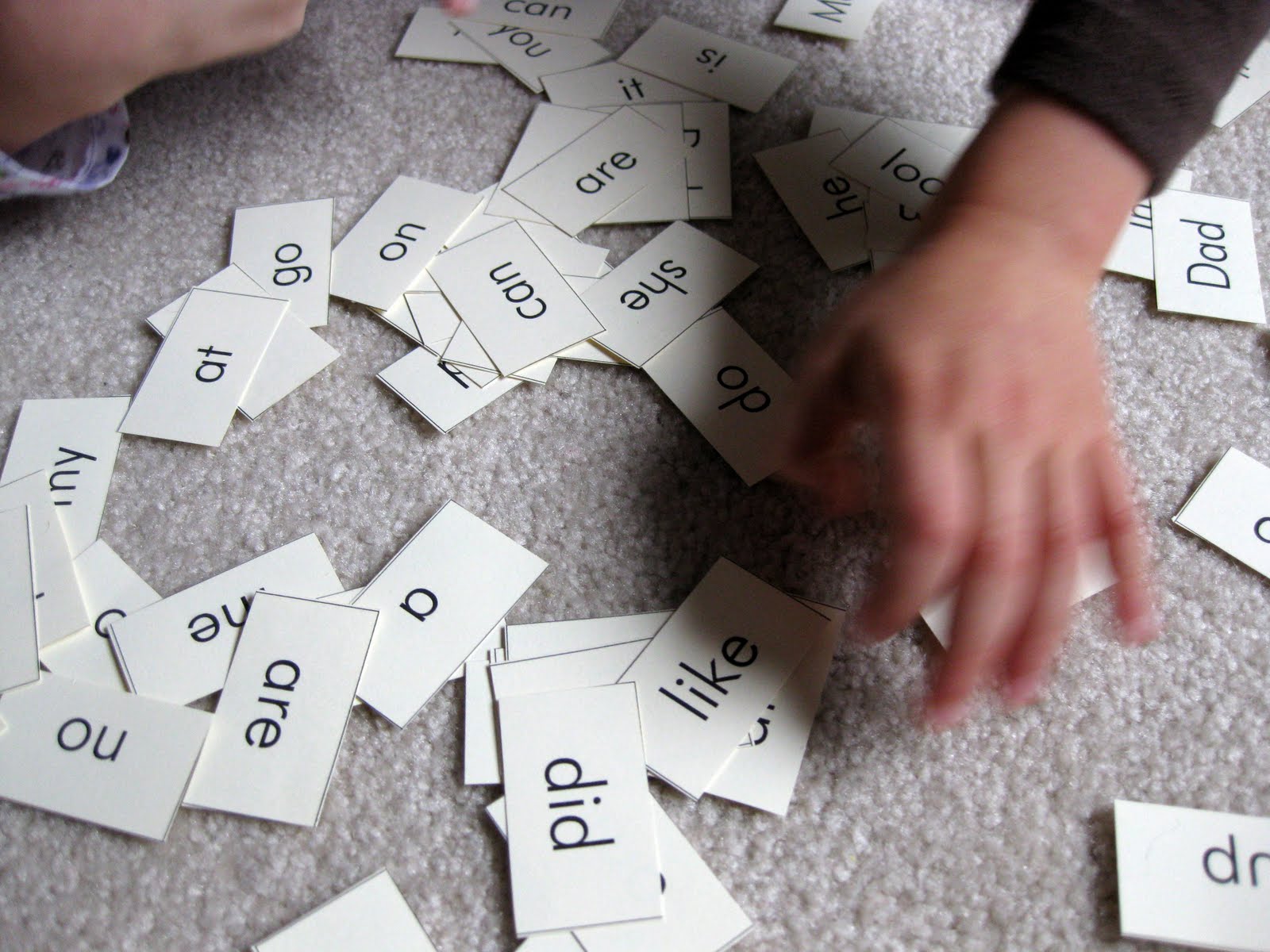
  • Sight Word Memory: All I did to assemble this game was to print two copies of the Early Emergent Words onto cardstock. I then cut the words apart, and the game was ready!

The Early Emergent Word Cards are here to download if you’d like.

To begin, we put all of the word cards face up on the floor, and we decide on a number of words to use. When Maddy, Owen, and I play, we each chose four of our favorite words so that the total for our game was twelve.

our Early Emergent Word cards

We then each read the words we chose, flip them face down, and mix them up. Then, just like regular Memory, we put the cards in organized columns and rows.


Each time a card is turned over, the player who flipped it has to read the word. However, this little rule can sometimes be anxiety-producing for little ones who just don’t know the words yet. So when Owen flipped, I’d read the word for him, or he’d echo my reading.


I’d say, Owen found the word, ‘did’ and . . . . let’s see. What will he find next? ‘Yes!’ ‘Did’ (I’d point to it) and ‘yes’. Two good three-letter words, but not a match. Owen, remind me again–which word was ‘did’ and which word was ‘yes’? (Hopefully he’d point to the correct ones and be able to identify each.)
For Maddy’s turns, she read all of the words. If she made a mistake (like for look sometimes gets her), I’d say, Are you sure? Check all of the letters and try again.


Owen’s testing his memory and his reading skills.


Each time
(or every other time so it didn’t get annoying), I would make comparisons between the words:

-Oh! Wow–‘do’ and ‘you’ rhyme, but they don’t look like they rhyme, do they?
Or,

-‘No’ and ‘go’! I found two rhyming words, but they’re not a pair. Or,

-‘Are’ and ‘and’. What do you notice about these two words? How are they alike/ different?


When players found pairs, they’d have another turn. Once all of the cards were gone, we’d take turns following two steps: we’d read all of the words on our cards, and then we’d count them. The player with the most pairs wins.

Today, after we matched all of the cards (it was a longgame!), Maddy wanted to make sentences with the words. So she hunted for words and strung them together to make sentences and stories. You can’t do too much with a bunch of sight words, but she stretched her brain, giggled at non-sense phrases, and was finally ready to quit. I think next time, I’ll combine some of the other lists to increase the difficulty level. Today, she was under the weather–I didn’t want it to be too much for my bambina this time.

fyi:
If you’d like to up the excitement level of your game–if your little players are ready and able–then here are other word cards to use:

  • Early Emergent Word Cards
  • Upper Emergent Word Cards
  • Early Fluency Word Cards
  • Fluency Word Cards

Or, if you’d like, stay simple:

  • Alphabet Letter Cards

Playing games and having fun with Sight Words is definitely the way to go. Here’s why:

Emerging readers need to have a solid bank of sight words that they can read automatically so that they can focus their attention on understanding the text and on decoding new words. Reading researcher (and one of the authors of my most favorite teaching tools ever–Words Their Way), Francine Johnson has said that “a large and stable sight vocabulary continues to be the hallmark of a successful reader” (The Reading Teacher, 1998).

And in the September 2008 issue of The Reading Teacher, in a really interesting article about how teachers can help young English-Language Learners acquire a sight word vocabulary, Helman and Burns conclude by saying that “an extensive sight word vocabulary develops alongside and contributes to proficient reading.”

It makes sense. So we’ll play some games, read some words, and hopefully get my kindergartner back to school before the week is over, right? Interesting stuff–and certainly worth sneaking into our little ones’ days!

Thanks for subscribing to teachmama! Have a good one!
December 3, 2009 5 comments
0 FacebookTwitterPinterestPocketEmail
Putting The Pieces Together - Story Repair
readingwriting

Putting The Pieces Together – Story Repair

by Teach Mama October 20, 2009
written by Teach Mama

Today is the National Council of Teachers of English and the International Reading Association’s new National Day on Writing!

The National Day on Writing is designed to draw attention to the variety of writing that occurs as part of daily life in the United States as well as to celebrate composition in all forms (Reading Today, Aug/Sept 2009).

What better day than today to share one of my favorite ways of teaching reading and writing?

  • Story Repair: Maddy and I have done this several times now, and she really loves it. When used in combination with a Writer’s Notebook and other authentic writing prompts and exercises, it’s a great way of varying instruction and making learning fun.

Maddy and I were talking about the guinea pigs and then we moved to the rabbit that I had as a pet years and years ago. We joked about how Marty (the rabbit) was not a gentle pet like Golden and Guinea and that he hopped around our house and often bit my husband and me. And he gnawed wires, clothes, and furniture, but that’s a whole other story. . .
After we had talked for a while, I said, Maddy, let’s write a story about a bunny. Actually, you decide on the story, and I’ll write it for you.

She started dictating quickly, and I wrote the first few lines of her story. The focus here isn’t length but more the creation of two or three meaningful sentences.

Maddy’s story is starting to come together.

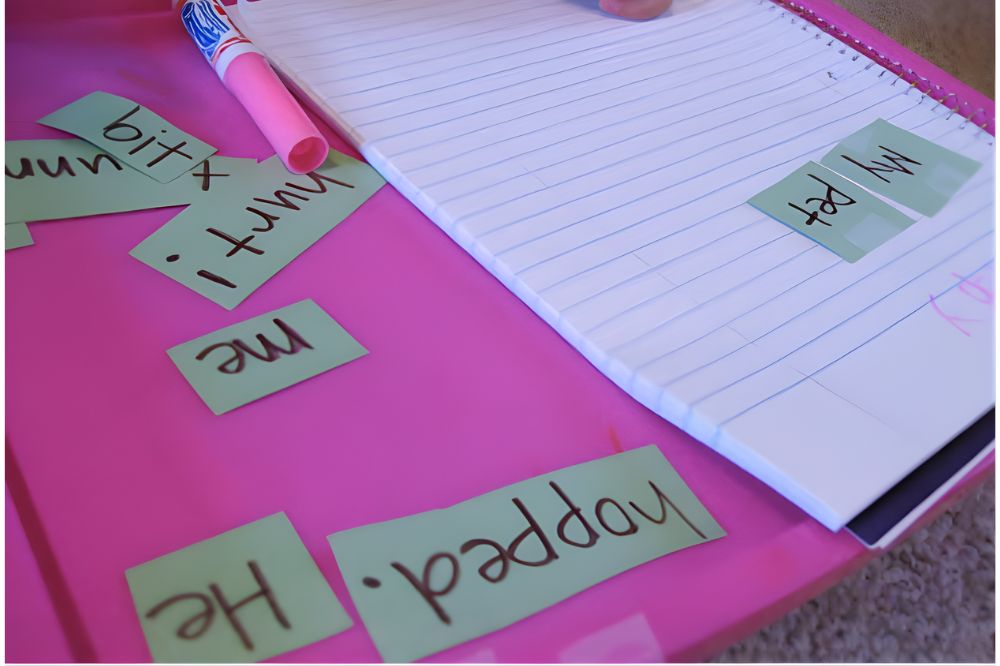
After I wrote her first two sentences, we read them together, and then I cut the words apart.

I mixed them up and put the words in front of Maddy. And then I asked her to put the words in the correct order.

She slowly repeated the first sentence and hunted for the words. I put her Writers Notebook in front of her, and she laid out the words on the paper. As she moved each word, she read it aloud.

the finished story

When the sentences seemed complete, we read them together to make sure they were correct. Then Maddy taped the words on the page, drew a picture on the bottom, and we were finished!

This activity is pretty simple, but it’s really worthwhile. Used in some intervention programs–like Reading Recovery–it helps emerging readers get back on track, I’ve also used it frequently with the younger readers I’ve tutored.

Here are some reasons it’s a great activity:

  • It gives students a break from actually composing their ideas–that way they can create any story they choose without the pressure of spelling words correctly or writing their letters accurately.
  • Students get a chance to see what their “stories” look like on the page.
  • Students can play with the words, and they realize that they can read more than they thought when they locate the words and put them in the correct order.
  • It works their growing brains–first, their creativity in the development of the story and second, by having them retain the story in their mind as they put it back together.
  • Students can learn that they can figure out words by using whatever they can recognize–beginning letters and their sounds or ending letters and their sounds. Or, they learn to look for word length to figure them out; either way works!
  • Emerging readers will also recognize grammar conventions–sentences begin with a capitalized word and end with a period.

And that’s it for today. . . happy National Day on Writing!

Thanks for subscribing to teachmama! Have a good one!
October 20, 2009 8 comments
0 FacebookTwitterPinterestPocketEmail
Back-To-School Books
reading

Back-To-School Books

by Teach Mama August 26, 2009
written by Teach Mama

As we all know, there are a gazillion children’s books on the market that focus on beginning a new school year.

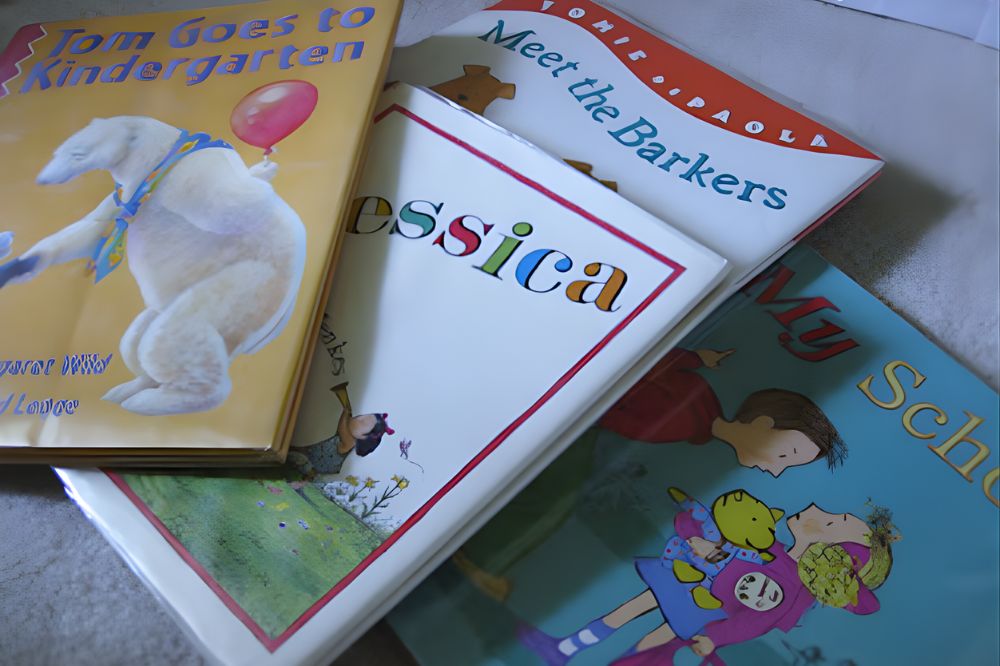
While looking at the library last week for new ones for us, I found four new titles that I am pretty darn excited about. They cover different aspects of school than the norm, and they seem to work well for my kiddos:

  • Meet the Barkers–Morgan and Moffat Go To School, by Tomie DePaola (2001): I love, love, love this book because it deals with a set of twins who are heading to school for the very first time, and the focus of the book is teaching kiddos to balance friends and achievement.

Moffie (the girl) tends to be an over-achiever, always seeking to earn gold stars and trying to answer every single question, while Morgie (her brother) and her classmates watch. DePaola does a great job–like always–of using his illustrations to convey the emotions of his characters, so readers can tell how Moffie’s classmates feel about her “hogging” the spotlight all of the time. Obviously, not too happy. . .

While she’s busy as the teacher’s pet, Morgie is busy making friends, and by mid-book, you can pretty much tell what needs to happen–Moffie has to learn to share the spotlight and make some pals, and Morgie needs to start talking to the teacher, or it’s going to be a long road for both of them.

They both figure it out, and, in the end, Moffie gets a best friend, and Morgie gets a chance to earn a gold star. It’s a happy ending, and–I think–a great way to facilitate a discussion about sharing the spotlight with others and meeting new friends in school.

  • Tom Goes to Kindergarten by Margaret Wild (1999): This book is a riot. I particularly liked it because it begins with, “Every day, Tom and his mother and Baby went past kindergarten on their morning walk. . . ” His mother tells him, “That’ll be you soon, Tom,” much like I said to Maddy every day when we watched the big neighborhood kids walk up the hill to school. (And it will be her soon–like in 4 days!?)

Tom is excited for school, and he even shouts, “YES!” when he wakes up on the first day. But once he’s there, he doesn’t want his parents to leave–so they don’t. They stay at school with him that day, and they stay the next, until Tom strongly suggests they go home. His mom and dad and baby brother leave–reluctantly–but they do very silly things when they get home, mirroring all of the activities they loved in the classroom.

It’s one of those books that makes you giggle when you read it, and that’s why we loved it–and read it over, and over, and over.

  • Jessica by Kevin Henkes (1989): We LOVE Kevin Henkes over here but have never read this book. It’s a great back-to-school book for our house because it’s about a little girl, Ruthie, who has an imaginary friend named Jessica. Ruthie is an only child who does just about everything with Jessica, including taking her to school with her on the first day. (Yikes.)

Ruthie doesn’t do anything at school to meet new friends; rather, she plays with imaginary Jessica. We talked a lot about how Henkes shows us how Ruthie really feels about playing with Jessica in school by the way he draws sad faces and slumped shoulders on her, but after she makes an effort to meet a new friend, Ruthie’s whole body clearly changes into a brighter, more alive little person.

My big Owen has a tendency to talk quite often about his own imaginary pal, so this book seemed a good fit for him. We are not discouraging his pretend friend or the stories Owen makes up about him, but we do want him to see how important it is to make friends in school and to have fun with them while he’s there.

  • It’s My School by Sally Grindley (2005): This book is great for siblings who will be sharing a new school for the first time. Tom is the big brother who does not want to share his school with his little sister, Alice, who is completely and totally excited for Kindergarten. Tom acts very angry towards his sister, and he even runs away from her on the school yard. However, after he hears her yell and scream for him when she loses her teddy bear, he comes to her rescue like a good big brother should.

Owen and Cora will share a school this year (okay, for one day a week. . . ), but I used this book to discuss how Tom’s behavior toward his sister was not okay, was not kind and loving, and how that behavior is not the kind of behavior that we show toward anyone, especially a family member–ever. But even though we used it as a teaching tool that way, it still worked to talk about playground behavior for Maddy and the idea of being kind and helping others when they need it.

Along with the other few–and very simple–things we’re doing over here to prepare for the new adventure that will be Kindergarten, these books also help to make the road a little less scary for Maddy–and even for the rest of us.

Thanks for subscribing to teachmama! Have a good one!
August 26, 2009 2 comments
0 FacebookTwitterPinterestPocketEmail
age-appropriate speech sounds | teachmama.com
foundationsspeaking

Age-Appropriate Speech Sounds

by Teach Mama August 1, 2009
written by Teach Mama

As a Reading Specialist and English teacher, I am always looking for ways to make learning to read fun for the students I tutor and my own little emerging readers.

While I was organizing my desk today, trying to file my huge stacks of papers, files, books, games, and binders, I ran across something I thought was worth sharing: an Age-Appropriate Speech Sounds packet.

That’s right–all of the sounds your child should be able to master and the general timeframe for each.

It’s just a starting point. And you should totally talk to your pediatrician if you have any concerns. But it’s good to have as a reference.

Here’s the skinny. . .

Age-Appropriate Speech Sounds:

This small packet is not in the best shape, and I’m not even positive of its exact origin (my apologies!), but I do know that I received it as a part of an Early Literacy course for my Master’s program not that long ago.

age-appropriate speech sounds is here as a pdf for you to download if you please.

What I love about this resource is the ease with which anyone–teacher, parent, student, whomever–can read and understand when children should be able to master certain speech sounds.

I also love that it spans ages three through nine, and it made clear to me that children aren’t expected to “own” those tricky blends and even trickier digraphs until age six.

I also appreciate the last page, which shows where in the mouth the sounds are formed.  In fact, a few days ago at breakfast, Cora said–out of the blue–that she missed her Uncle Will. Except she said, in a sad and whiny little voice, Mommy, I am so sad. I miss my Uncle Woo.

Maddy said, Cora, his name is Uncle Will. It rhymes with mill and sill. Can you say, ‘Will’? Maddy is five and Cora’s two. I always get a kick out of little teachers trying to help littler students.

Even Owen jumped in and tried saying ‘Will’ with a definite ‘l’ at the end, but he had trouble: Uncle Wou, he said.

So I said, La, la, la, la, lllllllllaaaa, (in my best singing voice ever). Who can make their tongue touch the top of their mouths and sing with me–la, la, la, la, llllaaaaa. . . .

speech sounds | teachmama.com

Maddy, Owen, and Cora joined in, and then I said. Listen: Willlll. Can you feel your tongue touch the top of your mouth when you say ‘Will’?

They tried, and everyone seemed to get closer. We did a little rhyming, and then we finished our breakfast. We even called Uncle Will to let him know he was a star today.

So understanding where these speech sounds are formed might make it easier for parents at home to help their little ones enunciate more clearly–or to at least guide their children a little bit.

Some other helpful links: age-appropriate speech and language milestones; same information but linked to CHOP (Children’s Hospital of Pittsburgh), another set of milestones from an occupational therapist.

Don’t get me wrong–I’m not expecting my kiddos to master each individual speech sound before they’re ready, and I’m not drilling them if they don’t own these sounds when they’re expected to. In fact, I had two very late talkers and one who just never seemed to care if he pronounced anything correctly.

I just find that the age-appropriate speech sounds packet gives me a starting point, that’s all, and it makes for great breakfast conversation with your kids.

Want a little more about language and speech development?

Check out:


oral language development


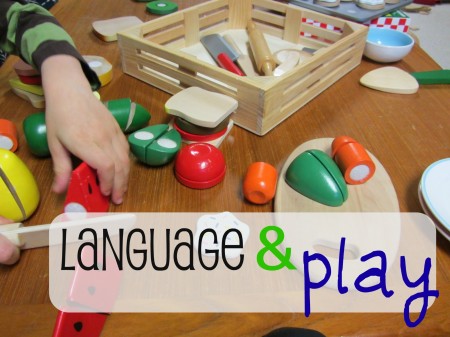
language and play

no more baby talk cover pinterest


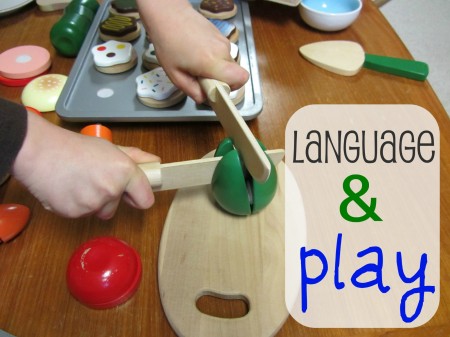
more language and play


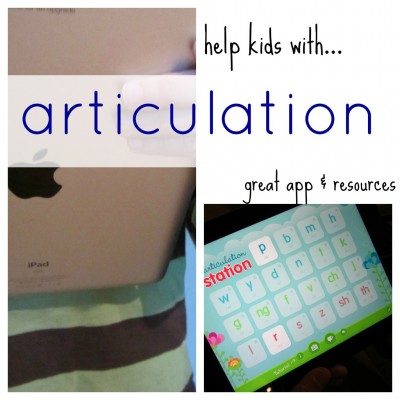
help kids with articulation


chat with children


What other resources do you use to help with age-appropriate speech sounds and language development? 

Check out a few other posts that may help you develop strong and healthy habits for your family:

  • wait time
  • my day, your day
  • frozen peas
  • kids who rock the kitchen
  • kids who rock the laundry
  • rest time
  • gem jars
  • arm circles
  • noticing kids
  • homework routine

fyi: Some of the links in the post above are “affiliate links.” This means if you click on the link and purchase the item, I will receive an affiliate commission. Forever and always I recommend only products or services I use personally and believe will add value to my readers. I am disclosing this in accordance with the Federal Trade Commission’s 16 CFR, Part 255: “Guides Concerning the Use of Endorsements and Testimonials in Advertising.”  For more information, please see teachmama media, llc. disclosure policy. 

August 1, 2009 9 comments
0 FacebookTwitterPinterestPocketEmail
Kids Counting Money
countingmathsorting

Counting Money

by Teach Mama June 4, 2009
written by Teach Mama

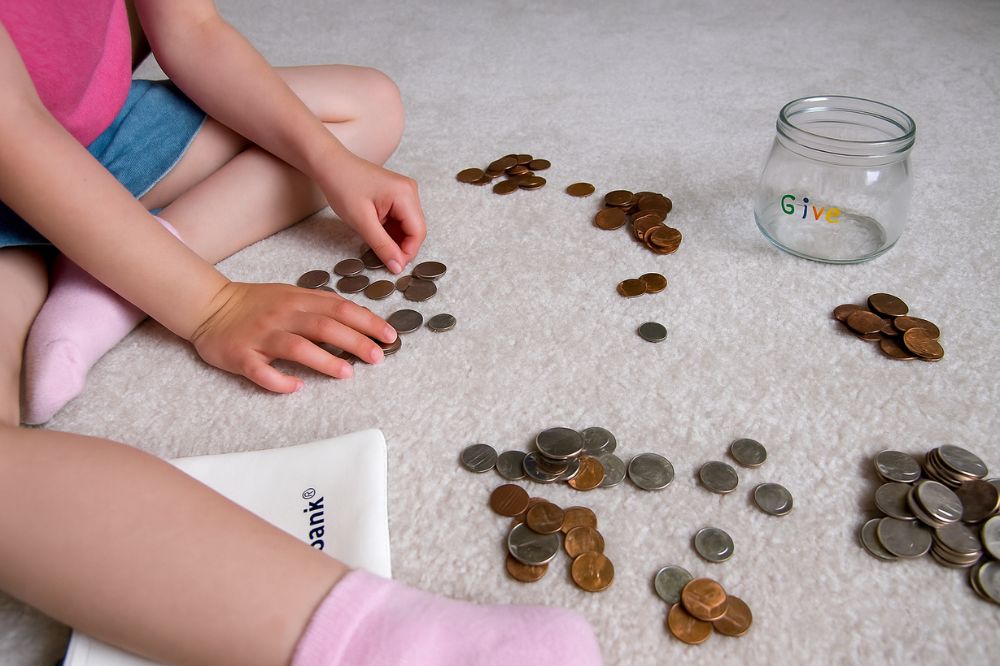
A funny thing happened to me when I dumped out all of our Relay for Life donations on Owen’s bedroom floor the other day–I realized that I had never really talked to Maddy and Owen about coins and coin values.

Maddy and Owen sorting coins

It’s suuuch a difficult concept, I know this and realized it quickly only minutes after I began, but it was a “teachable moment” of sorts, with me needing to count a gazillion coins and having two expert sorters right there at my fingertips. After they spilled out the contents of their “Give” jars to add to the grand total, they were totally psyched to organize the bills and coins and to count, count, count–regardless of whether they understood the values of each coin!

Here’s how it went:

  • Coin Sorting and Counting: I told Maddy and Owen that one of our jobs of the day was to count all of the money that we earned at the Relay so we could turn it in to the organizers of the event. Maddy asked if they could add the money from their Give jars, and we all agreed it would be a super idea.

So we dumped out all of the money, and after a few minutes of playing with the coins, we talked about the differences between them and the names of the coins that they knew. They knew pennies for sure–and they were pretty confident about quarters, but dimes and nickels were totally new to them.

Lining similar coins up by 10’s. . .

We then began grouping the coins into like piles: pennies, nickels, dimes, quarters, and strange ones (.50 cent pieces, dollar coins, and really dirty ones). This sorting was not as easy for them when it came to distinguishing quarters from nickels, so we talked about the ways to tell the difference between the two (put one on top of the other–the smaller is the nickel, or compare the pictures on the front).

I very briefly talked about how there are 5 pennies in one nickel and showed them by laying out 5 pennies under one nickel along with how there are 10 pennies in one dime, etc. Maddy asked a few questions, but Owen started zooming cars through piles, so I let it rest and got back to our task at hand. . .

After the coins were all sorted into piles, we started lining them up by 10’s (pennies, nickels, and dimes) and 4’s (quarters) and counting them. It was great counting practice, and we checked and re-checked our work and made sure they were in straight lines to compare numbers.

Finally, I made a list and counted the totals for each coin. I wrote it all down and made sure I was correct, with their counting help of course. With totals accounted, we put all of the money in our bag and our now-empty Give jars back on their shelves.

Even though this was a simple activity, it helped Maddy and Owen with their sorting skills (which you know I could go on and on and on about), counting skills, early money-recognition skills, and a big-time life skill–giving.

Thanks for subscribing to teachmama! Have a good one!
June 4, 2009 4 comments
0 FacebookTwitterPinterestPocketEmail
Using Large Crayons To Help Support Tripod Grip
tripod gripwriting

Owen’s Got Grip: Using Large Crayons To Help Support Tripod Grip

by Teach Mama April 28, 2009
written by Teach Mama

post contains affiliate links


owen's got grip: using large crayons to help support tripod grip

No joke! My boy finally found his grip! It’s taken a while, and over the last few months, I’ve researched (our friends at HWT do have great ideas), tried slip-on grips (wouldn’t use them), crayon bits (a good start. . .) to no avail.

Even though I don’t know much, I do know that learning happens when everything’s aligned–the stars, planets, mind and body–you name it.

We were patient (kind of), and it happened!

I have to thank our friends at Crayola for their Jumbo Crayons and Owen’s tireless, talented preschool teacher for introducing Owen to them.

And for the box she sent him home with on Monday that he hasn’t let rest for days.

Woo-hoo!

teach kids grip: thick crayons | teachmama.com

teach kids grip: thick crayons | teachmama.com

When he “showed me how they worked”, he slipped immediately into a normal tripod grip, and it makes sense. They’re thick without being bulky or heavy, and for a guy who is still developing his fine motor skills, the thicker (and shorter) the better!

I praised him over and over and silently thanked the village it takes to raise a child these days. Tomorrow he may lose it or forget to use it, but at least now I know that when he really needs to know how a good grip feels, I can reach for the Jumbo’s.

fyi: affiliate links used in this post

April 28, 2009 6 comments
0 FacebookTwitterPinterestPocketEmail
Teach Kids on High Frequency Words
early literacyprintablesreadingsight words

Hello, High Frequency Words!

by Teach Mama April 22, 2009
written by Teach Mama

My little Maddy’s got the reading bug. She’s trying to read anything and everything she can, whether its the writing on our snack boxes, road signs, recipes, or her own books. I’m having a blast watching her slowly acquire the skills she needs to unlock the words around her, so I decided a few weeks ago to introduce her to some high frequency words.

A gazillion activities disguised as games exist to use with Sight Words. As I use them, I’ll share them.

  • Point to the Word: I chose half of the readinga-z first set of high frequency word flash cards (24 total), then I took only 12 of those words. I told Maddy that we were going to practice reading ‘Kindergarten’ words, and I read through the words first, slowly, putting them face up in front of Maddy as I went.

Then I put three words in a row. I told Maddy to grab Puppy (her favorite lovey of the day) and said,

Maddy, would you please put Puppy on either the word ‘to’ or ‘am’?

She put him on ‘to’, so I gave her a good Woooo-hoooo!! and we tried again. Awesome reading! Can you put Puppy on the word ____ or _____?

We went through the words two or three times, I gave her tons of praise for trying her best. I didn’t want to overwhelm her or bore her, so we soon moved on to bigger and better things–playing veterinarian with Puppy and his pals as our patients.

An extension for this easy activity would be to find an emerging reader book that had several of the words we practiced in it and to read it together, but if you’re not ready for that, then try:

  • place four cards face up, two on top and two below, and do the same activity as above;
  • do either of the above activities and have the reader use a “magic wand” or some other fun pointer to point to the words;
  • do the above activities and have the reader write the word(s) you ask her to (on a white board, on fun paper, with markers, in watercolors, etc);
  • play ‘flip-it’ where you flip a card over and you and the reader “race” to read it first (an activity for a stronger emerging reader).

Here are some pretty cool places to pick up Dolche sight words or cards: Mrs. Perkins’ Dolche Words, Dolch Kit, a beautiful set by Jan Brett, abc teach, and lanternfish which has awesome cards to print from your computer.

FYI: I belong to reading a-z, which I find incredibly rich with resources for tutoring, teaching, and using for my own kiddos. It’s literally an on-line book room packed with leveled printable books, lesson plans, activities, easy assessments, and tons of letter and sound activities.

Whew! That’s a ton of learning for today, even though Maddy didn’t realize it. Now let the reading fun really begin!!

Thanks for subscribing to teachmama! Have a good one!
April 22, 2009 2 comments
0 FacebookTwitterPinterestPocketEmail
help kids use illustrations to support reading and thinking
comprehensioninferringreading

Every Picture Tells A Story

by Teach Mama April 19, 2009
written by Teach Mama

The Gardener, by Sarah Stewart and illustrations by David Small, is honestly one of the most beautiful children’s books I have ever read.

The story takes place during the Depression and is told through letters that Lydia Grace writes to her Grandmother and parents after she leaves them to spend a year working with her surly uncle in his bakery in the city. She brings her love of gardening to her uncle’s shop and ultimately brings some sunshine to a previously depressed town.

  • The Gardener: Because we’ve been re-potting our terrarium, talking about our upcoming tour at a garden center, and beginning to start our outside garden, this was a great book to read tonight before bed. Maddy has also been doing a lot of reading in her own books, so I could tell that Owen’s been feeling frustrated. Tonight, I wanted to show them both how some authors use pictures to tell the story.

Several parts of this book use two-page illustrations to carry the narrative, so I modeled how to examine the inside cover illustration. I modeled my thinking:

Oh my goodness! Look at this incredible garden! I can see so many plants and vegetables growing here. Look at the sunflowers! See the lettuce? What else do you notice? . . . Look at the little girl showing the woman–maybe her grandma?–that huge tomato! It looks like she must feel proud of that tomato. They must work very hard to make their garden grow.)

Then we looked closely at the following pages’ illustrations and talked through what we saw. We asked questions (I wonder why those two people look so sad? What will they say when the little girl comes back with food from the garden?) and made observations.

When I finally got into the reading, Owen got the hang of it and could clearly explain what he saw. When he talked us through Lydia Grace’s arrival at the train station, I cheered–You did it! Owen, you’re reading! You don’t always have to use words to read; sometimes there are no words, so you use the pictures! That’s exactly what reading is–using the words and the pictures to tell the story! That’s exactly how Maddy is learning to read her books–and you’re doing the same thing. Good for you.

And that’s how we walked through The Gardner, talking about how the author uses both Lydia Grace’s letters and the illustrations to tell the story. What a beautiful walk it was–I’ll take this kind of learning any day.

April 19, 2009 3 comments
0 FacebookTwitterPinterestPocketEmail
at-home vacation - watching movie
family lifetravel

At-Home Vacation

by Teach Mama April 7, 2009
written by Teach Mama
Woo-hoo! Woo-hooo!! Wooooo-hoooo!!

(And boo-hoo!!)

Posting this means that my amazing husband is finally home from his golf trip, and I couldn’t be happier to have him back. But it also means that my at-home vacation with Maddy, Owen, and Cora has come to an end. That’s right–we were playing vacation here (kind of) while Dad was away.

Here’s what we did to “up” the fun factor for a few days to keep ourselves busy and to keep my little ones from missing their daddy:

  • Movie Night: This may be a staple for others, but for my Maddy and Owen, this was a real treat. Madagascar 2 after Cora went to bed. Snuggling under a blanket on the couch. Tons of giggles. Popcorn. Lots of it. Need I say more?
  • Dress-up Marathon: Under the guise of a dress-up extravaganza, I organized our massive amounts of dress-up clothes while “trying them on” the kids for size. They were happy to see what fit and laugh at what didn’t, and I am now happy to have a clean toy closet.
  • Computer Game Free-For-All: I set the timer for a longer amount of time than usual, and Maddy and Owen were able to “free play” on the computer. They love to have control over their favorite sites, and adding an extra 5 or 10 minutes was out of the ordinary for this mom who tries to limit screen time.
  • Creek Walkin’: We got crazy lucky that our friends invited us over to play and have dinner on Saturday and doubly lucky that they were in the mood to do some exploring in the creek near their house. We brought boots, extra clothes, and dove in. We splashed, explored, skipped (okay, threw in) rocks, and we even saw a tadpole-almost-frog. Being invited to our friends’ house was one thing, but to walk in a creek and climb on rocks–that’s another.
  • Breakfast Out: Going out for breakfast is one of my favorite activities, so one morning I rallied the troops right after they popped out of their pj’s and headed to a nearby breakfast joint. Pancakes as big as their plates? Check. Buttering and cutting their own pancakes? Check (Minus Cora). Full bellies? Check. Super fun and kind of vacation-y? Check!
  • Big-time Bike Ride: My kids love to ride their bikes. Love it. So one morning, I packed drinks and snacks, threw Cora in the wagon complete with baby doll and baby doll stroller, and I let them ride and ride. Or, at least they rode the paths to the park, where they rode–and Cora pushed baby–some more. Having snack at the park is always fun, and so is climbing the pine trees and getting all sappy. . . well, fun for these little vacationers.
  • Backward Dinner: Dessert before dinner only happens on vacations, so we had to throw in a backward dinner during our . . . trip. Icecream sandwiches before hotdogs and Smiles? Talk about bliss–for three kids 5 and under, at least.
  • Ikea: For our family, a trip to Ikea is an event in itself. I had a few organizing dreams in mind and knew that it would be a great place for the kiddos to burn some steam on (yet another!) rainy day, so we got there right as it opened at 10am. We walked through the staged rooms, played at each–and I mean each–of the kid stations, met some cool pals in the children’s area, had lunch in the cafeteria, and even shared icecream cones with our new friends before we left. Fun, indeed!
  • Hibachi Dinner: Woo-hoo! The best part of our at-home vay-cay is that my husband returned early from his trip, so we decided to celebrate by taking the family to a local Japanese hibachi restaurant. I packed our favorite chopsticks, and we were off! It was everyone’s first time there, so when Maddy, Owen, and Cora saw the flames in front of them, they were surprised, but once the food hit their plates, they were smiling. Talk about an adventure–sure beats Cheeburger, Cheeburger! (Guy at right is not our chef, but you get the picture.)

And that’s it–our at-home vacation while Mom’s rolling solo. Now I’m ready to pack my bags and head out on my own for a bit!

FYI: The idea for a vacation at home was inspired by an article I read awhile back in either Wondertime, Family Fun, or Parenting–three pretty darn cool magazines that I subscribe to but rarely have time to read. I’m happy to hand over my pile to anyone who’s interested before I recycle. . .

Thanks for subscribing to teachmama! Have a good one!
April 7, 2009 2 comments
0 FacebookTwitterPinterestPocketEmail
Left, center, and right
Uncategorized

Left, Center, And Right!

by Teach Mama February 8, 2009
written by Teach Mama

Okay, I’m coming clean: I really don’t know my left from my right. I honestly don’t. When my husband asks which way he has to turn if we’re driving somewhere together, more often than not, I say, Turn right–I mean left–no, right! Brent, I’m soooo sorry.

The kids whoop it up like they’re on a roller coaster, hands waving in the air, but steam shoots out of my husband’s ears.

So I have made a commitment to myself and my children’s future spouses that they will know their left from their right even before they make it to elementary school. Or, at least that’s my goal. Luckily for everyone, there’s a tool out there that might save us all:

  • LCR: Left, Center, Right is a dice game that is actually played by kids of all ages. It’s a very simple concept (again, something I wish I would have thought of first!) but so very valuable. Each player gets three tokens. The first person rolls the three dice and follows the directions on each die: for each number of L’s, C’s, or R’s rolled, that number of tokens goes to the person on the left, center, or right. If a person only has one or two tokens left, he rolls that number of dice. If you roll a black dot, you don’t do anything.

The person with the most tokens at the end wins the ones in the center. The fun, I think, is in what you choose to use as tokens. The set comes with plenty, but we’ve played with things like Hershey’s Kisses, crayons, Foamies (yes, Foamies!), and Matchbox cars. I know that the big, big kids (over gambling age, that is) find it more exciting to play with quarters or dollars.

However you choose to play, you can’t get by without knowing your left and right. It’s still difficult for Maddy and Owen (okay, and even me sometimes. . . ), but when they get stuck, we say, Okay, line up your dice. Tell me what you rolled. All right–L is for left. Which side is your left? If you need help, see if that hand makes an L, then tell me.

Or, we say, You have 2 R’s and a dot. R makes the rrrr sound. Does lllleft start with the rrrr sound, or does rrrright start with the ‘r’ sound? That’s correct! Hand over two tokens to Daddy, who’s on your rrrright. Varying the use of both techniques will cover two things–right and left directionality and R/L letter-sound correspondences.

We seem to be on a LCR kick right now. One morning, I found Owen sitting up in his bed with Blankie, Puppy, and Puppy’s Daddy all playing the game. I’m not totally sure how it was working out for them, but they each had tokens in front of them and the dice in the middle.

All the parts of this game fit snugly in its tiny plastic tube; it’s perfect for your purse or diaper bag and is a great way to pass time–and sneak in a little learning–just about anywhere.


Thanks for subscribing to teachmama! Have a good one!
February 8, 2009 0 comments
0 FacebookTwitterPinterestPocketEmail
Newer Posts
Older Posts

About Me

About Me

Hi! I'm Hannah.

A mother of one, I am passionate about inspiring mamas and educators with hands-on, meaningful learning ideas that make everyday moments fun, purposeful, and filled with curiosity.

Follow Teach Mama

13.4K Fans Like
2.8K Subscribers Subscribe
132K Followers Follow Us

Recent Posts

  • Summer Learning Activities for Kids: A Low-Pressure Guide for Reading, Play, and Family Connection

    June 15, 2026
  • Effective Techniques for Teaching Complex Historical Topics

    June 13, 2026
  • 4 Neighborhood Adventures That Teach Kids Real-World Skills

    June 12, 2026
  • What Does an Urgent Care Visit Cost in Manhattan Without Insurance?

    June 12, 2026
  • Future Trends Influencing Enterprise Learning Management System Adoption

    June 10, 2026
  • How to Survive Your Husband’s Grad School Years Without Going Broke

    June 9, 2026

LEARN

PLAY

CRAFTS

PRINTABLES

About Me

A mother of one, I am passionate about inspiring mamas and educators with hands-on, meaningful learning ideas that make everyday moments fun, purposeful, and filled with curiosity.

Useful Links

  • About
  • Contact

Popular Posts

  • Words 3 Ways: Learning Sight Words For Kindergarten

    May 17, 2012
  • Quick Trick: Magnetic Letters (How To Use Them With Your Kids!)

    December 1, 2010

Recent Posts

  • Summer Learning Activities for Kids: A Low-Pressure Guide for Reading, Play, and Family Connection

    June 15, 2026
  • Effective Techniques for Teaching Complex Historical Topics

    June 13, 2026
  • Facebook
  • Pinterest
  • Youtube
Teach Mama
  • Reading
  • Early Literacy
  • Writing
  • STEM
  • Activities
  • Digital Literacy

Shopping Cart

Close

No products in the cart.

Close